

The digital landscape has shifted dramatically. In 2026, startup owners and enterprises are no longer just looking for "coders,"; they are looking for AI-augmented engineers and strategic partners. With the rise of autonomous agents, decentralized systems, and high-performance computing, handing your project to the wrong hands is more dangerous than ever.
Today’s market demands more than technical proficiency; it requires developers who can navigate the complexities of Generative AI integration, Cloud-native scalability, and Zero-Trust security. In an era where "AI-driven development" is the standard, a mistake in hiring isn't just a budget leak; it's a risk to your company's intellectual property and future scalability.
Whether you are building a decentralized finance platform, an AI-powered healthcare app, or a next-gen SaaS, choosing a technical partner requires a forward-looking strategy. To avoid the common pitfalls of failed investments, technical debt, and misaligned "wrong promises," use this updated 2026 roadmap to Hire Dedicated Developers who are truly equipped for the future.
Why Digital Projects Fail: Why You Must Hire Dedicated Developers Carefully
While poor execution and budget issues remain constants, the technical landscape of 2026 has introduced high-stakes hurdles. Handing a project to a team that lacks a "future-proof" mindset often leads to these specific failure points:
AI Hallucinations & Logic Gaps:
In 2026, "vibe coding" (relying on AI to generate large blocks of code) has become a double-edged sword. Projects fail when teams use "lazy" AI-generated code without human-in-the-loop validation. This leads to subtle logic errors in code that looks correct and runs, but fails under specific edge cases or business logic constraints that an LLM cannot foresee.
Lack of Scalability (Cloud-Native):
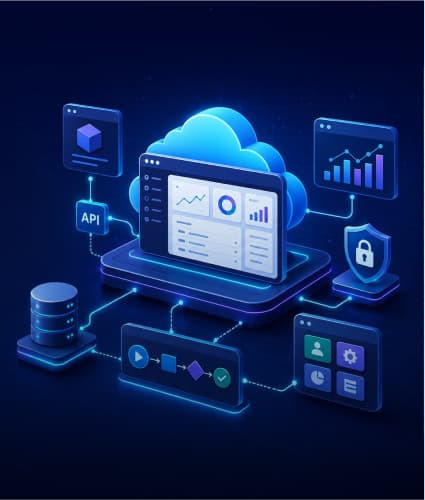
The era of "lift and shift" is over. Modern projects fail when they are built as monolithic "spaghetti" apps that cannot leverage Kubernetes, Serverless architectures, or Edge Computing. Without a cloud-native foundation, your application will struggle with latency, high operational costs, and an inability to scale horizontally during traffic spikes.
Security Debt & The "Trust Gap":
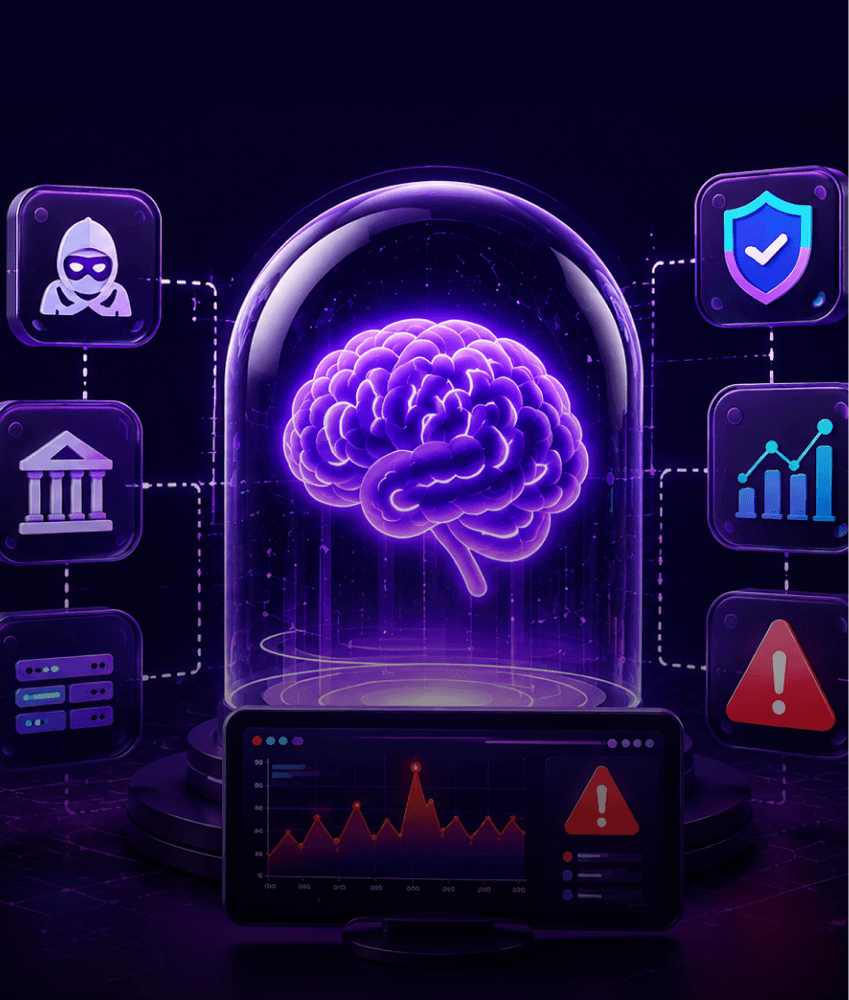
Many teams treat security as a final checklist. In 2026, failing to implement Zero-Trust Architecture from day one is a fatal flaw. Sophisticated AI-driven cyber threats now exploit static perimeters. If your developers aren't enforcing "never trust, always verify" for every API call and data access point, your user data is a ticking time bomb.
Prompt Fatigue vs. Architectural Integrity:
There is a growing trend of hiring teams that rely too heavily on basic prompts rather than deep system architecture. They can build a pretty UI quickly, but they ignore the underlying data structures and modularity. This results in "rot," where the application becomes impossible to update or integrate with autonomous AI agents later on.
The "Context Window" Bloat:
A new failure mode in 2026 is poor code modularity. If a codebase is messy and tightly coupled, modern AI coding agents struggle to "understand" the project because the context window becomes bloated with unrelated code. This slows down development speed and increases the cost of every new feature.
Observability Gaps:
Projects fail when they lack "deep observability." In complex microservices and AI-integrated systems, traditional logging isn't enough. If your team can't trace a request across distributed services or explain why an AI agent made a specific decision, troubleshooting becomes a multi-day nightmare that drains your budget.
Ready to Build With the Right Dedicated Team?

Key Competencies: The 2026 "Must-Haves" to Hire Dedicated Developers
When you look to Hire Dedicated Developers, the standard "full-stack" resume is no longer enough. To build a product that survives the next decade, your team must master the 2026 technical landscape:
Methodology: AI-Augmented Agile (Agile 2.0)
Agile has evolved. In 2026, leading teams practice Agile 2.0, where AI is a core participant in every sprint.
Predictive Sprints:
They use AI-driven planning tools to analyze team velocity and predict bottlenecks before they happen.
Automated Documentation:
Instead of developers spending 20% of their time writing manuals, they use AI to generate real-time, context-aware documentation directly from the codebase.
Hyper-Automation:
Look for teams that have automated their entire CI/CD pipeline, achieving a "zero-manual-handoff" workflow.
Design Process: Human-AI Experience (HAX)
Design in 2026 is about more than just screens; it's about interaction loops between humans and autonomous agents.
Agentic UI:
A solid team designs interfaces that can adapt when an AI agent performs a task on behalf of the user (e.g., "The app booked your flight; click here to review the itinerary").
Trust & Explainability:
Good designers ensure that when an AI makes a decision, the user understands why. This prevents the "black box" effect that leads to user frustration.
Digital Minimalism:
With AI doing the heavy lifting, the best UIs are invisible. Your team should focus on reducing "cognitive load" rather than adding more buttons.
The Tech Stack of 2026
If your team is only talking about PHP or basic JavaScript, they are behind. Your dedicated resources must be proficient in modern technologies and frameworks. If your project requires a scalable Node.js backend, you can hire dedicated NestJS developers with the expertise to build and scale production-ready applications.
High-Performance Languages:
Rust for memory safety and Go (Golang) for ultra-efficient backend microservices. These are essential for handling the high-concurrency demands of modern apps.
Edge Computing & 6G Optimization:
As 6G begins to roll out, your developers should know how to use WebAssembly (WASM) to run heavy logic on the "edge," providing near-instant responses regardless of server location.
Vector Databases & RAG:
Essential for any intelligent app. They should be experts in databases like Pinecone, Milvus, or Weaviate to build Retrieval-Augmented Generation (RAG) systems that allow AI to "read" your company’s private data securely.
Sustainability & "Green Coding"
In 2026, cloud costs and carbon footprints are major business metrics.
Energy-Efficient Algorithms:
A top-tier developer understands how to write code that minimizes CPU cycles, directly reducing your cloud bill and helping you meet ESG (Environmental, Social, and Governance) goals.
FinOps Awareness:
They don't just build; they optimize for cost. Ask your potential hires how they use "Spot Instances" or "Serverless" to keep your monthly burn rate low.
Ready to Build With the Right Dedicated Team?
Evaluating AI Literacy & "Agentic" Skills to Hire Dedicated Developers
In 2026, the baseline for a "senior" developer has shifted from knowing how to code to knowing how to architect Agentic Systems. These are autonomous or semi-autonomous AI agents that don't just wait for a user click but proactively perform multi-step workflows. When you look to Hire Dedicated Developers, you must vet their ability to move beyond basic "Chatbot" logic into the world of autonomous reasoning.
Multi-Agent Orchestration & Framework Proficiency:
A top-tier team should be fluent in 2026-standard frameworks like LangGraph, CrewAI, or Google’s Agent Development Kit (ADK). Ask how they manage specialized "roles," for example, one agent that researches, one that writes code, and a third that audits for security.
Interview Tip: Ask them to explain how they handle "handoffs" between agents to prevent infinite loops or task failure.
PromptOps & Prompt-Driven Development (PDD):
Prompting is no longer a "creative experiment"; it is a discipline. To Hire Dedicated Developers who can sustain a project, ensure they treat prompts as operational assets. This means they use a Prompt Registry for central storage, perform A/B testing on different prompt versions, and use automated "Evals" (LLM-as-a-judge) to score AI responses for accuracy and tone.
Decision Transparency & Explainable AI (XAI):
In 2026, "The AI just did it" is not an acceptable answer for stakeholders or regulators. Your developers must be able to build Traceable Logic.
Reasoning Chains: They should implement "Chain-of-Thought" (CoT) tracing so you can see the step-by-step reasoning the AI used.
Audit Logs: Look for developers who integrate tools like Langsmith or Arize to provide deep observability, ensuring that every automated decision is logged, explainable, and auditable for compliance.
Tool-Use & Function Calling Mastery:
An "agentic" developer knows how to bridge the gap between AI and your existing business data. They should be experts at Function Calling, allowing an AI agent to safely call your APIs, query your Vector Databases, or update a record in your CRM without human intervention.
Check for: Knowledge of Model Context Protocol (MCP), which is the 2026 standard for how agents securely access external tools and data sources.
Security & Ethical Compliance: The Legal Layer to Hire Dedicated Developers
In 2026, technical skill is only half the battle. With the full enforcement of the EU AI Act and the emergence of the Colorado AI Act, your developers must function as "compliance-aware engineers." When you Hire Dedicated Developers, you aren't just buying code; you are buying insurance against massive regulatory fines (which can now reach 3% of global turnover).
Confidential Computing (Data-in-Use Protection):
Historically, data was only encrypted "at rest" (on disk) or "in transit" (moving over the web). In 2026, the gold standard is protecting data at runtime.
What to look for: Ensure your team can implement Trusted Execution Environments (TEEs) or "Secure Enclaves" (like Intel SGX or AWS Nitro). This ensures that even if a cloud provider’s infrastructure is compromised, your sensitive user data remains encrypted while it is being processed by your AI models.
Green Coding & ESG Compliance:
Software energy consumption is now a line item on corporate ESG (Environmental, Social, and Governance) reports.
The 2026 Standard: Look for developers who use Carbon-Aware SDKs that shift heavy background tasks (like model retraining) to times when the local power grid is using 100% renewable energy.
Optimization: Ask if they use WebAssembly (WASM) or Rust for high-traffic components, as these reduce CPU cycles and direct server energy costs compared to heavier, traditional frameworks.
AI Transparency & "Deepfake" Labeling:
Under the 2026 transparency obligations (Article 50 of the EU AI Act), any AI-generated content must be detectable.
Requirement: Your team must be able to implement machine-readable watermarking and metadata labeling. If your app generates text, images, or audio, you must Hire Dedicated Developers who know how to disclose this to users without ruining the user experience.
IP Protection in the AI Age:
A major risk in 2026 is "shadow IP" code generated by AI that may contain fragments of licensed software.
Contractual Safety: Your hiring agreement must include an AI-Indemnity Clause. Ensure the team uses "clean" AI models and provides a Software Bill of Materials (SBOM) that proves no copyrighted training data was illegally used to build your core product.
The Decision Matrix: Cost vs. Quality to Hire Dedicated Developers
In 2026, a "broken" app isn't just a technical nuisance; it's a massive financial liability. As software becomes the backbone of every business operation, the cost of failure includes not just lost revenue, but also regulatory fines, data breach remediation, and the high price of fixing "technical debt." When you Hire Dedicated Developers, you are making a strategic choice between three primary engagement models, each with a different impact on your risk profile and budget.
Understanding the Location Dynamics
Onshore Teams:
These developers are located in your own country. While they command the highest hourly rates, they offer the lowest risk for projects requiring deep strategic alignment, frequent face-to-face brainstorming, and strict adherence to local government or financial regulations. They are ideal for high-stakes enterprise systems where "zero-latency" communication is a requirement.
Nearshore Teams:
This model involves hiring from neighboring countries (e.g., a U.S. company hiring from Latin America). Nearshoring has become the "sweet spot" in 2026, offering significant cost savings (often 30–50% less than onshore) while maintaining real-time collaboration windows. It is the best choice for fast-moving startups that need to move at high velocity without a 12-hour time gap.
Offshore Teams:
Sourcing talent from global hubs like India, Southeast Asia, or Eastern Europe offers the highest cost-efficiency. In 2026, offshore agencies have matured into specialized centers of excellence. This model is perfect for scaling quickly or accessing massive pools of AI-ready talent at a fraction of the cost, provided you have the management bandwidth to handle asynchronous workflows.
The True Cost of "Cheap" Talent
The market in 2026 is flooded with low-cost providers who promise the world but deliver "patchy" results. Projects often fail when owners prioritize the lowest hourly rate over long-term value. A "budget" team might deliver a product 40% cheaper today, but if that code is poorly architected or utilizes unverified AI "vibe coding," you will likely spend 3 to 5 times more later this year just to refactor it for security and scalability.
Ready to Build With the Right Dedicated Team?
Beyond the Hourly Rate: Value-Added ROI
When you Hire Dedicated Developers from a professional firm, you aren't just paying for hours; you are paying for an ecosystem. Professional teams come with:
Built-in Quality Assurance (QA):
Automated testing is integrated into the development flow, not added as an afterthought.
DevSecOps Maturity:
Security is treated as a continuous process, protecting you from the AI-driven cyber threats of 2026.
Architectural Foresight:
A professional team builds with a "Composable Architecture," ensuring your app can easily integrate with new AI models or blockchain protocols as they emerge next year.
Credentials & Social Proof: How to Vet and Hire Dedicated Developers
In 2026, a static PDF portfolio is no longer a reliable indicator of a team's capability. With the proliferation of AI-generated case studies, business owners must dig deeper to verify that the team can handle the complexities of modern engineering. When you Hire Dedicated Developers, use these multi-layered verification strategies to ensure you are getting the "Top 1%" of talent.
Check Live Apps & Agentic Interactions
Don't just look at screenshots. Ask for access to live, production-grade applications.
Test the "Feel":
In 2026, performance is a feature. Are the apps fast, or do they feel sluggish under modern 6G connections?
Verify Agentic Features:
If the developer claims expertise in AI, test their Agentic features. Does the AI agent in their app provide "Chain-of-Thought" reasoning? Does it gracefully handle failures, or does it enter an infinite loop?
Accessibility Check:
Use automated tools to see if their live projects meet the latest global accessibility standards (WCAG 3.0).
Verify via Repositories & Contribution Logic
A developer’s GitHub or GitLab profile is their "digital footprint." To Hire Dedicated Developers with true seniority, look beyond the green "contribution squares."
Review Pull Requests (PRs):
Look at how they interact with other developers. Are their PR comments constructive? Do they provide clear logic for their code changes, or do they just dump AI-generated code into the repo?
Commit History Consistency:
Look for meaningful commits. A developer who pushes small, logical chunks of code is much more valuable than one who pushes a 10,000-line "black box" of code once a month.
Open Source Footprint:
Contributions to reputable 2026 frameworks (like Rust-based backend tools or Vector DB plugins) are a massive "green flag."
Interview for "Soft Skills" & Asynchronous Mastery
In a remote-first, AI-driven world, coding is only 50% of the job. The other 50% is communication.
Mastery of Async Tools:
When you Hire Dedicated Developers, assess their proficiency with tools like Notion, Loom, and Slack. A developer who can record a 2-minute Loom video explaining a complex architectural change saves hours of unnecessary meetings.
Critical Thinking vs. Prompt Reliance:
During the interview, pose a problem and watch how they think. You want to hire a developer who uses AI as a "co-pilot" but maintains the "pilot" seat. If they cannot explain the underlying logic of a solution without an AI prompt, they are a liability.
Cultural & Timezone Synergy:
Ensure the team has at least a 4-hour overlap with your workday. In 2026, "Performance over Presence" is the motto. You need a team that delivers outcomes, not just hours logged.
Ready to Build With the Right Dedicated Team?
Conclusion: Securing Your Digital Future
In 2026, the decision to Hire Dedicated Developers is no longer just an HR task; it is a fundamental business strategy. The rapid evolution of AI agents, green computing, and complex regulatory frameworks like the EU AI Act means that the "standard" developer of yesterday is no longer sufficient. To succeed, you need a team that blends architectural integrity with AI literacy and ethical compliance. By following this guide, you can filter through the noise of "vibe coding" and find a technical partner that delivers long-term ROI rather than technical debt.
Ready to build your next-gen digital product with the industry's top talent? For expert assistance in scaling your technical team, Contact Zignuts today. Our team of experts is ready to help you find and onboard professionals who are vetted for 2026's most demanding tech challenges.

Zignuts Technolab
Zignuts Technolab delivers future-ready tech solutions and keeps you updated with the latest innovations through our blogs. Read, learn, and share!