


.svg)

.svg)


.svg)

.svg)


In 2026, the global Android ecosystem alone consists of thousands of device variations across manufacturers like Samsung, Xiaomi, Google, and OnePlus. Foldables, AI-optimized chipsets, adaptive refresh rate displays, and region-specific firmware variations make mobile fragmentation more complex than ever.
Simulators and emulators are useful for early development stages, but they cannot replicate:
- Real battery consumption behavior
- GPU rendering inconsistencies
- Hardware-level biometrics
- Camera integrations
- Background app throttling
- Push notification delivery reliability
As mobile applications increasingly rely on AI features, AR capabilities, and real-time APIs, testing on actual physical devices is no longer optional — it is a competitive necessity.
Key Criteria Used to Evaluate These Platforms
When selecting the top real device testing platforms for 2026, we evaluated them based on:
1. Device Coverage
Number of active physical devices and frequency of updates.
2. Automation Support
Compatibility with frameworks like Appium, Espresso, XCUITest, Cypress, and Selenium.
3. AI & Analytics Capabilities
Root-cause detection, flaky test identification, and performance insights.
4. Scalability
Ability to handle high parallel execution without performance degradation.
5. Security & Compliance
SOC2, GDPR, HIPAA, and private cloud options.
6. Pricing Flexibility
Subscription vs usage-based models and startup-friendly tiers.
Top 5 Real Device Testing Platforms in 2026: Pros, Cons, and the Best Choice
In the modern mobile-first world, your application’s reputation depends on its performance across a fragmented landscape of devices. Building an in-house lab is expensive and nearly impossible to scale. Cloud-based device firms solve this by providing remote access to thousands of physical smartphones and tablets.
Here are the top 5 device testing firms today.
1. BrowserStack
Best For: Unmatched device inventory and cross-platform maturity.
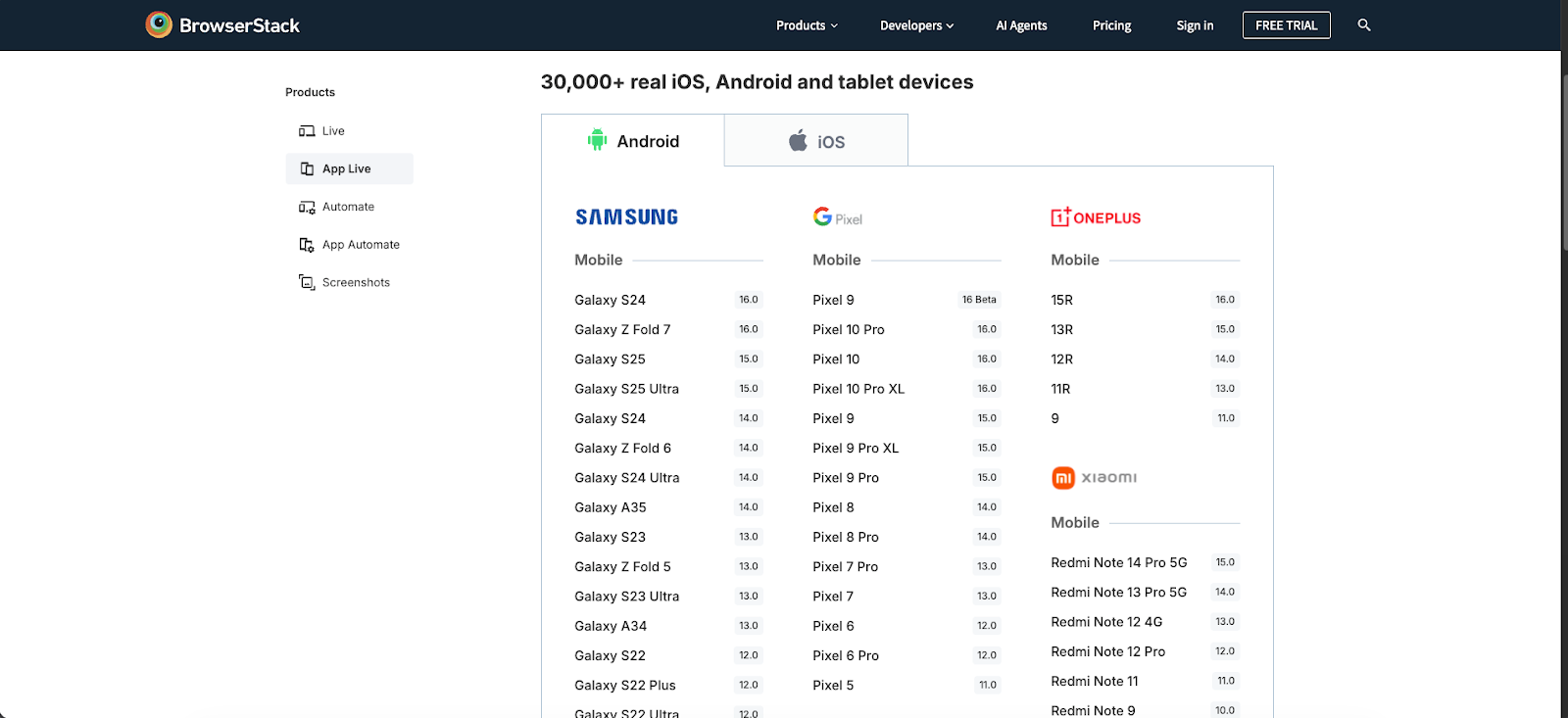
BrowserStack remains the industry titan, recently expanding its fleet to over 30,000 real devices. It is the go-to platform for teams that need to test both web and mobile apps seamlessly.
- Pros: Immediate access to the latest iPhone and Android models (often within 24 hours of launch); excellent documentation; rich integration with IDEs (VS Code) and CI/CD tools.
- Cons: One of the most expensive options on the market; the interface can feel "heavy" due to the sheer number of features.
- Limitation: Performance logs can sometimes be overwhelming for beginners to navigate without training.
- Ideal Use Case Example: A fintech company launching simultaneously in the US, Europe, and Southeast Asia can validate device compatibility across region-specific OS builds within hours using BrowserStack’s large inventory.
For more details, click here
Ready to turn your app vision into a reality? Get started with Zignuts expert Android app developers.
**Hire now**Hire Now**Hire Now**Hire now**Hire now

2. Sauce Labs
Best For: Deep AI-driven insights and enterprise-grade reliability.
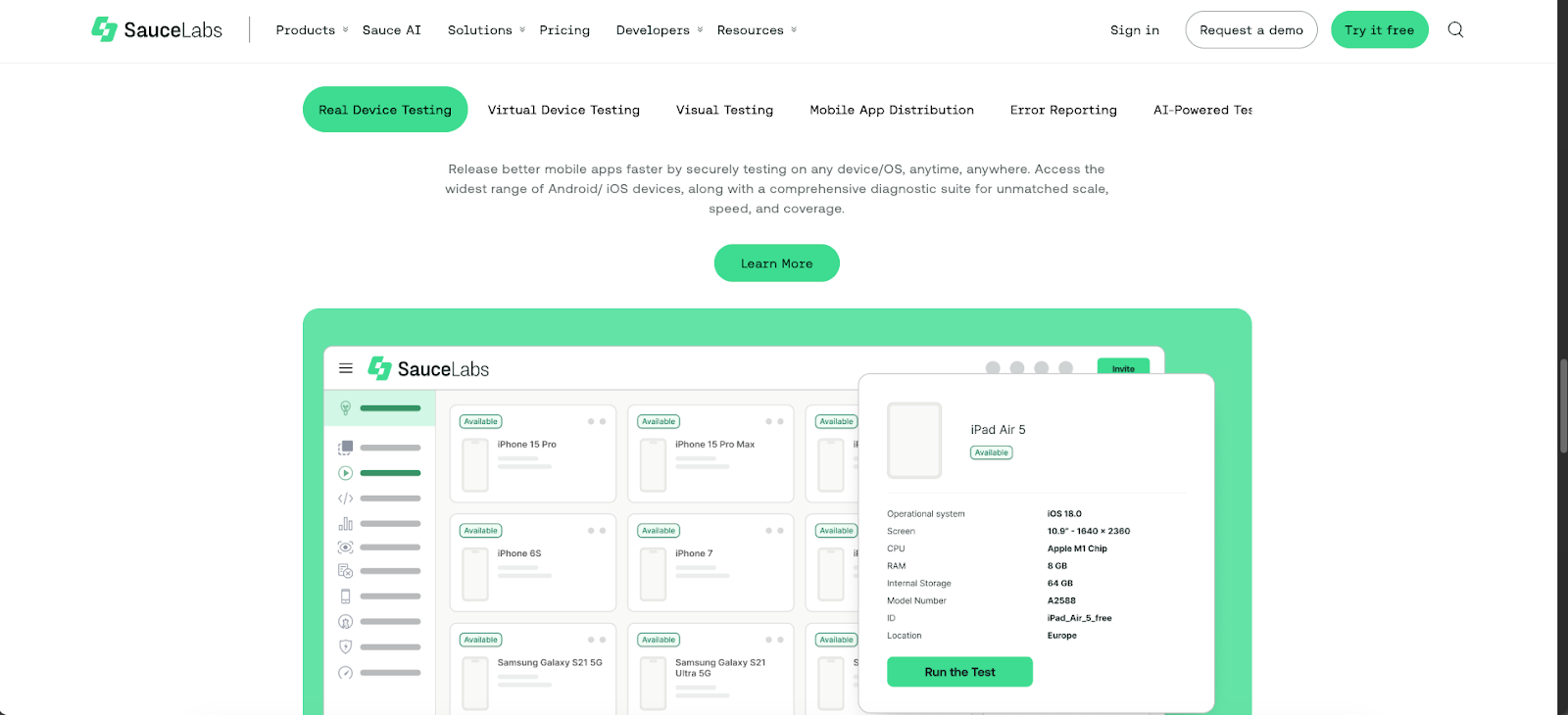
Sauce Labs has pivoted heavily into Sauce AI, which uses machine learning to help teams find the root cause of failures using natural language queries.
- Pros: Advanced "Real Device API" that allows for OS-level commands; unified visibility from development to production monitoring; robust security for highly regulated industries.
- Cons: Steeper learning curve compared to BrowserStack; pricing is complex and geared toward large enterprises.
- Limitation: The setup for private cloud instances can be time-consuming for smaller teams.
- Ideal Use Case Example: An enterprise SaaS organization running thousands of nightly regression tests benefits from Sauce AI’s failure clustering and natural language debugging queries.
For more details, click here
3. LambdaTest (TestMu AI)
Best For: Speed and cost-effectiveness.
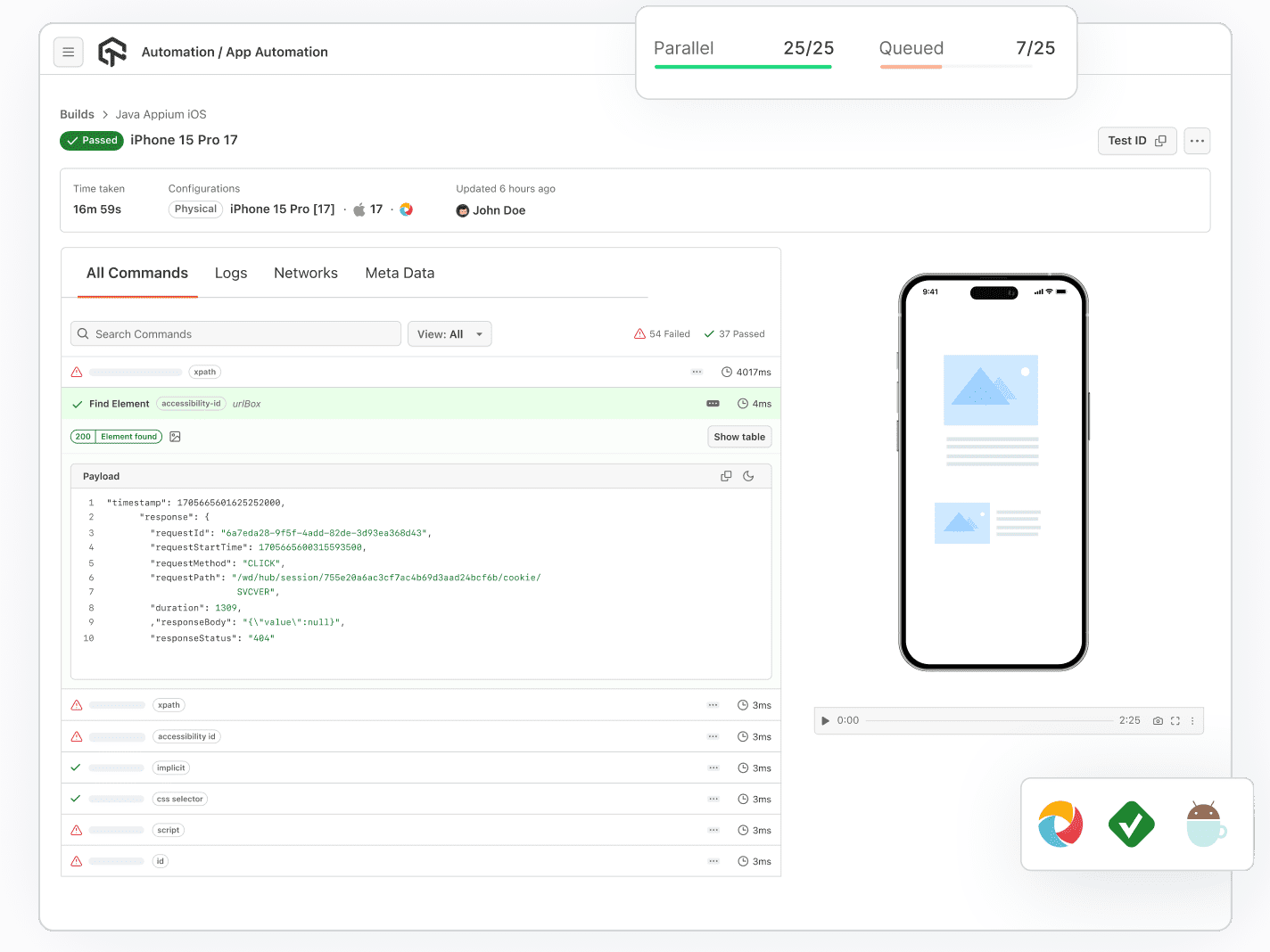
LambdaTest’s HyperExecute technology has changed the game by orchestrating tests to run up to 70% faster than traditional cloud grids.
- Pros: Highly competitive pricing; high concurrency limits (run hundreds of tests at once); modern, clean user interface.
- Cons: Historically smaller device lab than BrowserStack (though growing rapidly); some niche legacy OS versions may be missing.
- Limitation: Primarily focused on web/mobile automation; manual testing features are solid but secondary.
- Ideal Use Case Example: A fast-scaling startup preparing for a product launch can execute parallel tests across 100+ environments without dramatically increasing infrastructure costs.
More details, click here
Ready to launch high-quality, bug-free applications? Partner with Zignuts’ dedicated manual QA testers to ensure a flawless product experience.
**Hire now**Hire Now**Hire Now**Hire now**Hire now
4. Kobiton
Best For: Teams that want to manage their own devices alongside the cloud.
Kobiton excels in Device Lab Management (DLM), allowing you to connect your local "on-desk" devices to their cloud infrastructure for a hybrid testing environment.
- Pros: Superior AI-powered scriptless automation (capture a manual session and turn it into a script); high-frame-rate streaming for low-latency manual testing.
- Cons: Mobile-only focus (limited desktop web testing); can be buggy when connecting certain older local devices.
- Limitation: The "Lightning Mode" for high speed is excellent but requires specific high-bandwidth environments.
- Ideal Use Case Example: A QA team maintaining both in-office devices and cloud-based automation can centralize their entire device lab using Kobiton’s hybrid management system.
For more details, click here

5. AWS Device Farm
Best For: Existing AWS customers with massive automation needs.
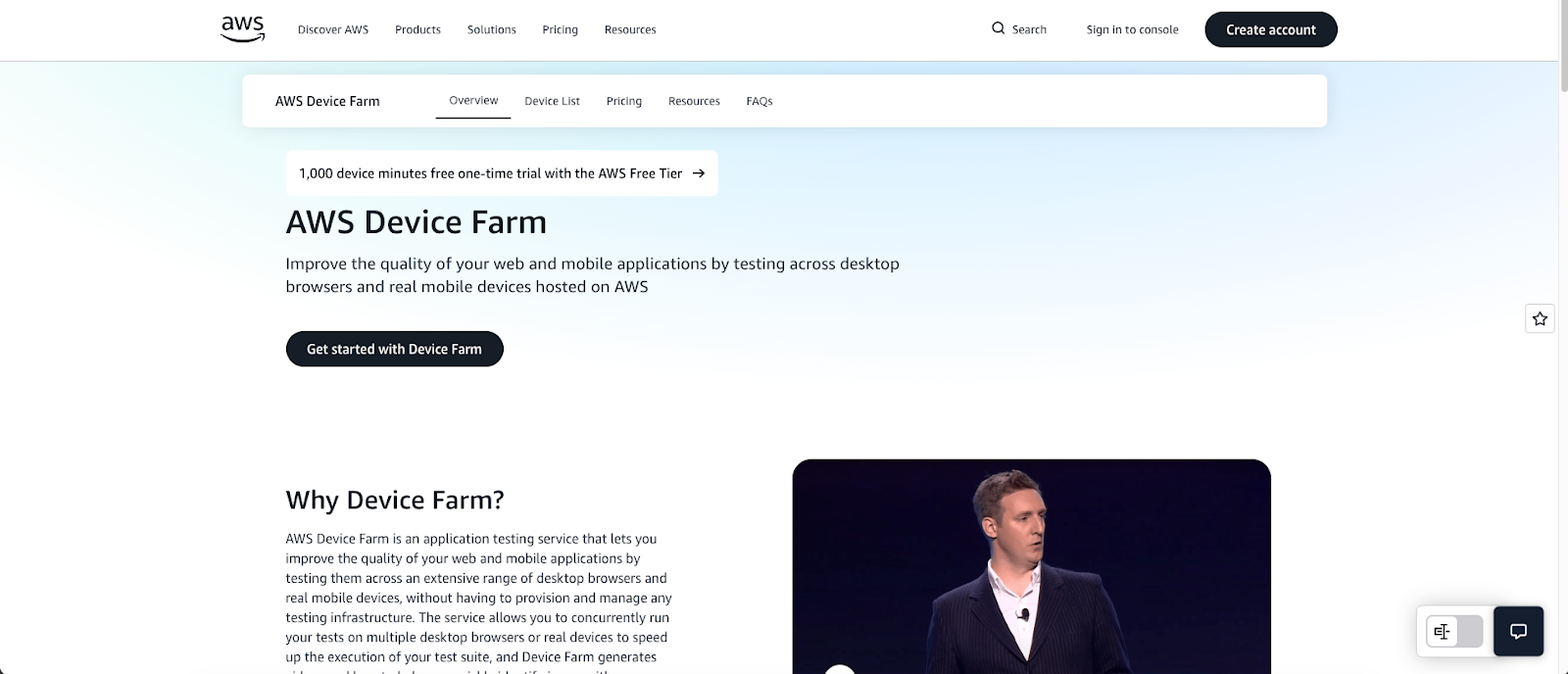
If your entire stack is on Amazon Web Services, Device Farm is the most logical choice. It offers a unique pay-per-minute model.
- Pros: No monthly subscription required (pay only for what you use); seamless integration with AWS CodePipeline and CloudWatch.
- Cons: Limited manual testing features compared to competitors; documentation is often technical and geared toward DevOps engineers.
- Limitation: Slower to add the latest consumer devices compared to specialized labs like BrowserStack.
- Ideal Use Case Example: A DevOps-heavy team already using AWS CodeBuild and CodePipeline can integrate mobile testing seamlessly into their CI/CD workflow.
More detail, click here
Comparison Summary
General Benefits and Limitations
The Benefits
- Zero Maintenance: No need to worry about charging, updating, or repairing physical phones.
- Parallel Testing: Run tests on 50 different devices simultaneously to cut a 10-hour test suite down to 15 minutes.
- Real-World Conditions: Test features like Biometrics (FaceID/Fingerprint), Geolocation, and different network speeds (3G/4G/5G).
The Limitations
- Internet Dependency: If your internet connection is unstable, the device streaming will lag.
- Latency: There is always a slight delay between your click and the device's reaction because the phone is physically in a data center across the world.
- Security Hurdles: While these firms are SOC2 compliant, very sensitive data may still require a "Private Cloud" setup, which is significantly more expensive.
Add a “Pricing Considerations in 2026” Section
The pricing landscape has evolved significantly:
- Subscription models remain dominant for predictable budgeting.
- Usage-based pricing is growing among DevOps-centric teams.
- AI-powered analytics features are increasingly sold as premium add-ons.
- Concurrency limits often impact total cost more than device count.
For startups, entry-level tiers typically start around $100–$200 per month, while enterprise plans can exceed $10,000 per month depending on scale and private cloud requirements.
Final Verdict: Which is the Best?
The "best" platform depends on your specific stage:
- The Best Overall: BrowserStack. Its massive device library and polished UI make it the most reliable choice for 90% of teams.
- The Best for ROI: LambdaTest. If you are on a budget but need high speed and 24/7 support, LambdaTest offers the best value for your money in 2026.
- The Best for Mobile-Only Teams: Kobiton. Their scriptless AI is a lifesaver for teams without heavy coding expertise.
Other device farms:





.webp)
.webp)
.webp)

.webp)
.webp)
.webp)
.webp)
.webp)
.webp)


