


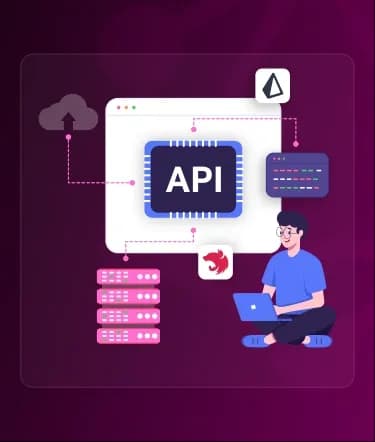

Building APIs today is not just about making endpoints work - it’s about maintainability, safety, and confidence. After working with REST, plain GraphQL, and multiple ORMs, I found that building a Type-Safe GraphQL API with NestJS and Prisma offers one of the cleanest and most reliable backend experiences available.
Most of the production issues caused by mismatched database fields and GraphQL resolvers - issues that slipped through tests and surfaced only at runtime. Moving to a fully type-safe stack fundamentally changed how we design and ship APIs.
This article walks through why this stack works so well, how to implement it, and lessons learned from real-world usage.
What Is a Type-Safe GraphQL API?
A type-safe GraphQL API ensures that your database schema, application logic, and GraphQL schema remain consistent at compile time.
Key Benefits
- Errors caught before deployment
- Strong IDE autocomplete
- Improved collaboration across teams
- Safe refactoring
With NestJS and Prisma, TypeScript becomes a source of truth rather than a convenience.
Why NestJS for GraphQL APIs
NestJS brings structure and clarity to GraphQL development.
What Observed in Real Projects (h3)
Before adopting NestJS, GraphQL resolvers gradually became unstructured and hard to test. NestJS solved this with:
- Dependency injection
- Clear separation of concerns
- Modular architecture
- Decorator-based schemas
NestJS makes GraphQL feel like a full backend framework rather than just a query layer.
Why Prisma Complements GraphQL Perfectly
Prisma is more than an ORM - it’s a type generation engine.
Experience
The moment Prisma generated fully typed database models, entire categories of bugs disappeared. Invalid queries simply failed to compile.
Prisma Advantages
- Excellent developer tooling
- Readable schema modelling
- Safe and predictable migrations
- Auto-generated TypeScript types
Type-Safe GraphQL API with NestJS and Prisma: Architecture
| Layer | Tool | Responsibility |
|---|---|---|
| API | GraphQL | Client-facing contract |
| Application | NestJS | Business logic |
| Database | Prisma | Data access and typing |
All layers communicate through strongly typed contracts.
Hire NestJS Developers Today!

Setting Up the Project
Create a NestJS Application
Add GraphQL Support
Enable auto schema generation:
Adding Prisma
Example schema:
Run migrations:
Creating Type-Safe GraphQL Models
This keeps GraphQL and TypeScript perfectly aligned.
Writing Type-Safe Resolvers
Prisma ensures query correctness, while GraphQL enforces schema integrity.
Advantages of a Type-Safe GraphQL API with NestJS and Prisma
Compile-Time Error Detection
Most issues are caught before deployment.
Faster Development
Autocomplete and refactoring dramatically reduce development time.
Safer Refactoring
Renaming fields or models becomes low-risk.
Improved Team Productivity
New developers understand the system faster.
Real Production Incident
In an earlier non-type-safe GraphQL project, a database column rename caused a silent failure in production. After migrating to Prisma and NestJS, similar issues were caught immediately at build time. That incident permanently changed my approach to backend architecture.
Best Practices
- Prefer code-first GraphQL
- Avoid any
- Centralise Prisma usage
- Use DTOs for input validation
- Enable strict TypeScript mode
Performance Considerations
Type safety does not reduce performance. Combined with:
- Prisma query optimisation
- GraphQL field selection
- NestJS caching
This stack scales effectively in production environments.
Conclusion
Building a Type-Safe GraphQL API with NestJS and Prisma significantly improves code quality, reliability, and developer confidence. Based on real-world experience, this stack reduces bugs, simplifies refactoring, and scales gracefully.
Once you adopt full type safety, it’s difficult to return to loosely typed APIs.

Ekta Trivedi
A Node.js enthusiast focused on building scalable, high-performance applications that power the next generation of web technologies

Bhavik Prajapati
Focused on ensuring product quality, refining user experiences, and delivering reliable, well-tested solutions across platforms.