


We’ve all been there. You have a brilliant idea, a tight deadline, and a budget to respect. You receive three quotes: two are professionally priced, and one is an absolute steal. It’s tempting. You think, “Code is code, right? Why pay more for the same features?”
Fast forward six months. The "steal" has turned into a nightmare. Your app crashes during demos, the original developer has gone quiet, and the code looks like a bowl of digital spaghetti.
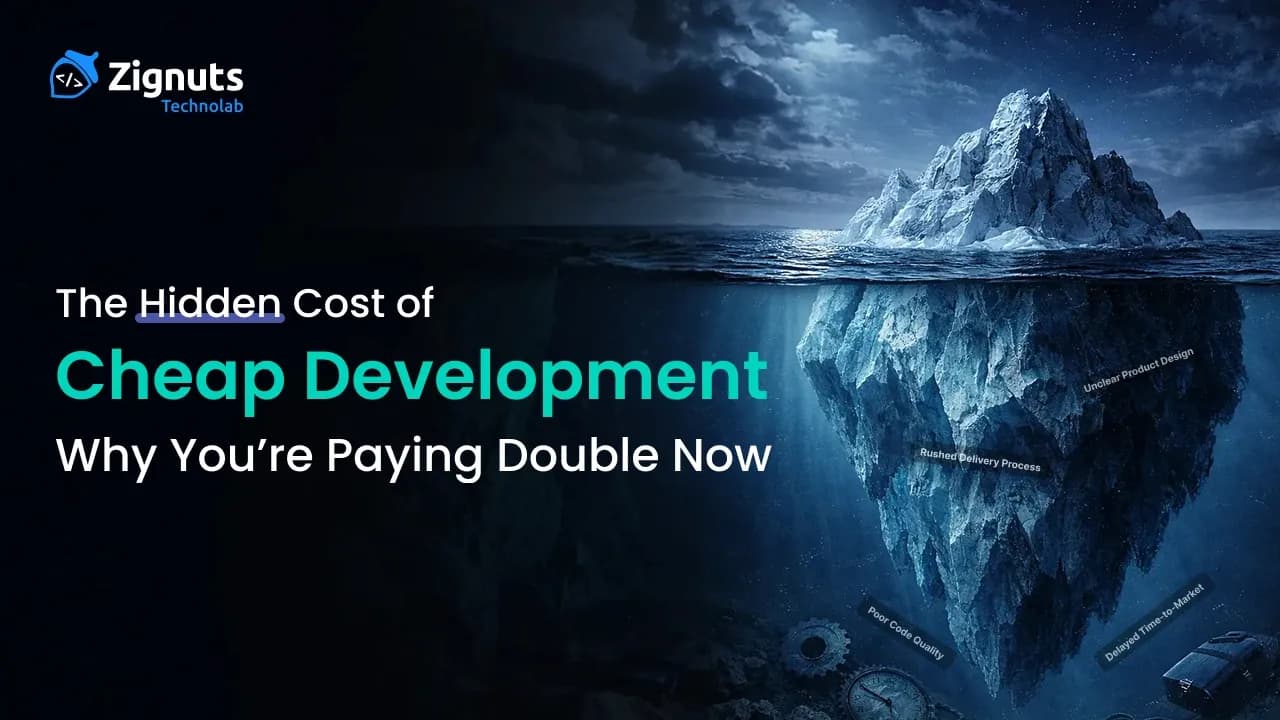
This is the "Cheap Development Paradox." When you try to save 40% upfront, you often end up spending 200% more just to make the software usable. Here is why "cheap" is the most expensive way to build software.
1. The Heavy Burden of Technical Debt
In software, technical debt is like a high-interest credit card. Cheap development teams often take shortcuts - skipping documentation, ignoring edge cases, or using outdated libraries - just to "make it work" for the launch.
Initially, things look fine. But as soon as you want to add a new feature, the whole system breaks. You end up paying new developers to spend weeks just understanding the mess before they can even write a single line of new code. You aren't paying for progress; you’re paying for the mistakes of the past.
2. The Scaling Wall
Cheap code is rarely built for growth. It’s usually built as a "monolith" that works for 10 users but collapses under the weight of 1,000.
- Performance Lags: Your database queries haven't been optimized.
- Security Holes: Basic protocols were ignored to save time.
- Rigidity: The software is so brittle that changing one color on the dashboard breaks the checkout flow.
If your business succeeds, your software shouldn't be the thing that kills it.
3. The "Management" Tax
When you hire a bargain-basement team, you become the project manager, the QA tester, and the therapist. You spend your nights debugging and your mornings' explaining basic requirements for the fifth time.
If you calculate the value of your own hourly rate, that "cheap" project suddenly becomes the most expensive investment of your life. Your time should be spent on growth and strategy, not on micromanaging a team that doesn't understand your vision.
Get Expert Software Rescue.

4. The Sunk Cost Fallacy: Why Businesses Stay Stuck
One of the biggest "hidden costs" isn't technical - it's emotional. Many founders realize their development team is failing, but they keep pouring money into it because they’ve already spent so much. This is the Sunk Cost Fallacy.
You tell yourself: "If I just give them one more month, they’ll surely finish the dashboard." But in "cheap" development, that month usually results in more bugs, not more features. Every dollar spent on a team that lacks the architecture to scale is a dollar you aren't spending on a team that can actually fix it. Recognizing that your current path is a dead end is the first step to saving your business from a total software collapse.
5. The Opportunity Cost (The Cost of Not Launching)
While you’re busy fixing "cheap" bugs, your competitors are capturing the market.
- Delayed Time-to-Market: While your developers struggle with a simple API integration, your window of opportunity is closing.
- Loss of Trust: If your early adopters experience a buggy, slow interface, they won't give you a second chance. Recovering a reputation is far more expensive than building a high-quality product from day one.
- Missed Funding/Revenue: Investors and customers can smell bad software. If the "under the hood" mechanics are messy, it signals a lack of professional standards that can scare away serious capital.
6. Security: The Billion-Dollar Shortcut
Cheap development often treats security as a "v2" feature. This is a catastrophic mistake.
- Hardcoded Credentials: To save time, inexperienced devs might hardcode passwords into the code.
- Unprotected Endpoints: Leaving data doors unlocked because "nobody will find it."
- Lack of Encryption: Storing sensitive user data in plain text.
A single data breach doesn't just cost money; it can end a company legally and reputationally. When you pay for quality development, you aren't just paying for features; you’re paying for insurance against disaster.
Is Your Project a Sinking Ship?
It’s a hard realization to come to, but most businesses reach a "point of no return" with poor development. You feel stuck. You’ve already invested so much that you’re afraid to walk away, yet you know that every dollar you put in now is just "throwing good money after bad."
Signs you need a rescue:
- You’re afraid to push updates because something always breaks.
- Your "simple" feature requests take months to implement.
- The original team has hit a technical wall they can't climb.
- Users are complaining about bugs that were "fixed" weeks ago.
Turning the Tide: The Rescue Mission
Software doesn't have to stay broken. There is a middle ground between "scrapping it all" and "suffering forever." It requires a team that understands how to perform Software Surgery - identifying the healthy parts of your build, cutting out the rot, and stabilizing the core so you can finally scale.
At Zignuts, we’ve seen it all. We’ve stepped into projects that were 90% "finished" but 0% functional. We don't just patch the holes; we rebuild the foundation so your software becomes an asset again, not a liability.
Stop Guessing. Start Recovering.
You’ve already paid the "cheap" tax. Now, it’s time to invest in a solution that actually works. Let’s audit your current build, identify the bottlenecks, and get your project back on the roadmap to success.
Don't let a bad start define your finish.
Revive Your Project with Zignuts Software Rescue Services →

Deep Mistry
Digital Marketing Enthusiast | Diving into the world of trends, tools, and strategies, sharing discoveries that help create impactful online experiences.