

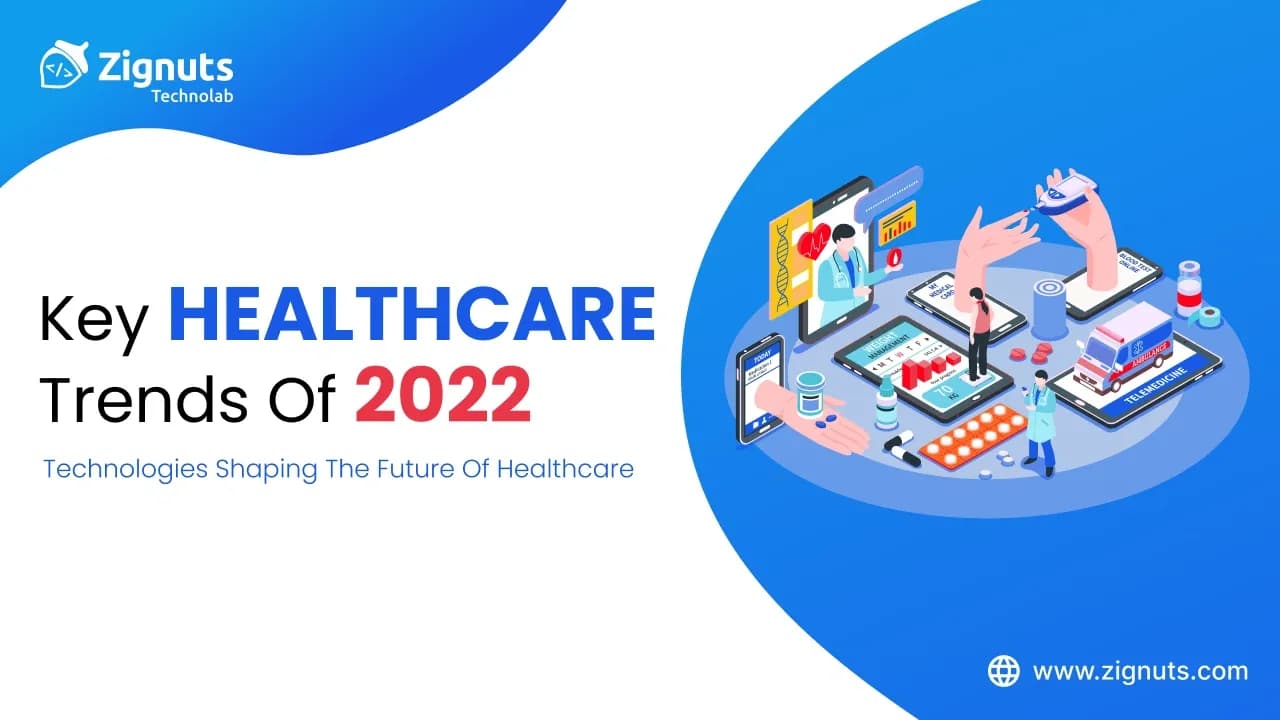
Healthcare remains the most dynamic industry on the planet, characterized by a relentless pace of innovation. As we navigate through 2026, the sector has moved far beyond simple digitization into an era of ambient intelligence and ultra-connected ecosystems. Recent breakthroughs have transitioned from experimental laboratory concepts to ground-breaking clinical realities, saving lives through predictive diagnostics and real-time intervention.
In 2026, we are firmly rooted in the era of Healthcare Informatics 2.0. This is the sophisticated intersection of data science, 6G connectivity, and clinical medicine. The goal is no longer just "going digital" it is about leveraging Healthcare Trends of 2026 to increase clinical capacity, treat patients with hyper-precision, and shift the global medical model from a reactive "sick-care" system to a proactive "well-care" architecture.
The introduction of Ambient Clinical Intelligence has further revolutionized the patient experience by allowing technology to work quietly in the background. Sensors and AI "agents" now handle administrative burdens and clinical documentation in real-time, reducing physician burnout by over 50%. With the integration of 6G networks offering terabit-per-second speeds and near-zero latency health data is now more accurate and actionable than ever before, enabling everything from instantaneous holographic consultations to remote robotic surgeries in underserved regions.
1. Soaring IoMT in the Medical Industry
Healthcare Trends of 2026
The Internet of Medical Things (IoMT) has evolved into the "Connected Nervous System" of modern medicine. In 2026, the IoMT market is projected to reach a staggering USD 63.7 billion for connected devices alone, with the total market valuation moving toward USD 370 billion by the end of the decade. This growth is fueled by the transition from passive monitoring to autonomous clinical intervention.
The Rise of Bio-Sensing "Digital Skins"
Modern wearables in 2026 have moved beyond the wrist. We are now seeing the mass adoption of smart patches and electronic skins ultra-thin, breathable adhesives that sit directly on the chest or arm. These clinical-grade biosensors are capable of detecting cardiac deterioration, respiratory distress, and glucose fluctuations days before a patient feels symptoms. Unlike the fitness trackers of the past, these 2026 devices utilize Edge AI, processing data locally on the device to provide instant haptic alerts for life-critical conditions like arrhythmias or sudden drops in blood oxygen.
"Hospital-at-Home" as the New Gold Standard
The most significant of the Healthcare Trends of 2026 is the maturation of the Hospital-at-Home (HaH) model. By deploying a kit of interconnected IoMT devices including AI-driven stethoscopes, smart pulse oximeters, and connected medication dispensers hospitals can now provide acute-level care in a patient's living room.
- Outcome: This shift has reduced hospital readmissions by up to 50% and cut the cost of chronic disease management by nearly USD 300 billion annually.
- Smart Medication: Connected pill bottles now track dosage adherence in real-time, automatically notifying care teams if a high-risk patient misses a critical dose.
6G-Enabled Real-Time Diagnostics
With the rollout of 6G networks in 2026, the latency issues that once hindered remote care have vanished. Medical businesses are now leveraging 1ms latency to perform Remote Diagnostic Imaging. A technician in a rural clinic can operate a high-definition ultrasound or MRI machine while a specialist hundreds of miles away views the live, holographic stream without a second of delay.
For medical businesses, investing in IoMT development and Wearable App Development is no longer a futuristic goal it is a mandatory requirement for survival in the 2026 healthcare landscape. Companies that fail to integrate these "always-on" data streams into their clinical workflows will find themselves obsolete in an industry that now demands real-time, data-backed precision.
Hire Mobile Developers Today!

2. Big Data in Effective Medical Data Processing
Healthcare Trends of 2026
In 2026, Big Data acts as the high-octane fuel for the entire healthcare engine. We have moved past simple data collection to the Synthetic Health Data Revolution, where Generative AI creates high-fidelity, privacy-compliant datasets. These synthetic twins allow researchers to train complex medical models without ever risking patient confidentiality, solving the privacy-utility paradox that once hindered innovation.
The global healthcare big data market is experiencing a massive surge, projected to exceed USD 100 billion by late 2026. This growth is driven by the industry's ability to process trillions of data points from 6G-enabled devices in milliseconds.
Transitioning to Predictive and Prescriptive Analytics
The most significant shift in the Healthcare Trends of 2026 is the move from descriptive analytics (what happened?) to Prescriptive Analytics (what should we do?).
- Predictive Disease Modeling: By sifting through billions of historical records and real-time biometric streams, Big Data systems now provide AI-Powered Risk Scoring. These systems can predict a cardiac event or the onset of sepsis up to 48 hours before clinical symptoms appear, allowing for life-saving pre-emptive strikes.
- Operational Efficiency: Beyond clinical care, Big Data is optimizing hospital logistics. Predictive models now forecast patient admission rates with 95% accuracy, allowing administrators to adjust staffing and supply chain requirements before a bottleneck occurs.
Hyper-Personalized Treatment and Pharmacogenomics
In 2026, the "one-drug-fits-all" approach is a relic of the past. Big Data facilitates Hyper-Personalized Treatment by dynamically integrating a patient's unique genetic code, environmental factors, and real-time lifestyle data.
- Tailored Prescriptions: Doctors now use pharmacogenomic data pools to identify which medications will be most effective for a specific individual, reducing adverse drug reactions by an estimated 30%.
- Scientific Research Acceleration: Global data interoperability allows researchers to access anonymized global data pools, accelerating the search for cures for rare diseases from decades to months.
The Role of 6G in Data Velocity
The integration of 6G technology has eliminated the "data lag" that previously limited Big Data’s potential. With 6G, the Healthcare Trends of 2026 include "Zero-Latency Insight." Massive medical imaging files, such as 4K pathology slides or 3D organ scans, are now uploaded and analyzed by cloud-based AI in seconds, providing immediate decision support to surgeons mid-operation.
3. Artificial Intelligence: The Autonomous Copilot
Healthcare Trends of 2026
Artificial Intelligence has transitioned from a "miracle technology" to an essential "clinical wingman." In 2026, failing to use AI in a clinical setting is increasingly viewed as a liability. With a global shortage of healthcare professionals reaching critical levels, AI Agents and Ambient Listening Tools have stepped in to handle 90% of clinical documentation, effectively returning the "human touch" to the patient-doctor relationship.
The Shift to Agentic AI and Autonomous Workflows
The most significant leap in the Healthcare Trends of 2026 is the move from "Chatbots" to Agentic AI. Unlike the generative models of previous years that simply provided information, 2026’s AI agents can execute complex, multi-step tasks autonomously.
- Journey Management: These agents now manage the entire patient journey from triaging initial symptoms and scheduling diagnostic tests to flagging anomalies in lab results and managing follow-up care without human intervention.
- Revenue Cycle Automation: AI agents now predict and prevent insurance denials before they happen, autonomously correcting coding errors and verifying medical necessity scores, which has saved the global industry an estimated $900 billion this year.
Ambient Clinical Intelligence (ACI)
One of the standout Healthcare Trends of 2026 is the widespread adoption of Ambient Clinical Intelligence.
- Zero-Click Documentation: Using sophisticated Natural Language Processing (NLP), ambient devices "listen" to patient-clinician conversations. They filter out small talk, understand medical context, and automatically draft structured SOAP notes directly into the EHR within seconds of the visit ending.
- Burnout Reduction: This technology has reduced physician documentation time by up to 75%, effectively eliminating "pajama time" (after-hours charting) and allowing nurses and doctors to focus entirely on the patient in front of them.
Generative AI in Drug Discovery and Genomics
In 2026, AI is no longer just predicting drug behavior; it is simulating human biology at the molecular level.
- Affordable Cures: By simulating billions of molecular interactions through "Digital Twins" of human cells, researchers are bringing affordable drugs to market in record time. AI-enabled discovery workflows have shortened early-stage timelines by 40%.
- CRISPR x AI: The intersection of gene editing and AI has reached a tipping point, with AI copilots now designing safer, more precise genetic splice patterns to treat previously incurable conditions like cystic fibrosis and muscular dystrophy.
Diagnostic Precision and Triage
The Healthcare Trends of 2026 have made AI-driven diagnostics ubiquitous.
- Smarter Imaging: FDA-cleared AI tools now assist in over 70% of radiology and pathology reviews. These systems act as a "second set of eyes," catching micro-fractures, early-stage cancers, and brain bleeds with an accuracy rate that exceeds manual human inspection by 15%.
- Continuous Monitoring: AI-powered triage bots now integrate with a patient's wearables to monitor pain levels and psychological distress 24/7. If a patient's vocal patterns or heart-rate variability indicate a crisis, the AI agent proactively alerts the care team before an emergency occurs.
4. AR/VR and Spatial Computing in the Medical Mission
Healthcare Trends of 2026
Imaging informatics has been revolutionized by Spatial Computing. In 2026, AR/VR is used for much more than training; it is a primary tool for Surgical Navigation and Personalized Patient Engagement. The "helmet" designs of the past have been replaced by sleek, lightweight mixed-reality glasses that allow clinicians to blend digital data seamlessly with the physical world.
X-Ray Vision and Autonomous Navigation
Surgeons now use AR overlays to see "through" a patient's skin with millimeter precision. By mapping internal organs, tumors, and blood vessels into a 3D hologram before a single incision is made, the risk of hitting critical structures is nearly eliminated.
- Intraoperative Guidance: In 2026, these systems are "context-aware." Using SLAM (Simultaneous Localization and Mapping) and AI, the AR display automatically highlights the optimal incision path and warns the surgeon if they deviate from the pre-operative plan.
- Proficiency Gains: Studies in 2026 show that surgeons using spatial navigation are 6 times less likely to make errors and complete procedures up to 29% faster than those using traditional 2D monitors.
VR as a "Prescription" for Pain and Mental Health
For patients, VR has transitioned from a gadget to a powerful Digital Therapeutic (DTx). In 2026, the FDA has cleared over 90 AR/VR medical devices, many specifically for pain management and mental health.
- Opioid Alternative: Immersive VR environments such as "RelieVRx" are used to treat chronic lower back pain and post-operative trauma, reducing pain scores by over 50% and significantly lowering the need for high-dose opioids or heavy sedation.
- Spatial Physical Therapy: Patients recovering from strokes use AR-guided home exercises. The system tracks their movements in 3D space, providing real-time haptic feedback to ensure they are performing the movements correctly, essentially bringing a "digital twin" of their therapist into their living room.
Tele-medicine 3.0: The Virtual Consult Room
The most futuristic of the Healthcare Trends of 2026 is the arrival of Tele-medicine 3.0. Specialists no longer just look at a patient through a webcam; they enter a shared virtual consultation room.
- Holographic Health Data: Both the doctor and patient can interact with 3D models of the patient's own health data such as a 3D-reconstructed MRI of a joint allowing for a level of explanation and understanding that was impossible with 2D charts.
- Global Proctored Surgery: Expert surgeons can now "teleport" into an operating room on the other side of the world via AR. They can place 3D annotations directly into the local surgeon's field of view, guiding complex radical procedures in real-time as if they were standing at the table.
5. EHR, Cloud, and Edge Computing
Healthcare Trends of 2026
The healthcare cloud computing market has officially surpassed USD 74 billion in 2026, driven by a global mandate for instant data accessibility and the massive storage requirements of high-resolution medical imaging. However, the most transformative shift this year is the rise of Edge Computing as the primary layer for real-time care.
The Rise of the "Intelligence at the Edge"
Because 2026 demands sub-millisecond responses, critical data is now processed directly on the wearable device or a local hospital gateway (the "edge") rather than traveling to a distant central server.
- Life-Saving Low Latency: This reduction in "data travel time" is critical for closed-loop systems like automated insulin pumps and smart pacemakers, which must make split-second decisions without relying on a stable internet connection.
- Bandwidth Efficiency: By filtering noise at the source, edge devices only send essential, summarized data to the cloud, reducing network congestion and lowering operational costs for healthcare providers.
Fully Interoperable Hybrid Cloud Ecosystems
The Healthcare Trends of 2026 have finally solved the "data silo" problem. Electronic Health Records (EHR) are now hosted on secure, hybrid cloud systems that utilize FHIR (Fast Healthcare Interoperability Resources) 5.0 standards as the default.
- Patient Data Portability: A patient's medical history now follows them seamlessly across borders and different hospital systems via a secure "Digital Health Passport."
- Sovereign Security: These hybrid models allow hospitals to keep sensitive patient identifiers on-premises while leveraging the public cloud's massive computing power for anonymized research and AI training.
6. Revolutionizing Robotics and Nanotechnology
Healthcare Trends of 2026
Robotics and Nanotechnology have moved from the realm of science fiction into standard clinical practice. In 2026, the global medical robot market is valued at over USD 14 billion, transitioning from general assistance to highly specialized, autonomous surgical and cellular interventions.
Autonomous Exoskeletons and Bio-Hybrid Robotics
Wearable robotic platforms have become the primary tool for physical therapy and daily assistance.
- Neuro-Integrated Exoskeletons: In 2026, exoskeletons are no longer just mechanical braces; they integrate with Brain-Computer Interfaces (BCI), allowing paralyzed patients to control leg movements through thought alone.
- Elderly Mobility: Lightweight "soft robotics" are now used by the elderly to prevent falls and assist with muscular weakness, significantly extending independent living years.
Nanobots: The "Internal Surgeons"
Nanotechnology has reached a "Quality by Design" era in 2026. Microscopic machines and lipid nanoparticles are now used for Targeted Drug Delivery, acting as guided missiles within the human body.
- Precision Oncology: Nanobots travel through the bloodstream, programmed to recognize the unique chemical signatures of cancer cells. They release high-potency chemotherapy only upon contact, sparing healthy tissue and virtually eliminating the systemic side effects like hair loss and nausea.
- Cellular Repair: Advanced nanostructures are now being used to cross the blood-brain barrier to deliver gene-editing payloads directly to neurons, offering new hope for treating Alzheimer's and Parkinson's.
Mechano-responsive Therapeutics
One of the most exciting Healthcare Trends of 2026 is the emergence of Mechano-responsive Therapeutics. These are intelligent nanomaterials designed to sense and respond to the body's physical environment.
- Smart Implants: Orthopedic implants can now detect abnormal physical stress or the early signs of infection. Upon sensing these "mechanical cues," the implant can autonomously release anti-inflammatory agents or trigger a localized healing response.
- Force-Activated Medicine: These drugs remain inert until they reach a specific area such as a high-pressure blood clot where the physical force triggers the release of the medication exactly where it is needed.
7. Hyper-Personalized Medicine and Genomic AI
Healthcare Trends of 2026
The era of "one-size-fits-all" medication has officially ended. In 2026, Genomic AI has become the gold standard for clinical decision-making. By utilizing advanced transformer-based models and GPU-accelerated analysis pipelines to decode a patient’s entire DNA sequence in hours, doctors can now predict with 99% accuracy how a specific body will react to a drug. With sequencing costs now dropping below $500, genomic insights are no longer a luxury but a fundamental component of the standard Electronic Health Record (EHR).
The Multi-Omics "Biological Blueprint"
This trend is moving beyond basic genetics into Multi-Omics, where AI integrates data from proteins (proteomics), metabolites (metabolomics), and even the gut microbiome to create a comprehensive "Biological Blueprint."
- Dynamic Dose Optimization: These Healthcare Trends of 2026 allow for real-time dose adjustments. AI systems monitor how your body metabolizes chemicals today, based on your current stress levels and diet, rather than relying on static data from a month ago. For example, closed-loop insulin pumps and AI-guided radiotherapy now use real-time physiological feedback to modify dosages instantly, maximizing efficacy while minimizing toxicity.
- Early Detection of Rare Diseases: By identifying "molecular signatures" years before physical symptoms appear, Genomic AI is turning previously untreatable conditions into manageable chronic states. AI-driven liquid biopsies and genomic screening tools can now flag early-stage cancers with a precision that was impossible just a few years ago.
- AI-Powered "Digital Twins": In 2026, physicians use virtual replicas of a patient's biological systems Digital Twins to simulate the impact of various treatments before applying them in real life. This "test-drive" approach reduces the risk of adverse reactions and ensures the selected therapy path is the most likely to succeed.
- Accelerated Drug Access: The integration of Pharmacogenomics into drug development has slashed clinical trial timelines. AI-driven patient stratification matches individuals to trials based on their unique mutation profiles, boosting success rates and bringing life-saving orphan drugs for rare genetic diseases to market at record speed.
8. Digital Therapeutics (DTx) and Mental Health
Healthcare Trends of 2026
Software is now being "prescribed" just like a pill. Digital Therapeutics (DTx) have emerged as a USD 4.5 billion pillar of the industry in 2026. These are clinically validated, FDA-cleared software applications used as primary treatments for conditions ranging from chronic insomnia and ADHD to Type 2 Diabetes and addiction.
AI-Driven Digital Companions
In the realm of mental health, AI-driven "Digital Companions" provide 24/7 support that bridges the critical gap between therapist sessions. Unlike the generic chatbots of the past, these 2026 companions are built on Multimodal LLMs that can process text, voice, and even facial expressions to offer empathetic, context-aware support.
- Voice-Stress Analysis: Using high-fidelity microphones on 6G-connected devices, these apps detect early vocal tremors, shifts in speech rate, or pattern changes that signal a depressive episode or anxiety attack before the patient even realizes it. By 2026, these tools have achieved a 90% accuracy rate in predicting relapse in patients with bipolar disorder.
- Gamified Behavioral Therapy: Many Healthcare Trends of 2026 in DTx use immersive gamification to keep patients engaged in Cognitive Behavioral Therapy (CBT). By turning coping exercises into interactive "missions," adherence rates have climbed to 40% higher than traditional paper-based or video methods.
- Real-Time Crisis Intervention: In 2026, AI companions act as a direct link to emergency services. If the software detects markers of self-harm or severe crisis through sentiment analysis, it can immediately alert a human crisis counselor while simultaneously providing the patient with grounding exercises to de-escalate the situation.
- Integrated Biometric Feedback: Modern DTx apps now sync with smart rings and patches to monitor physiological signals like Heart Rate Variability (HRV) and cortisol levels. If the body shows signs of physical stress, the app proactively initiates a "micro-therapy" session, such as guided breathing or a mindfulness prompt, to reset the nervous system in real-time.
Closing the Accessibility Gap
These Healthcare Trends of 2026 are effectively democratizing mental healthcare. With a global shortage of human therapists, DTx offers a scalable, stigma-free, and affordable alternative for millions. In 2026, major insurance providers have officially added "Digital Prescription" codes to their standard coverage, allowing doctors to prescribe these apps as a first-line treatment for mild to moderate mental health conditions.
Hire Mobile Developers Today!
9. Zero-Trust Cybersecurity and Data Privacy
Healthcare Trends of 2026 [h3]
As medical data becomes the world’s most valuable commodity, it has also become the biggest target for sophisticated ransomware and "double-extortion" attacks. In 2026, the industry has fully transitioned to a Zero-Trust Architecture. This framework operates on the principle of "never trust, always verify," requiring strict identity verification for every single entity from a surgeon’s tablet to an automated IV pump or a patient's connected pacemaker.
Micro-Segmentation and Device Lifecycle Management
The Healthcare Trends of 2026 go beyond simple firewalls. Security is now granularly embedded into the network fabric through Micro-Segmentation.
- Containment by Design: By isolating medical devices into smaller, protected zones, a breach in a hospital’s guest Wi-Fi cannot spread to critical life-support systems.
- Proactive Lifecycle Security: Hospitals now use AI-driven Asset Management to monitor every connected device. If a smart implant shows signs of outdated firmware or unusual data traffic, the Zero-Trust system automatically quarantines the device until it is patched, preventing it from becoming a "backdoor" for hackers.
Quantum-Resistant Encryption & Self-Sovereign Identity
With 6G connectivity enabling the transfer of massive, high-fidelity datasets, hospitals are now utilizing Post-Quantum Cryptography (PQC). This ensures that sensitive genetic and clinical data remains secure even against the future threat of quantum-level decryption.
- Blockchain Health Passports: One of the standout Healthcare Trends of 2026 is the move toward Self-Sovereign Identity (SSI). This gives patients total ownership of their records on a secure, decentralized "Health Passport." Using a digital wallet, patients can grant "Selective Disclosure" for example, sharing their vaccination status without revealing their full medical history.
- Non-Human Identity (NHI) Frameworks: In 2026, security isn't just for people. AI agents and IoT sensors now have their own "machine identities." Zero-Trust protocols ensure that an AI agent only accesses the "minimum necessary" data required to complete its clinical task.
AI-Powered Compliance and PHI Auditing
Manual compliance checks are a thing of the past. In 2026, Automated Compliance Platforms perform real-time auditing of all Protected Health Information (PHI) access.
- End-to-End Auditability: Every time a record is viewed or a prescription is adjusted, an AI-generated, immutable log is created on a blockchain ledger. This provides an irrefutable trail for HIPAA or GDPR audits.
- Anonymization-at-the-Edge: Before medical data is sent to the cloud for research, AI "Redaction Agents" automatically strip or tokenize personally identifiable information (PII), ensuring that data privacy is maintained at the point of origin.
Conclusion: Embracing the Future of Healthcare Innovation
As we have explored, the Healthcare Trends of 2026 represent a total shift in the human experience. We are no longer waiting for sickness to strike; we are predicting it, preventing it, and treating it with a level of precision that was once considered science fiction. From the microscopic precision of nanobots to the hyper-connected ecosystems of IoMT and 6G-enabled tele-medicine, the boundary between technology and biology has effectively dissolved.
The transition to Healthcare Informatics 2.0 means that clinical success now depends on a provider's ability to manage data as effectively as they manage patients. Whether it is implementing Zero-Trust Cybersecurity to protect sensitive genomic blueprints or deploying Digital Therapeutics to bridge the mental health accessibility gap, the digital infrastructure of a medical business is now its most critical asset.
For medical businesses and healthcare startups, the mandate is clear: to thrive in this era of ambient intelligence, you must Hire Mobile App Developers who specialize in the complexities of IoMT, AI integration, and secure cloud architecture. The right technical partner doesn't just build an app; they build a life-saving ecosystem that meets the rigorous standards of 2026.
Ready to revolutionize your healthcare services? At Zignuts, we help you navigate these complex Healthcare Trends of 2026 by delivering state-of-the-art digital solutions tailored to your clinical needs. Whether you need to integrate AI copilots or develop clinical-grade wearable applications, our team is ready to help you lead the industry. Contact Zignuts today to start a conversation about your next breakthrough in healthcare technology.

Zignuts Technolab
Zignuts Technolab delivers future-ready tech solutions and keeps you updated with the latest innovations through our blogs. Read, learn, and share!