

Introduction to Progressive Web Apps
In the digital landscape of 2026, the boundaries between software and the web have effectively vanished. Users now expect instantaneous, high-fidelity experiences that work across every foldable, wearable, and desktop interface they own. This is where the modern web excels by bridging the gap between traditional browser-based sites and heavy native software. These systems represent a sophisticated evolution in development, offering a polished user journey that feels identical to a downloaded app while staying anchored in the open web.
The current year has seen a massive shift in how these applications interact with hardware. Beyond just mobile screens, the latest versions are fully optimized for the booming foldable market, dynamically remapping their interfaces as devices expand or contract. By utilizing the latest browser engines and WebAssembly, these tools provide fluid, deeply engaging, and stable environments that remain functional regardless of how patchy a user's satellite or cellular connection might be.
Furthermore, the integration of on-device AI and edge computing allows these applications to deliver hyper-personalized content without the latency of traditional server requests. This ensures that the digital environment is not only fast but also context-aware, adapting to the user’s real-time needs and surroundings. As businesses move away from the high fees and restrictive policies of centralized app stores, these web-based solutions have become the strategic gold standard for reaching a global audience with a single, unified codebase.
What is a Progressive Web Apps?
A modern digital solution in this category is essentially a mobile-optimized website that acts like a high-performance application without the friction of a storefront download. These platforms serve as a powerful tool for organizations looking to refine mobile interactions and solve the problem of abandoned shopping carts or low engagement. By using the core building blocks of the internet, they provide a native-style feel with rapid transitions and smooth navigation, even when data speeds are throttled.
In the 2026 tech landscape, these applications have moved beyond simple web shortcuts to become "PWA 2.0" systems. They leverage advanced browser engines and WebAssembly to handle heavy tasks like real-time video editing or complex data visualization that were once limited to desktop software. Because they exist on the web, they bypass the 15-30% commissions often charged by traditional digital stores, allowing businesses to keep more of their revenue while maintaining a direct relationship with their customers.
These applications merge the simple reach of a URL with the advanced capabilities of a smartphone. You can launch them from your home screen, receive haptic feedback, and view content without a live signal. They load with incredible speed, ensuring a frictionless experience. By following modern architectural standards, creators can build environments that are searchable by Google, easy to install, and fully integrated with system-level features like biometric security and spatial location services.
Key Technical Advancements in 2026:
- Biometric Authentication: Modern versions now use secure WebAuthn protocols, allowing users to log in with a fingerprint or facial scan directly through the browser interface.
- Intelligent Edge Caching: By utilizing global edge networks, these apps predict user behavior and pre-load necessary data before the user even clicks, making the experience feel instantaneous.
- Hardware Interoperability: They can now communicate with physical hardware via WebBluetooth and WebUSB, enabling them to control smart home devices or industrial machinery.
- Native File System Access: Users can now grant permission for these applications to read or write files directly to their device’s storage, making them a viable replacement for traditional document and photo editors.
- Background Sync & Fetch: Data transfers and updates continue even if the user closes the window, ensuring that the latest messages or downloaded media are ready the next time the app is opened.
Hire Web Developers Today!

Key Features of Progressive Web Apps
Progressive Enhancement
The architecture focuses on a "core-first" mentality. Basic features work for everyone, but the experience scales up beautifully for those using the latest 2026 hardware and browser versions, ensuring no user is left behind. This principle has expanded to include AI-driven feature detection, where the application identifies the device’s processing power in real time to decide whether to run complex tasks locally or offload them to the edge. This adaptive approach ensures that a user on a high-end 2026 flagship receives a premium interface with neural processing, while someone on an older device still enjoys a stable, functional version of the software.
Responsive Design
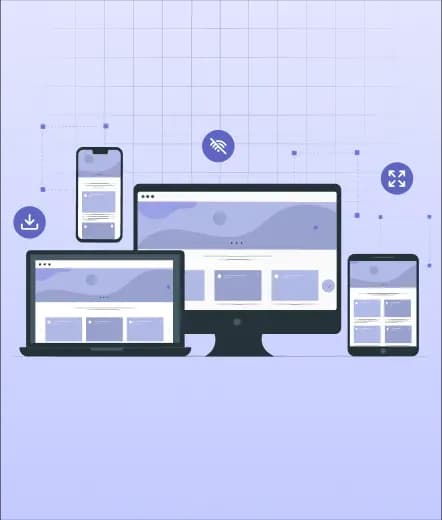
Through fluid grids and intelligent media queries, the interface reshapes itself instantly. Whether viewed on a smart glasses overlay or a massive ultrawide monitor, the layout remains intuitive and visually striking. In 2026, this also means "Adaptive Continuity," where the app remembers your scroll position and active tasks as you move from a phone to a desktop or a foldable screen. The design logic now accounts for multi-form factor devices, ensuring that the UI elements shift dynamically as a screen is unfolded or docked into a workstation.
Connectivity Independence
Advanced background scripts allow these systems to store vital data locally. This means the software remains operational in "dead zones," providing a reliable tool for users in transit or remote areas. Modern "Background Fetch" capabilities now allow the app to download large media files or database updates even after the user has navigated away, ensuring the latest content is ready for the next session. This feature is particularly crucial for enterprise tools and travel applications where users often move through areas with zero network coverage.
App-Like Interactions
By utilizing smart data fetching and localized processing, the interface removes the "white screen" flash of traditional loading. The result is a tactile, smooth motion that feels deeply integrated into the device. This is further enhanced by WebGPU support, allowing for 60fps animations and high-fidelity 3D graphics that were previously only possible in native gaming software. Every swipe, tap, and transition is engineered to be instantaneous, mimicking the haptic response and fluidity of a local executable file.
Fresh Content
Data stays current through background synchronization. Even when you aren't looking at the screen, the system fetches the latest updates so that everything is ready the moment you open it. Periodic Background Sync now enables the app to refresh its cache during "low-power" windows, like when the device is charging at night, to provide a completely fresh experience every morning. This ensures that news feeds, financial data, and social interactions are updated silently without requiring a manual refresh from the user.
Safety and Security
Encryption is a non-negotiable standard. By operating exclusively over protected tunnels, user data remains shielded from external interference or unauthorized snooping. The 2026 standard has evolved to include Zero-Trust architecture, where every hardware request (like camera or location) is verified for identity and intent, providing a safer environment than many older native apps. Furthermore, since these applications run in a browser sandbox, they provide a secondary layer of protection against malware that could otherwise compromise the entire operating system.
Discoverability
Unlike closed ecosystem software, these are visible to search crawlers. This means your platform can be found through a simple search query, drastically increasing organic growth and visibility. Furthermore, they are compatible with "Web Monetization" protocols, allowing creators to receive micro-payments directly through the browser without needing third-party payment processors. In the current SEO landscape, these platforms often outrank traditional sites due to their superior performance metrics and user engagement scores.
Re-Engagement
Smart alerts keep the conversation going. Users receive relevant updates and timely reminders directly on their lock screens, which helps maintain a steady connection with the audience. Advanced "Notification Triggers" now allow the app to schedule alerts locally, ensuring users get time-sensitive information even if they lose their internet connection shortly after the alert was scheduled. This creates a powerful retention loop that brings users back to the application for personalized offers, messages, or task deadlines.
Installability
The barrier to entry is removed. A simple prompt allows the user to place an icon on their device, bypassing the need to navigate crowded and restrictive digital storefronts. Current systems allow for "Custom Install UI," letting developers design beautiful, branded onboarding experiences that explain the benefits of installation before the prompt appears. This "one-tap" installation process results in significantly higher conversion rates compared to the multi-step journey required by traditional app stores.
Linkability
The entire experience remains tethered to a simple web address. Sharing a specific page or a unique state of the app is as easy as sending a text message or a social link. This "Deep Linking" capability has been refined so that shared links can instantly open the installed version of the app if it exists on the user's device, providing a seamless transition from a message to the full application. It enables a "try before you buy" philosophy where the user can experience the core functionality before deciding to commit to a full installation.
Benefits of Progressive Web Apps
Universal Compatibility:
The layout reshapes itself for perfect legibility on any screen size or input method. In the 2026 landscape, this extends to foldable displays, smart mirrors, and even vehicular dashboards. By using a single codebase, developers ensure that the user experience remains identical whether someone is interacting via a touch screen, a mouse, or voice commands. This eliminates the need for maintaining separate builds for different platforms, drastically reducing development overhead and ensuring feature parity for all users.
Resilience:
They are built to thrive on modern high-speed 5G or older, slower signals without crashing. Using sophisticated caching strategies, these applications can predict and store the next likely steps of a user’s journey. This means that even in elevators, underground subways, or remote rural areas, the interface remains responsive. The software is designed to fail gracefully, showing saved content instead of a broken connection error, which keeps users focused on their tasks rather than their signal strength.
Data Integrity:
Serving content via secure protocols ensures a private and trustworthy environment for every visitor. By mandating HTTPS, these platforms protect sensitive user information from being intercepted by third parties. In an era where digital privacy is a top priority, the secure nature of this architecture prevents content injection attacks and ensures that the data the user sees is exactly what the server intended to send, building long-term brand credibility.
Deep Integration:
They feel like part of the operating system, complete with icons and system-level shortcuts. These applications can now show badges on their icons for unread messages, appear in the device’s task switcher, and even register as handlers for specific file types. This level of integration makes the software feel like a permanent tool on the user's device rather than a temporary website, encouraging more frequent and meaningful interactions.
Frictionless Setup:
One click is all it takes to "onboard" a user, removing the multi-step process of traditional installs. There is no need to visit an app store, enter a password, or wait for a heavy download to complete. This "zero-friction" path to the home screen has been shown to increase installation rates by up to 100% compared to native apps. Users appreciate the ability to instantly add the tool to their device the moment they realize its value.
Seamless Maintenance:
Updates happen automatically in the background, so everyone is always using the most polished version. Unlike native software that requires users to manually download updates from a store, these platforms refresh themselves every time they are opened. This ensures that critical security patches and new features are deployed to the entire user base simultaneously, eliminating the problem of "version fragmentation" and reducing support tickets.
Storage Efficiency:
These solutions take up a tiny fraction of the space required by traditional software, making them ideal for all devices. While a native social media or retail app might require 200MB or more, a web-based equivalent often uses less than 1MB. This is a game-changer for users with budget devices or those who are wary of cluttering their storage, as it allows them to keep dozens of useful tools on their phone without ever seeing a "storage full" warning.
Optimized Performance:
Fast load times lead to better retention, lower exit rates, and much happier visitors. By using service workers to manage assets, the initial load is almost instantaneous. In 2026, where every millisecond translates to revenue, the ability to deliver content faster than a traditional website provides a significant competitive advantage. Rapid transitions between pages create a psychological sense of "lightness" that encourages users to explore more content.
Hybrid Power:
You get the best of both worlds: the massive reach of the internet combined with the deep functionality of a local app. These platforms can be found through a Google search or a social media link, yet they offer the offline reliability and push notification capabilities of a native executable. This hybrid nature allows businesses to capture top-of-funnel traffic from the web and convert it into a loyal, highly engaged mobile user base without any middleman intervention.
Technical Components of Progressive Web Apps
Service Worker
This is the engine under the hood. It acts as a programmable proxy between the browser and the network, handling the heavy lifting of caching resources and managing notifications even when the site is closed. In the 2026 technical landscape, these scripts have evolved into multi-threaded background processors that manage more than just cache. They now utilize Periodic Background Sync to refresh application data during low-power windows, such as when a device is charging, ensuring the user is greeted with fresh content the moment they wake up. Furthermore, modern service workers can intercept and modify network requests with surgical precision, allowing for predictive pre-fetching where the app anticipates the user’s next move and downloads the necessary data before they even click.
Web App Manifest
This configuration file tells the operating system how the software should look and behave. It controls the splash screen, the theme colors, and the icon, ensuring the transition from the web to the home screen is indistinguishable from a native app. The 2026 manifest standard has expanded to include Protocol Handling, allowing the app to register itself as a default handler for specific web links or file extensions. It also supports Shortcuts, which enable users to long-press the app icon to jump directly into specific sections like "Search" or "New Message." This JSON-based file essentially acts as a bridge, translating web metadata into a rich, branded experience that integrates deeply with the system-level UI of Android, iOS, and desktop environments.
Secure Contexts (HTTPS)
Security is baked into the foundation. Because these tools can intercept network traffic and access sensitive hardware, they require a validated, encrypted connection to function, protecting the user and the developer. Beyond basic encryption, the current standard focuses on Zero-Trust Architecture. This means that every time the app requests access to the camera, microphone, or Bluetooth sensors, the secure context verifies the integrity of the request. This prevents "man-in-the-middle" attacks and ensures that the powerful capabilities of modern browsers cannot be exploited by malicious third parties. Hosting over HTTPS also unlocks advanced features like the Payment Request API for secure, one-touch checkouts and WebAuthn for passwordless biometric logins.
Advanced Web APIs
The synergy of these components is fueled by a new generation of browser interfaces. In 2026, WebAssembly (Wasm) allows these applications to execute complex code at near-native speeds, enabling high-performance tasks like 3D rendering or real-time AI processing directly in the browser. Additionally, WebGPU integration allows the application to tap into the device's graphics hardware for visually stunning interfaces that maintain 60 frames per second. These APIs, combined with IndexedDB for large-scale client-side storage, allow for a "local-first" data model where the user’s work is saved instantly to the device and synced to the cloud only when a connection is available.
Progressive Web Apps vs Native Mobile Apps
In the modern landscape of 2026, the choice between these two architectures often defines a brand's digital reach and operational efficiency. While both aim to provide a high-quality interface, they differ fundamentally in how they are built, distributed, and maintained.
The Development and Codebase Philosophy
The most significant departure lies in the engineering approach. Modern web solutions are built using a unified codebase of HTML, CSS, and JavaScript, which allows a single team to deploy the application across all operating systems simultaneously. In contrast, native software traditionally requires specialized development for each platform, using Swift for iOS and Kotlin for Android. This fragmentation in native development often leads to higher costs and "feature lag," where one platform receives updates months before the other. The web-based model ensures feature parity, meaning every user gets the same polished experience regardless of their device.
Distribution and Discovery Friction
A major advantage of the web-style application is the elimination of the "download barrier." To use native software, a user must navigate to a store, authenticate their account, and wait for a significant download to finish. This friction often results in high drop-off rates. Web-based applications, however, are accessible via a simple URL or a QR code scan. They are indexed by search engines, making them discoverable through organic search. This means a user can "try" the application instantly in their browser and only choose to install it once they have seen its value, creating a much smoother transition from visitor to loyal user.
Storage Impact and Device Performance
As digital ecosystems grow, device storage remains a precious commodity for many users. Native applications are often bulky, frequently exceeding several hundred megabytes just for the initial installation. Over time, they accumulate cache and data that can slow down the device. On the other hand, these progressive solutions are incredibly lightweight, typically occupying less than 1% of the space required by their native counterparts. Because they leverage the browser’s existing engine, they do not need to package heavy, redundant libraries, making them the preferred choice for users who want a fast, clutter-free device.
Update Cycles and Maintenance
Maintenance is where the two paths diverge most sharply. For native software, every bug fix or new feature must pass through a third-party review process by app store moderators, which can take days or even weeks. Furthermore, the developer must hope that the user eventually chooses to download the update. Progressive applications bypass this entirely. Updates are deployed directly to the server and are applied automatically the next time the user opens the app. This "continuous delivery" ensures that 100% of the user base is always on the most secure and up-to-date version without any manual intervention.
Hardware Integration and System Access
Historically, native software held a massive lead in accessing a phone's internal hardware. However, in 2026, the gap has narrowed significantly. Web-based apps now utilize advanced APIs to access biometrics, GPS, camera, and even Bluetooth sensors. While native apps still offer the deepest possible integration for high-intensity tasks like professional mobile gaming or heavy video rendering, the vast majority of business, retail, and social applications now find that the web provides all the hardware access they need to deliver a top-tier experience.
Use Cases of Progressive Web Apps
Progressive Web Apps have matured into a primary strategic tool for global industries in 2026. Their ability to deliver high-performance experiences without the overhead of native development has opened up new possibilities across various sectors.
Retail and Commerce
Creating lightning-fast storefronts that allow customers to browse and buy even during a commute is just the beginning. In 2026, e-commerce platforms use these systems to handle high-traffic sales events where traditional sites might crash. With features like Offline Cart Persistence, a shopper can lose their signal in a tunnel and still finish their order once they emerge. Retailers also integrate Virtual Try-On features through the browser, allowing users to see how clothes or makeup look using their camera without ever downloading an app.
Media and Publishing
Delivering instant news alerts and allowing readers to finish articles while offline in a subway has transformed digital journalism. Large news outlets now use Intelligent Pre-caching to download the top 10 trending stories the moment the app is opened, ensuring a seamless reading experience even without a data connection. This approach has drastically reduced bounce rates and increased ad viewability, as readers no longer face "page not found" errors when moving between cellular towers.
Community and Social Platforms
Keeping users connected with real-time messaging and feed updates that don't drain the battery is essential for modern social networks. By using Background Sync APIs, these platforms allow users to draft long posts or send messages while offline; the system automatically pushes them to the server as soon as a connection is detected. This ensures that the conversation never stops, even for users in regions with unstable internet infrastructure.
Logistics and Travel
Providing digital boarding passes and itinerary details that stay accessible when roaming data is turned off is a lifesaver for international travelers. In 2026, logistics companies will equip field workers and delivery drivers with these tools to manage routes and scan packages in remote areas. The data is stored locally on the device and synchronized with the central hub in the background, preventing data loss and ensuring that operational workflows remain consistent regardless of network availability.
Healthcare and Telemedicine
In 2026, healthcare providers will use these applications to offer secure patient portals and remote monitoring tools. Patients can book appointments, view lab results, and even participate in video consultations directly through their browser. Because these apps are lightweight and don't require an install, they are more accessible to elderly patients or those with low-end devices. Push Notifications serve as critical medication reminders or alert patients to upcoming virtual check-ups, significantly improving health outcomes.
Real Estate and PropTech
The real estate industry has embraced these platforms to provide immersive property tours and instant market updates. High-resolution galleries and 3D Walkthroughs load instantly, allowing potential buyers to explore homes with zero lag. Agents use the offline capabilities to show property details in basements or remote locations where cell signals are blocked. Automatic alerts notify users the second a property matching their criteria hits the market, ensuring they never miss an opportunity in a fast-moving landscape.
Education and E-Learning
Educational institutions and training platforms use these systems to provide offline access to textbooks and video lessons. Students can download course modules while at school and study them at home without needing a high-speed home internet connection. Interactive Labs and quizzes run at near-native speeds thanks to WebAssembly, making high-quality education more portable and accessible than ever before.
Hire Web Developers Today!
Examples of Successful Progressive Web Apps
The effectiveness of the PWA model is best seen through the industry giants that have abandoned traditional native-only strategies in favor of a web-first approach. In 2026, these platforms have set the benchmark for speed, engagement, and cross-device continuity, proving that the web is a formidable environment for high-end software.
Starbucks
The coffee giant built a system that mirrors their primary mobile tool. It allows customers to customize drinks and manage their carts without a connection, which is perfect for travelers or those in rural areas with spotty signals. The interface utilizes advanced caching to store personalized user preferences and local store menus, ensuring that the ordering process is never interrupted by a drop in network bars.

- Results: Since the 2026 "Back to Starbucks" transformation, the PWA has seen a 2x increase in daily active users. This growth is attributed to the frictionless nature of the web experience, which encourages spontaneous orders from casual web browsers.
- Innovation: The app now uses a "Smart Queue" system that intelligently sequences mobile and café orders, maintaining a peak throughput of under four minutes even during morning rushes. It also leverages localized push notifications to alert customers exactly when their latte is ready for pickup.
Uber
By creating a slimmed-down version of their platform, they made ride-hailing accessible on older devices and slow 2G networks. The tiny footprint ensures that anyone, anywhere, can get a ride. This strategic move was designed to penetrate emerging markets where high-end smartphones and unlimited data plans are less common, ensuring the service remains truly universal.

- Efficiency: The vendor bundle size was slashed from 280kB to just 17kB, allowing the core content to load in under two seconds. This lean architecture ensures that the map and ride-request functions are operational before the user even finishes typing their destination.
- Adoption: Roughly 30% of Uber riders now choose to use the web app exclusively, bypassing the need for a heavy app store download. This has led to a noticeable increase in retention among users who previously deleted the native app to save space.
Twitter/X Lite
This version of the social platform saw a massive spike in user activity. By reducing data consumption and increasing speed, they made global conversations more inclusive for users with limited data plans. The PWA provides a data-efficient way to stay updated, utilizing specialized background sync to ensure that the feed is refreshed without draining the device's battery or data cap.

- Data Savings: The "Data Saver" mode reduces consumption by up to 70%, making it the gold standard for emerging markets. It achieves this by serving compressed images and preventing video auto-play until explicitly requested by the user.
- Engagement: The platform reported a 20% decrease in bounce rates and a significant surge in tweets sent from mobile web devices. Users are finding that the web version is just as capable as the native one for real-time news and interaction.
After a major overhaul, their web-based experience saw a huge jump in time spent on the site. The smooth scrolling and instant image loading created a much more addictive and pleasant environment. By focusing on "Perceived Performance," the engineering team ensured that the most important visual elements appear first, keeping the user engaged while secondary data loads in the background.

- Revenue Impact: The PWA transition led to a 44% increase in user-generated ad revenue and a 370% increase in logins. These metrics prove that a faster, more reliable web experience directly correlates with higher financial returns.
- Performance: Core engagements rose by 60%, as the 150kB bundle uses lazy-loading to prioritize content visibility while the user scrolls. This ensures that the high-resolution "Pins" appear crisp and clear without causing the interface to stutter.
Tinder
The dating platform cut its load times significantly by switching to this model. The result was a more responsive interface that encourages more swipes and deeper engagement across all global markets. By shrinking the app's footprint, Tinder made it easier for users to jump back into the dating pool without committing to a large download, making the experience feel more casual and immediate.

- Speed: Tinder reduced its initial load time from 11.91 seconds to just 4.69 seconds. This reduction is vital for an app that relies on quick, instinctive user interactions and rapid-fire visual feedback.
- Impact: The lighter web version has become a key tool for Gen Z users who prioritize "low-drama" and "low-friction" interactions. It allows for discreet use on shared devices and maintains high performance even on congested public Wi-Fi.
Spotify
The music streamer utilized this technology to boost their conversion rates. By offering an immersive, personalized experience directly in the browser, they made it easier for listeners to transition to paid subscriptions. The web player now mimics the native desktop client, providing a full library of music and podcasts with high-fidelity audio that doesn't compromise on speed.

- Conversion: Spotify reported that over 65% of new Premium subscribers in recent cycles were acquired through promotional funnels powered by their PWA. The "one-click" nature of the web makes it easier to convert a casual listener into a paying customer.
- Continuity: The web player now features seamless cross-device syncing, allowing a user to start a song on their desktop and continue on a mobile browser without a native app. This unified experience ensures that the user's soundtrack follows them everywhere.
Telegram
The messaging service updated its web presence to provide a faster, more secure way to chat. It offers a desktop-quality experience that doesn't require a constant sync with a physical phone. This independence is a major draw for users who want to manage their communications across multiple workstations without the security risks of third-party plugins.

- Ecosystem: In 2026, the Telegram PWA has evolved into a "Mini App" hub, hosting over 10 million bots and games that run instantly without installation. This has turned the browser into a powerful gaming and productivity console.
- Scale: The platform currently supports over 1 billion monthly active users, many of whom interact solely through the high-speed web interface. This massive scale is handled effortlessly by the PWA's decentralized and efficient architecture.
BMW
The automotive leader uses high-resolution visuals and fast-loading video to tell their brand story. This approach led to a massive increase in people moving from the information pages to the actual sales portal. By delivering a "luxury" web experience that feels as polished as their vehicles, BMW has successfully turned its website into a powerful lead-generation engine.

- Growth: The PWA helped drive a 50% increase in new users and a 4x increase in visits to BMW sales pages. The use of immersive 360-degree views and interactive configurators keeps potential buyers on the site longer.
- SEO: Organic search traffic rose by 49% because the PWA's high-speed metrics significantly boosted its ranking on Google. In 2026, search algorithms prioritize sites that offer the stability and speed that this architecture provides.
Conclusion
In the rapidly shifting digital ecosystem of 2026, Progressive Web Apps have transitioned from an experimental alternative to a strategic necessity. By dissolving the friction of traditional app stores and offering a high-performance, resilient environment, PWAs empower businesses to reach a global audience through a single, secure codebase. Whether it is through AI-driven personalization, intelligent offline synchronization, or near-instant load times, the web has officially reclaimed its position as a dominant platform for sophisticated software.
To truly capitalize on these advancements and outpace the competition, organizations must look beyond basic web design and focus on high-level architecture. When you decide to Hire Web Developers who specialize in the latest PWA 2.0 standards, you ensure that your brand delivers a future-proof experience that is both discoverable and deeply engaging. Investing in this technology today is not just about staying current; it's about building a scalable, cost-effective digital foundation for tomorrow.
At Zignuts, we specialize in architecting next-generation PWAs that leverage edge computing and advanced web APIs to drive measurable growth. If you're ready to transform your digital presence, Contact Zignuts today to start building your future on the web.

Zignuts Technolab
Zignuts Technolab delivers future-ready tech solutions and keeps you updated with the latest innovations through our blogs. Read, learn, and share!