

In 2026, the software development landscape has undergone a tectonic shift, moving beyond the mere act of writing code to the orchestration of a hyper-intelligent ecosystem. We have entered the era of the Autonomous SDLC, where the traditional human-centric model has transitioned into an AI-augmented workflow defined by "agentic" collaboration and sustainable efficiency.
The mainstream adoption of Multi-Agent Systems (MAS), where specialized AI agents handle distinct roles like architecture, security, and QA, has turned software delivery into a high-speed, decentralized process. Coupled with hyperautomation, which eliminates manual handoffs between development and operations, and Sustainable "Green" Coding, which treats carbon efficiency as a core non-functional requirement, the benchmarks for "success" have been rewritten. In this climate, selecting the right Software Development Lifecycle (SDLC) methodology is no longer just a technical choice; it is a strategic mandate to avoid technical obsolescence and ensure market leadership.
Understanding the Software Development Lifecycle (SDLC) in 2026
The Software Development Lifecycle (SDLC) has evolved from a rigid, phase-based process into a dynamic, continuous loop of intelligence. In 2026, it is defined as an automated framework that integrates planning, design, AI-assisted development, autonomous testing, and self-healing deployment. Choosing the modern Software Development Lifecycle (SDLC) approach is now vital for managing the complexity of cloud-native architectures and ensuring ethical AI governance.
This new era of the Software Development Lifecycle (SDLC) prioritizes "Shift-Left" intelligence, where security, performance, and cost-efficiency are addressed at the very first line of a requirements document rather than at the end of a build.
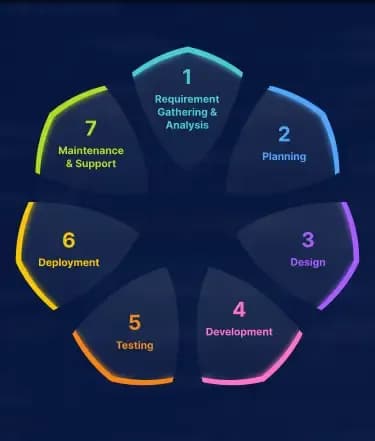
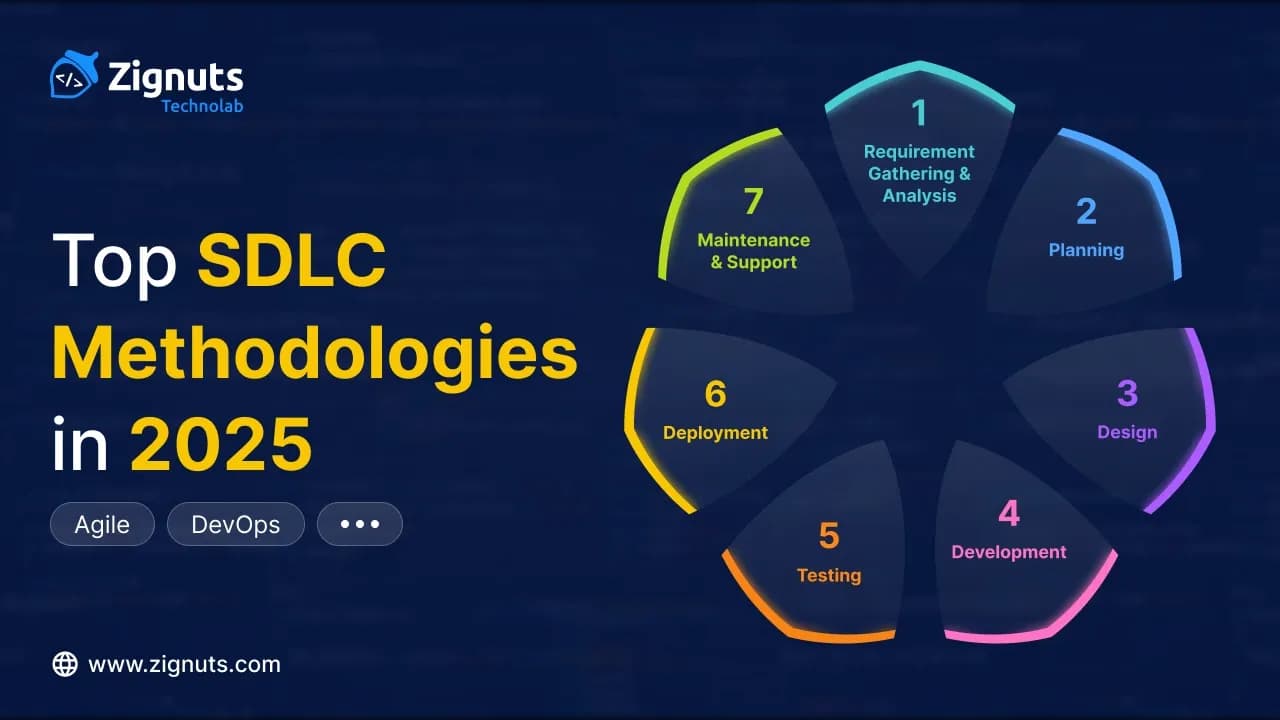
Key Phases of the Software Development Lifecycle (SDLC)
AI-Assisted Requirement Gathering & Analysis:
Utilizing Natural Language Processing (NLP) to convert stakeholder "vibes" and business goals into structured technical specifications. This phase now includes AI Bias Auditing to ensure requirements don't lead to discriminatory algorithms.
Predictive Planning & FinOps:
Using AI to forecast budgets and cloud-resource consumption while establishing FinOps guardrails. In the 2026 Software Development Lifecycle (SDLC), this also involves "Resource Prediction" for GPU and TPU availability.
System Architecture & Design:
Designing "Secure-by-Design" systems and AI-generated UI/UX wireframes based on real-time user telemetry. Architecture is now often "Self-Composing," where the Software Development Lifecycle (SDLC) tools suggest the best microservices based on existing library modules.
Augmented Development:
Human-AI pair programming where agents handle boilerplate, refactoring, and documentation. This phase of the Software Development Lifecycle (SDLC) has transitioned from manual coding to "Intent-Based Development," where developers review AI-generated logic.
Autonomous Testing:
Self-evolving test suites that adapt to code changes and simulate edge-case scenarios automatically. Testing in the modern Software Development Lifecycle (SDLC) now includes Chaos Engineering simulations as a standard step.
Progressive Deployment:
Utilizing canary releases and feature flags to ensure zero-downtime releases with automated rollbacks. The Software Development Lifecycle (SDLC) now relies on "Smart Handoffs" between CI/CD pipelines and production environments.
Intelligent Maintenance & Observability:
Predictive incident detection and "self-healing" scripts that resolve bugs before they affect users. This ensures the Software Development Lifecycle (SDLC) loop is closed by feeding production data back into the next planning phase.
Ethical & Compliance Guard-railing:
A mandatory 2026 addition to the Software Development Lifecycle (SDLC) where AI models are checked for regulatory compliance (like the AI Act) and data privacy standards (GDPR 2.0) before any code goes live.
Sustainability & Carbon Tracking:
Measuring the energy efficiency of the code. In this phase of the Software Development Lifecycle (SDLC), developers optimize algorithms specifically to reduce the electrical load on data centers.
Hire Dedicated Developers Today!

Best Software Development Lifecycle (SDLC) Methodologies in 2026
1. The AI-Augmented Agile Software Development Lifecycle (SDLC)
Agile remains the gold standard, but in 2026, it is "Agentic." Scrums are now supported by AI agents that manage backlogs, summarize stand-ups, and predict sprint velocity with 95% accuracy.
- Agent-Led Retrospectives:
AI agents perform deep-sentiment analysis on team communications and commit history to identify "friction" points. By cross-referencing code complexity with the time taken for Pull Request (PR) approvals, these agents suggest specific process improvements, such as automated refactoring of legacy modules or redistributing specialized tasks to prevent developer burnout.
- Dynamic Adaptation:
The Software Development Lifecycle (SDLC) loop now integrates real-time market signals and user telemetry directly into the active sprint. This allows for "micro-pivots," where the AI agent automatically reprioritizes the backlog based on a sudden drop in feature engagement or a competitor’s release, ensuring the team is always working on the highest-value tasks.
- Best Use Cases:
SaaS platforms and high-growth startups require rapid, intelligence-backed iterations.
2. The DevSecOps Software Development Lifecycle (SDLC) Model
In 2026, security is no longer a "checkpoint"; it is "ambient." The Software Development Lifecycle (SDLC) now mandates Policy-as-Code and automated threat modeling at every commit.
- Zero-Trust Integration:
Every service identity and data flow is validated by autonomous security agents within the Software Development Lifecycle (SDLC) pipeline. This "Ambient Security" ensures that no piece of code is deployed without a cryptographic proof of its origin, integrity, and compliance with organizational security policies.
- Self-Patching Code:
Utilizing AI Code Security Assistants (ACSAs), the system identifies zero-day vulnerabilities in real-time. Instead of just alerting the team, the Software Development Lifecycle (SDLC) toolchain generates, tests, and presents a "fix" Pull Request (PR) for human approval, often before the vulnerability is publicly indexed.
- Best Use Cases:
Fintech, Healthcare, and applications handling sensitive personal data.
3. The Sustainable (Green) Software Development Lifecycle (SDLC)
This methodology prioritizes carbon-efficient coding and resource right-sizing to meet global 2026 ESG (Environmental, Social, and Governance) standards.
- Carbon-Aware Pipelines:
In 2026, CI/CD pipelines are "energy-intelligent." They automatically schedule resource-intensive build and test jobs to run in data centers currently powered by peak renewable energy (wind/solar), effectively lowering the carbon footprint of the Software Development Lifecycle (SDLC).
- Algorithm Optimization:
This framework introduces a mandatory "Green Audit" phase. Specialized agents analyze the energy consumption of code blocks, identifying "greedy" loops or inefficient data queries and suggest refactoring options to minimize the Joules-per-request ratio without sacrificing user performance. - Best Use Cases:
Large-scale enterprise systems and public sector projects aiming for Net-Zero targets.
4. The Rapid Application Development (RAD) Software Development Lifecycle (SDLC)
RAD has been supercharged by Low-Code/No-Code (LCNC) platforms. In 2026, "Citizen Developers" use AI to build functional prototypes in hours rather than weeks.
- Prompt-to-Prototype: The Software Development Lifecycle (SDLC) has moved into the "Vibe Coding" era, where high-fidelity, production-ready applications are generated from natural language architectural prompts. AI agents handle the underlying database schema and API orchestration, allowing humans to focus entirely on intent and logic.
- Democratized Innovation: By removing the "syntax barrier," business analysts and product owners can participate directly in the build phase of the Software Development Lifecycle (SDLC). This collapses the feedback loop, as stakeholders can "live-edit" the application logic during requirement workshops.
- Best Use Cases: Internal business tools, marketing experiments, and MVP (Minimum Viable Product) testing.
5. The Platform Engineering Software Development Lifecycle (SDLC)
2026 has seen the rise of Platform Engineering as a formal Software Development Lifecycle (SDLC) methodology to manage the "cognitive load" of modern cloud stacks.
- Internal Developer Platforms (IDP): The platform team provides "Golden Paths," highly curated, automated workflows that abstract away the complexity of Kubernetes and multi-cloud networking. Developers can self-serve an entire production-grade environment with built-in observability and security guardrails in a single click.
- Cognitive Load Reduction: By treating "The Platform" as a product, this Software Development Lifecycle (SDLC) model ensures that developers spend 90% of their time on business logic rather than "yak shaving" or infrastructure troubleshooting. Agents monitor these "Golden Paths" to proactively suggest infra-upgrades or cost-saving instance migrations.
- Best Use Cases: Large-scale enterprises with massive microservices architectures and distributed engineering teams.
6. The DataOps & Model-Centric Software Development Lifecycle (SDLC)
As AI becomes the core of most applications, a specialized Software Development Lifecycle (SDLC) has emerged to treat data and models as first-class code citizens.
- Continuous Data Integration: This methodology focuses on the "nutrition label" of data. It ensures data freshness, lineage tracking, and integrity from the source to the AI model. If a data source "drifts" or loses quality, the Software Development Lifecycle (SDLC) pipeline automatically pauses training or inference to prevent hallucination.
- Model Observability: Integrated phases for monitoring AI bias and ethical compliance are now standard. The Software Development Lifecycle (SDLC) includes an "Explainability Audit" that documents how an AI decision was made, ensuring the software remains compliant with the latest global AI regulations.
- Best Use Cases: AI-first applications, Predictive Analytics, and real-time Recommendation Engines.
7. The Post-Quantum Security Software Development Lifecycle (SDLC)
With 2026 serving as a critical deadline for many global security standards, this Software Development Lifecycle (SDLC) focuses on protecting data against future quantum threats.
- PQC Migration Phase: A specific, mandatory step in the Software Development Lifecycle (SDLC) dedicated to inventorying and replacing legacy RSA or ECC encryption with Post-Quantum Cryptography (PQC). This ensures that every release is "Quantum-Resistant" by default.
- Future-Proofing & Hybrid Architectures: Most teams now use a "Hybrid Cryptographic" approach within their Software Development Lifecycle (SDLC), layering classical security with post-quantum algorithms to ensure immediate safety while preparing for the "Harvest Now, Decrypt Later" threat.
- Best Use Cases: Government, Defense, and Global Banking infrastructure.
The Impact of Multi-Agent Systems on the Software Development Lifecycle (SDLC)
A major shift in 2026 is the transition from single-model AI to Multi-Agent Systems (MAS) within the Software Development Lifecycle (SDLC). Instead of one AI tool, teams now use a network of specialized agents that function as a virtual engineering squad. These agents do not just generate code; they reason, plan, and execute multi-step workflows with minimal human intervention.
The Architect Agent:
This agent analyzes business requirements to suggest the best microservices structure based on cost, latency, and performance telemetry. It creates high-fidelity system diagrams (sequence diagrams and architecture outlines) and compares technological trade-offs, ensuring the foundation of the Software Development Lifecycle (SDLC) is optimized for future scalability and "Secure-by-Design" principles.
The Security Agent:
Acting as an "Ambient Auditor," this agent monitors for vulnerabilities throughout the entire Software Development Lifecycle (SDLC). It continuously scans repositories for zero-day threats, validates Software Bills of Materials (SBOMs), and can even auto-remediate flaws by opening its own Pull Requests (PRs) to patch insecure dependencies before the code ever reaches production.
The QA Agent:
Beyond simple scripting, the QA Agent writes and executes complex integration tests autonomously. In the 2026 Software Development Lifecycle (SDLC), these agents are "self-healing"; if a UI change breaks a test, the agent analyzes the new DOM structure, updates the test logic, and pushes the fix. They also simulate adversarial "chaos engineering" scenarios to ensure system resilience.
The Requirement & User Story Agent:
This agent bridges the gap between stakeholders and engineers by transcribing requirement discussions and decomposing them into precise, actionable user stories. It identifies conflicting specifications or ambiguous language early in the Software Development Lifecycle (SDLC), reducing rework cycles by up to 40% through proactive gap analysis.
The FinOps & Resource Agent:
A critical addition for 2026, this agent monitors the economic impact of the Software Development Lifecycle (SDLC). It predicts cloud resource consumption during the planning phase and optimizes CI/CD pipelines to run during periods of lower energy costs or higher renewable energy availability, ensuring the project meets sustainability and budget targets.
The Documentation & Onboarding Agent:
This agent maintains a "living" knowledge base of the project. It automatically updates technical documentation as the code evolves and acts as a mentor for new developers, explaining complex logic or architectural decisions through natural language interfaces, thus accelerating the human onboarding phase of the Software Development Lifecycle (SDLC).
The Platform Engineering Software Development Lifecycle (SDLC)
Platform Engineering is not just a toolset; it is a fundamental shift that treats the Software Development Lifecycle (SDLC) infrastructure as a product. The platform team builds and maintains an Internal Developer Platform (IDP), a unified, self-service layer that abstracts away the "plumbing" of development, allowing engineers to focus 100% of their energy on high-value business logic.
Self-Service & Zero-Wait State:
In the 2026 Software Development Lifecycle (SDLC), developers no longer file tickets for infrastructure. Through a centralized portal, they can provision production-ready environments, database clusters, and AI-compute nodes instantly. This removes the "Ops-bottleneck," reducing environment setup time from weeks to seconds.
Golden Paths & Guardrails:
The platform provides "Golden Paths," highly curated, automated workflows that are pre-approved by security and compliance teams. These templates ensure that every project follows the same Software Development Lifecycle (SDLC) standards for logging, observability, and security by default. If a developer needs to deviate, the platform provides the flexibility to do so within safe, pre-defined boundaries.
Cognitive Load Reduction:
By abstracting the intricacies of Kubernetes, service meshes, and cloud-provider APIs, Platform Engineering allows developers to interact with the Software Development Lifecycle (SDLC) through simple, intent-based commands. This "Developer-First" approach dramatically reduces burnout and increases "time-in-flow" for engineering teams.
Ambient Governance & FinOps:
The platform automatically embeds cost-control (FinOps) and security policies (Policy-as-Code) into the delivery pipeline. In the 2026 Software Development Lifecycle (SDLC), if a proposed deployment exceeds a carbon footprint or budget threshold, the platform proactively suggests optimizations or blocks the release until it aligns with corporate ESG goals.
Best Use Cases:
Large-scale enterprises with hundreds of developers, organizations managing complex microservices, and any business where scaling "DevOps" has become an operational hurdle.
The DataOps & Model-Centric Software Development Lifecycle (SDLC)
With the explosion of Generative AI, this specialized Software Development Lifecycle (SDLC) has emerged to manage the unique needs of data-heavy applications. Unlike traditional software, where logic is static, model-centric systems rely on the continuous flow of high-quality data. This approach integrates DataOps (the plumbing) with MLOps (the brain) to create a unified, self-healing pipeline.
Continuous Data Integration & "Nutrition Labels":
In 2026, this Software Development Lifecycle (SDLC) focuses on the "freshness" and "lineage" of the data feeding AI models. Every dataset is treated with a "nutrition label" that tracks its origin, transformation history, and quality scores. If a data source becomes stale or a "lineage break" is detected, the pipeline automatically pauses, preventing the model from generating unreliable or "hallucinated" outputs.
Model Observability & Drift Detection:
The Software Development Lifecycle (SDLC) includes integrated phases for monitoring model performance in real-time. Specialized agents detect "model drift" where a model's accuracy degrades as real-world data changes and trigger autonomous retraining cycles. This ensures that the software remains performant long after the initial deployment.
Ethical AI & Bias Guard-railing:
A mandatory 2026 addition to this Software Development Lifecycle (SDLC) is the "Ethical Audit." AI-powered tools scan training data and model outputs for discriminatory patterns or bias, ensuring compliance with global regulations like the EU AI Act. This phase ensures that "fairness" is a measurable KPI, just like speed or security.
Synthetic Data & Privacy-Enhancing Technologies (PETs):
To bypass the risks of using sensitive personal info, the 2026 Software Development Lifecycle (SDLC) heavily utilizes synthetic data generation. This allows developers to test and train models on statistically accurate but privacy-safe datasets, accelerating innovation in highly regulated sectors.
Best Use Cases:
AI-first applications, Predictive Analytics for finance/healthcare, and autonomous Recommendation Engines.
Hire Dedicated Developers Today!
The Post-Quantum Security Software Development Lifecycle (SDLC)
With the 2026 deadlines for global security standards, such as the transition of traditional networking equipment (VPNs and routers) to CNSA 2.0 compliance, this Software Development Lifecycle (SDLC) focuses on replacing vulnerable asymmetric cryptography with Quantum-Resistant technologies. It is specifically designed to combat the "Harvest Now, Decrypt Later" threat, where adversaries collect encrypted traffic today to break it once quantum computers mature.
PQC Migration & Crypto-Inventory Phase:
This mandatory step in the 2026 Software Development Lifecycle (SDLC) begins with a comprehensive discovery process. Organizations utilize Cryptographic Bill of Materials (CBOMs) to identify every instance of legacy RSA, ECC, and Diffie-Hellman encryption across their codebases. This inventory allows teams to systematically replace vulnerable components with NIST-standardized algorithms like Module-Lattice-Based Key-Encapsulation (ML-KEM) without disrupting operational continuity.
Crypto-Agility by Design:
A defining feature of the 2026 Software Development Lifecycle (SDLC) is "Crypto-Agility." Rather than hard-coding specific algorithms, developers build modular architectures that allow cryptographic primitives to be swapped or updated via simple configuration changes. This ensures that if a specific post-quantum algorithm is found to have a flaw, the system can be patched instantly across the entire enterprise without a full code rewrite.
Hybrid Cryptographic Deployment:
During the transition years, the Software Development Lifecycle (SDLC) mandates a hybrid approach. This involves layering a classical algorithm (like RSA-3072) with a post-quantum one (like ML-DSA). By using dual-signatures and hybrid key exchanges, software remains compliant with legacy systems while providing a "quantum-safe" wrapper that protects data against future threats.
Future-Proofing Long-Lived Data:
The 2026 Software Development Lifecycle (SDLC) emphasizes "Forward Secrecy" for data at rest. For sectors like healthcare and defense, where data must remain confidential for 25+ years, this phase includes re-encrypting existing archives with quantum-resistant algorithms to ensure they remain secure even decades after the "Q-Day" milestone.
Performance & Network Impact Testing:
Because PQC keys and signatures are significantly larger than legacy ones (often by a factor of 10x or more), the Software Development Lifecycle (SDLC) includes specialized performance gates. Teams must test for increased latency in TLS handshakes and potential packet fragmentation in constrained IoT environments to ensure that "quantum-safe" doesn't mean "system-slow."
Best Use Cases:
Government agencies, Defense contractors, Global Financial Infrastructure, and any enterprise managing high-value, long-retention data.
Choosing the Right Software Development Lifecycle (SDLC) Methodology
When selecting your framework in 2026, evaluate these four critical pillars to ensure your process remains resilient, compliant, and efficient:
Talent Density & AI-Readiness:
In 2026, team size is secondary to "AI-fluency." If your team is small but possesses high AI-literacy, an AI-augmented RAD Software Development Lifecycle (SDLC) is superior, as it allows a few "orchestrators" to manage a vast network of coding agents. Conversely, for larger, diverse teams, Agentic Agile provides the necessary structure to coordinate human creativity with autonomous backlog management, preventing the "shadow IT" that often plagues unmanaged AI usage.
Regulatory Landscape & Compliance-by-Design:
For highly regulated industries like Fintech, Healthcare, and Defense, the Hybrid (Agile-Waterfall) Software Development Lifecycle (SDLC) has evolved. It now uses "Digital Evidence Vaults" to ensure that while development is fast and iterative, every change is automatically mapped to global standards like the EU AI Act or ISO 42001. This ensures you maintain a "continuous audit" state, where compliance is a byproduct of the development process rather than a final, frantic hurdle.
Scalability & Cognitive Load:
DevSecOps is non-negotiable for cloud-native applications expected to scale globally. In 2026, this pillar focuses on Platform Engineering to reduce the "cognitive load" on developers. As systems grow more complex with microservices and edge computing, your SDLC must provide "Golden Paths" pre-configured, secure, and scalable infrastructure templates that allow developers to deploy at scale without needing to be experts in underlying container orchestration or global networking.
Sustainability & Carbon Intelligence:
Organizations are now legally and ethically required to factor in the energy consumption of their Software Development Lifecycle (SDLC). This involves selecting a Green SDLC that integrates carbon-tracking metrics into the CI/CD pipeline. Decisions are made based on "Energy-per-Feature" (EpF) scores, where AI agents optimize code for power efficiency and schedule resource-heavy builds during periods of peak renewable energy availability to meet mandatory ESG (Environmental, Social, and Governance) reporting standards.
Conclusion
In 2026, the Software Development Lifecycle (SDLC) is no longer just a roadmap for building software; it is a sophisticated, AI-driven engine for innovation. Whether you choose the speed of RAD, the robust security of the Post-Quantum SDLC, or the organizational clarity of Platform Engineering, the key to success lies in integrating human ingenuity with autonomous agentic systems. To build and maintain these complex frameworks, many forward-thinking enterprises choose to Hire Dedicated developers who possess the specialized expertise to manage this evolution. By prioritizing ethical AI governance, carbon intelligence, and cryptographic agility, organizations can ensure their software remains competitive in a rapidly evolving digital landscape.
At Zignuts, we specialize in delivering custom software development solutions using industry-best SDLC methodologies. Our expertise lies in integrating AI-driven development, automation, and cloud-native technologies to streamline the software lifecycle. With a focus on innovation, scalability, and security, we help businesses build robust applications tailored to their specific needs. Our expert team ensures high-quality software that aligns with your business goals. Explore our MVP Development Services and latest insights to stay ahead in the evolving IT landscape.
Contact Zignuts today to discuss your project requirements and discover how our expert team can help you build a high-performance future. Let's start scaling your vision together!

Nihar Bhatt
A planner at heart who thrives on turning ideas into reality, fostering collaboration, and ensuring every project tells a success story.