


In 2026, software is no longer just a tool; it is the fundamental heartbeat of your business. We have moved beyond simple digital transformation into the era of Autonomous Engineering, where AI-integrated workflows and hyper-scalable cloud architectures define market leaders. However, many organizations find themselves tethered to legacy partners that lack the technical velocity to keep pace with these advancements. Switching your Software Development Company is a strategic pivot that, while complex, is often a prerequisite for survival in a "software-first" economy.
The landscape of vendor transition has evolved significantly. In previous years, a "handover" was merely a transfer of source code and credentials. In 2026, a successful migration involves a sophisticated synchronization of Knowledge Graphs, CI/CD pipelines, and AI model weights. It is about migrating not just the code, but the institutional culture and development momentum that drive innovation. This guide outlines how to navigate this high-stakes change effectively, ensuring your project doesn't just survive the move but accelerates under more capable leadership.
Identifying Modern Failures in Your Current Software Development Company
Before initiating a move, it is crucial to diagnose the specific frictions stalling your progress. In 2026, the primary catalysts for switching providers usually fall into these categories:
1. The Innovation Deficit
If your current partner is struggling to integrate Agentic AI or real-time data streaming, they are effectively holding your competitive edge hostage. Modern development requires moving beyond simple "features" to creating autonomous systems that can self-optimize and learn from user interactions in real-time. A partner that merely takes orders without suggesting architectural AI enhancements such as integrated vector databases or retrieval-augmented generation (RAG) workflows is essentially building a sunset product. In an era where software must think and adapt, a developer who is just "writing code" is no longer an engineer; they are a typist for a legacy era.
2. Opaque Communication Loops
Traditional weekly emails and static PDF status reports are obsolete. If you lack real-time visibility into automated CI/CD pipelines or AI-driven sprint forecasting, you are operating in the dark. Modern partnerships demand "Live Documentation," a state where the project's health, velocity, and roadblocks are visible at any second through integrated dashboards and neural search tools. When your provider hides behind administrative layers or manual reporting cycles, they are likely obscuring inefficiencies. In 2026, transparency isn't a courtesy; it is a technical requirement facilitated by automated observability platforms that bridge the gap between business stakeholders and dev teams.
3. Security and Compliance Lag
With the tightening of global data regulations in 2026, a partner that treats cybersecurity as an afterthought is a catastrophic liability. A major red flag is the absence of Confidential Computing or "Secure Enclaves" when handling sensitive user data. If security isn't "shifted left," meaning it is integrated into the very first line of code and verified by automated security-as-code protocols, your brand reputation is at constant risk. The modern landscape requires a partner who understands the legal nuances of AI governance and can guarantee that their development practices meet the stringent, evolving standards of digital sovereignty.
4. Inability to Scale Automatically
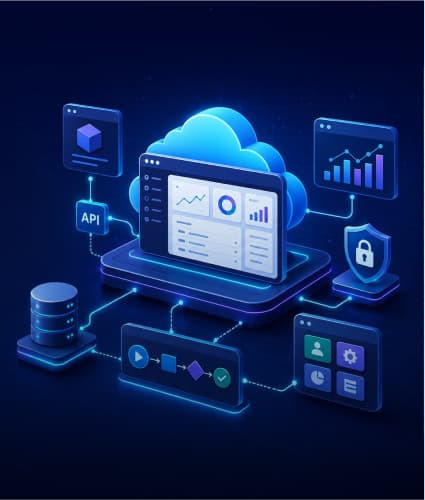
Modern platforms must handle unpredictable traffic spikes without human intervention. A provider that relies on manual server provisioning or lacks deep expertise in Serverless Cloud Fabrics is fundamentally obsolete. In 2026, your software should scale as elastically as your user base grows, leveraging auto-healing architectures that mitigate downtime before it happens. If your partner is still debating hardware specs instead of implementing global edge computing strategies, they are tethering your business to a localized, fragile infrastructure that cannot support global-scale ambitions.
5. Talent Gaps and "Skill Stagnation"
The tech stack of 2026 changes monthly, not yearly. If your provider is still pushing the same frameworks they used in 2022 and hasn't transitioned to high-performance languages like Rust or mastered Multi-Agent Orchestration, they are building you a legacy system from day one. This stagnation often stems from a lack of internal R&D within the provider's organization. A partner that doesn't invest in their engineers' ability to work with Large Action Models (LAMs) or quantum-safe cryptography will eventually produce code that is difficult to maintain, expensive to run, and impossible to integrate with the modern web.
6. ESG and Sustainability Oversight
In today’s market, "Green Software Engineering" has shifted from a trend to a core business requirement. If your Software Development Company doesn't actively monitor the carbon impact of your cloud compute or optimize code for energy efficiency (GreenOps), you may face significant regulatory hurdles and investor pushback. Modern code is not just measured by its speed, but by its computational efficiency. A partner who ignores the environmental footprint of heavy AI processing or inefficient database queries is failing to protect you from the "carbon taxes" and sustainability audits that have become standard in the mid-2020s corporate world.
Hire Dedicated Developers Today!

Overcoming Critical Transition Pain Points with a New Software Development Company
Successfully switching providers requires a proactive approach to common migration hurdles. In 2026, the complexity of software ecosystems means that a "plug-and-play" transition is a myth; instead, a strategic and deeply integrated handover is necessary to maintain business continuity. Here is how to address the primary challenges:
Technical Debt and Code Quality
Inheriting a "legacy mess" is the primary fear for any incoming team. When a previous partner has cut corners to meet deadlines, they leave behind a web of spaghetti code, unpatched vulnerabilities, and inefficient database queries that can stall new feature development for months. To overcome this, you must prioritize a Deep Code Audit powered by AI-driven static analysis tools. This process doesn't just identify bugs; it maps out the entire architectural health of the system. Your new Software Development Company should use automated refactoring agents to modernize the foundation, converting monolithic structures into microservices where necessary. By cleaning the "engine" before adding new parts, you ensure that the new team isn't building on a crumbling base, effectively turning a rescue mission into a fresh start.
Knowledge Loss and Documentation Gaps
The most valuable asset in any software project isn't actually the lines of code; it's the "why" behind every architectural decision. Too often, documentation is either non-existent or hopelessly outdated, leading to a situation where the new team accidentally "breaks" a critical but obscure function. To prevent this, you must implement a structured Knowledge Transfer (KT) phase. This involves more than just reading manuals; it requires the incoming team to shadow the outgoing developers in live environments. In 2026, this process is enhanced by recording "Developer walkthroughs" and using AI to index these videos into a searchable knowledge base. By capturing the tribal knowledge of the previous team, the new provider can understand proprietary logic and edge cases that are never visible in the source code alone.
Budgetary Drift and Hidden Costs
Switching companies can become a financial black hole if the transition isn't managed through a value-based lens. The "hidden costs" of onboarding, environment setup, and fixing inherited bugs often lead to significant budget overruns. To mitigate this, you must move away from archaic "Time and Materials" billing and demand a Milestone-Based Pricing Model. This ensures that payments are strictly tied to functional, verified software deliverables rather than just a tally of hours worked. A modern Software Development Company will offer a "Discovery and Transition" fixed-fee phase to stabilize the project before moving into a predictable sprint-based budget. This transparency forces the new partner to be efficient and gives you the financial predictability needed to report to stakeholders without fear of "surprise" invoices.
Cultural and Workflow Misalignment
One of the most overlooked pain points is the friction caused by differing work cultures and methodology gaps. If your internal team operates on a rapid-fire Agile cycle but your new provider uses a more rigid, tiered management structure, the resulting "culture shock" can paralyze production. Effectively addressing this requires an early Workflow Integration session. This is where both parties align on communication tools, branching strategies, and "Definition of Done" standards. By treating the new provider as an integrated "Extended Team" rather than an external vendor, you dissolve the "us vs. them" mentality. In 2026, successful transitions leverage shared Slack or Teams channels and unified DevOps dashboards to ensure that every developer, regardless of their employer, is pulling in the same direction from day one.
How Zignuts Facilitates a High-Velocity Switch to a Software Development Company
At Zignuts, we recognize that the year 2026 demands more than just code maintenance; it requires a partner capable of radical digital evolution. We have perfected a "Zero-Downtime Migration" framework specifically engineered to handle the complexities of modern enterprise ecosystems. Our approach ensures that while your development leadership changes, your service remains uninterrupted and your innovation velocity actually accelerates.
Case Study: Architecture Modernization and Cloud-Native Evolution
We recently assisted a global retail brand whose growth was physically limited by a rigid, monolithic infrastructure maintained by their previous partner. The legacy system could not support the cross-border expansion required for 2026 market dominance. Zignuts performed an automated architectural migration, decoupling their core services and moving them into a serverless, event-driven environment. By implementing edge computing strategies, we not only enabled global scalability but also reduced their operational overhead by 30%. This transition transformed their software from a cost center into a high-performance engine capable of handling millions of concurrent transactions across different time zones.
Case Study: Restoring Trust Through Real-Time Observability
For a prominent FinTech client, the primary pain point was "Black Box" development, a total lack of visibility into what their previous Software Development Company was actually doing. We resolved this by integrating their internal stakeholders directly into our live DevOps Observability Stack. This provided the client with minute-by-minute visibility into every code commit, automated security scan, and deployment pipeline. By moving from opaque weekly reports to a "Single Source of Truth" dashboard, we restored project confidence and ensured that every dollar of their budget was mapped to a tangible, high-quality technical output.
Case Study: Rapid AI Injection and Predictive Modeling
A stagnant healthcare application came to us after its previous provider claimed that integrating advanced diagnostics was "technically impossible" due to the existing database structure. Zignuts took over the project and, within the first two sprints, successfully integrated a Predictive Diagnostic Layer using Retrieval-Augmented Generation (RAG). By optimizing their data pipeline and implementing specialized vector databases, we turned a failing legacy app into a market-leading AI health assistant. This case illustrates our "Innovation-First" mindset: we don't just maintain what you have; we build what your competitors haven't even thought of yet.
The Zignuts "Transition-as-a-Service" (TaaS) Model
What truly sets Zignuts apart in 2026 is our comprehensive onboarding methodology. We utilize AI-driven code mapping to visualize your entire application’s dependency graph within the first 48 hours of engagement. This allows us to identify critical failure points that your previous partner might have overlooked. Furthermore, our focus on GreenOps ensures that while we modernize your stack, we are also optimizing it for the lowest possible carbon footprint, aligning your technical growth with global sustainability mandates.
Essential Legal and IP Safeguards for a 2026 Handover
In 2026, intellectual property (IP) is your most valuable asset and your primary competitive moat. A transition is not legally complete until every digital asset and the logic governing it is under your direct control. In an era of AI-generated code and decentralized infrastructure, the legal complexities of "ownership" have deepened, making these safeguards non-negotiable.
1. Intellectual Property Assignment and AI Sovereignty
Ensure your contract includes an explicit and comprehensive IP Assignment Clause. In the current landscape, simply owning the "source code" is insufficient. Your agreement must clearly state that you own the proprietary algorithms, specialized AI training datasets, and most importantly, the custom-trained model weights developed during the partnership. If your previous Software Development Company used "synthetic data" or semi-autonomous agents to build your platform, you must verify that the rights to the outputs of those agents are fully transferred to you. Without this, you may find yourself in a legal gray area where the "intelligence" powering your business technically belongs to your former vendor.
2. Version Control, Repository Ownership, and Audit Logs
Never allow your code to reside solely on a vendor's infrastructure or private servers. Before initiating the switch, you must ensure you have full Administrative Access to all Git repositories, whether they are on GitHub, GitLab, or Bitbucket. A clean break requires migrating these repositories to your own corporate-controlled accounts. Beyond the code itself, you must secure the commit history and audit logs. These logs are vital for future security forensics and for understanding the evolution of the software. Ensuring the outgoing team has their access revoked immediately upon project handover prevents "backdoor" entries and protects your codebase from unauthorized modifications during the sensitive transition period.
3. Escrow and Third-Party Dependency Mapping
Conduct a thorough audit of all third-party licenses, API keys, and library subscriptions. A common pitfall in 2026 is finding your application crippled because critical microservices were registered under a developer's personal email or a vendor’s corporate credit card. You must transition all SaaS subscriptions, cloud hosting (AWS, Azure, or GCP) accounts, and domain registrars to a centralized corporate management system. Furthermore, implement a Software Bill of Materials (SBOM) audit to identify every open-source component and third-party dependency. This ensures that you aren't inheriting licensing "bombs" that could lead to copyright infringement suits or unexpected service shutdowns once the previous partner departs.
4. Non-Compete and Confidentiality Enforcements
As you transition, reaffirm the Non-Disclosure Agreements (NDAs) and non-compete clauses. In a world where "Developer Poaching" and "Knowledge Leaks" are high risks, your contract should specify that the outgoing team cannot utilize the specific trade secrets or niche architectural logic developed for your product to benefit a competitor. This is especially critical if your software utilizes unique Prompt Engineering or proprietary data-handling workflows that provide you with a market advantage. Secure a formal declaration from the outgoing Software Development Company stating that all local copies of your data and proprietary materials have been permanently purged from their internal systems.
5. Transition Support and Liability Tail
A legal handover should include a "Warranty Period" or a "Liability Tail." This clause mandates that the outgoing provider remains liable for any critical security vulnerabilities or "hidden" defects discovered within a specific window (e.g., 90 days) after the handover. Additionally, ensure there is a legally binding agreement for Transition Support Hours. This requires the outgoing team to be available for a set number of hours to answer technical queries from the new team. Having this legal leverage ensures that the previous partner doesn't simply "go dark," leaving your new developers to guess at the complexities of a legacy environment.
Hire Dedicated Developers Today!
Best Practices for Long-Term Success with Your New Partner
In 2026, the relationship between a client and a Software Development Company must transcend the traditional vendor-client dynamic. To achieve sustainable growth and technical excellence, you must treat your partner as a strategic extension of your internal team. Here are the best practices for fostering a high-performance, long-term collaboration:
1. Perform a 30-Day Stabilization Sprint
Inheriting a codebase is like moving into a pre-owned house; there are always hidden leaks. Use the first month exclusively for fixing critical bugs, closing security gaps, and improving documentation rather than launching shiny new features. This "Maintenance First" approach allows the new team to learn the system's intricacies without the pressure of delivery. By the end of this sprint, your new Software Development Company will have a deeper grasp of the architectural logic, significantly reducing the risk of "regression bugs" when you eventually move into active development.
2. Standardize the Tooling and "Shift-Left" Security
Friction often occurs when two teams use different tools for the same job. Align on a shared tech stack from IDE plugins and testing frameworks to deployment pipelines. In 2026, this also includes standardizing your DevSecOps tools. If the new team uses different automated vulnerability scanners, migrate to a unified standard immediately to avoid "Shadow IT" or conflicting security reports. A unified toolset ensures that every developer is speaking the same technical language, creating a seamless environment where code moves from "local" to "production" without manual translation.
3. Establish a Conflict Resolution and "Blame-Free" Protocol
Technical disagreements and missed milestones are inevitable in complex projects. To prevent these from eroding trust, define a clear protocol for handling friction before it happens. Implement a "Blame-Free Retrospective" culture where the focus is on the root cause of a failure (e.g., "why did the deployment fail?") rather than the individual responsible. By establishing a formal escalation path naming specific decision-makers for architectural stalemates, you ensure that disagreements are resolved in hours, not weeks, keeping the project’s momentum alive.
4. Implement AI-Augmented Performance Benchmarking
Traditional KPIs like "hours billed" are meaningless in 2026. Instead, set quarterly reviews based on DORA metrics (Deployment Frequency, Lead Time for Changes, Change Failure Rate, and MTTR). Use AI-driven analytics to measure "Innovation Velocity," how quickly a new idea moves from a concept to a live user feature. Regular benchmarking ensures that your Software Development Company is not just keeping the lights on but is actively contributing to your competitive advantage. If the metrics dip, use the data as a collaborative diagnostic tool rather than a disciplinary one.
5. Foster Cultural and Visionary Alignment
For a partnership to last, the developers must understand why they are building the product. Involve your partner in high-level strategic meetings and share your long-term business roadmap. When developers see the "North Star" goals of the company, they transition from being task-takers to problem-solvers. This alignment encourages Proactive Innovation, where the team suggests new technologies (like moving to a more energy-efficient Rust-based backend) because they are invested in your brand’s long-term success, not just the current sprint.
6. Prioritize Continuous Knowledge Synchronization
Knowledge silos are the silent killers of long-term partnerships. In 2026, maintain a "Living Knowledge Base" using AI-powered documentation tools that auto-update as the code changes. Schedule monthly Cross-Pollination Sessions where your internal stakeholders and the partner’s lead architects discuss emerging tech trends. This ensures that the collective intelligence of both organizations remains synchronized, making future handovers or team expansions significantly smoother.
Conclusion
Switching your Software Development Company is one of the most significant strategic decisions a business leader can make in 2026. While the transition involves complex technical, legal, and cultural hurdles, the cost of staying with a partner that lacks innovation is far higher. By prioritizing a structured handover focused on AI sovereignty, technical debt audits, and cultural alignment, you can turn a potential disruption into a massive leap forward in your digital capabilities. To successfully bridge this transition, many organizations choose to Hire Dedicated Developers who bring the specialized expertise required to navigate modern architectural shifts.
With a forward-thinking partner like Zignuts, the migration process is not just about moving code; it’s about upgrading your entire technical infrastructure for the age of Autonomous Engineering. Whether you are dealing with a legacy mess or looking to inject cutting-edge AI into your platform, the right approach will ensure your business remains at the forefront of the market.
Ready to upgrade your technical partner? Contact Zignuts today to learn more about how we can streamline your transition and accelerate your product roadmap. Let’s build the future of your software together!

Deep Mistry
Digital Marketing Enthusiast | Diving into the world of trends, tools, and strategies, sharing discoveries that help create impactful online experiences.