


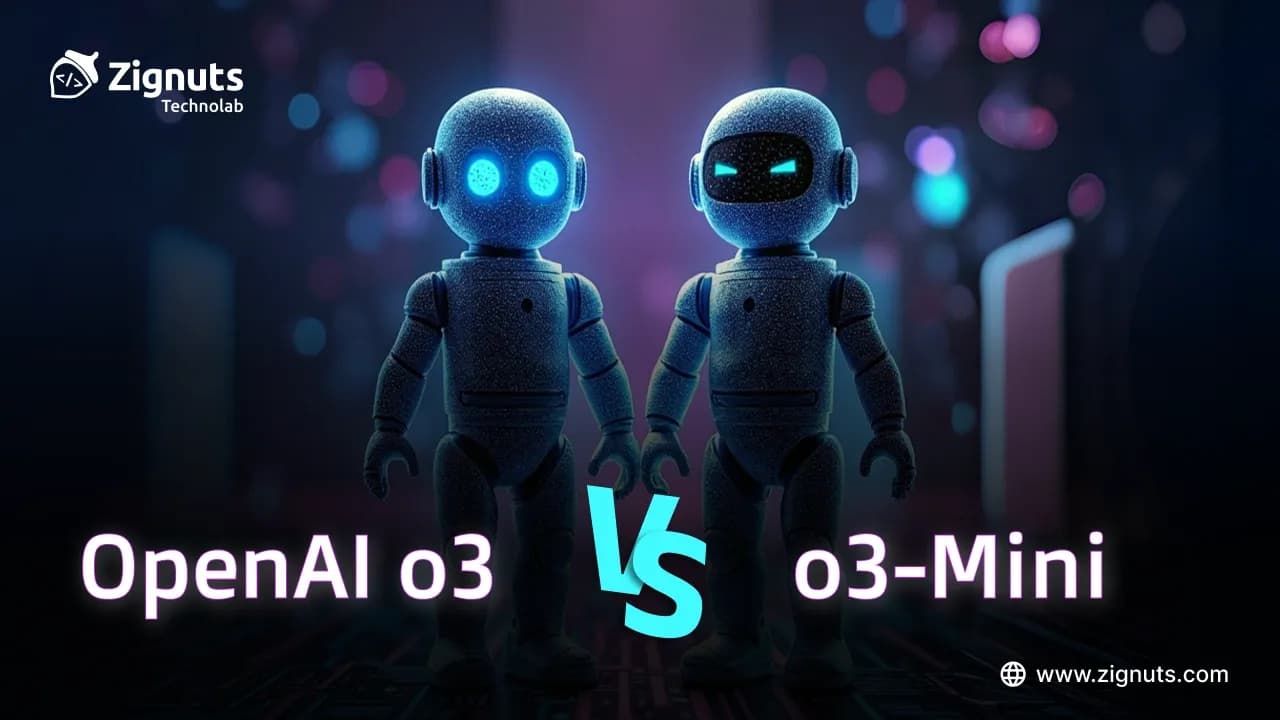
The landscape of Artificial Intelligence has shifted from mere pattern recognition to genuine cognitive simulation. As we move through 2026, the conversation has moved past simple chatbots toward "reasoning engines" that contemplate problems before they speak. This evolution is perfectly embodied in the latest flagship release from OpenAI.
By moving beyond the traditional architecture of the past, this new generation of models prioritises a deliberate thought process. They don’t just predict the next word in a sentence; they map out logic, verify their own math, and cross-reference internal facts. This deep-thinking approach marks the transition from AI as a digital assistant to AI as a collaborative partner in complex problem-solving.
This progress is largely driven by a massive scale-up in reinforcement learning, where models are taught to "think" using a private chain of thought. Unlike previous iterations that relied solely on pre-trained data patterns, these systems now possess the ability to plan several steps ahead, backtrack when they hit a logical dead end, and refine their strategies in real time.
The introduction of these reasoning models has effectively bridged the gap between rapid-fire text generation and the high-precision requirements of STEM fields. Whether it is solving research-level physics proofs or managing autonomous multi-step software deployments, the focus in 2026 is no longer just on what the AI knows, but on how it arrives at a conclusion. This shift ensures that AI is now a reliable professional tool capable of handling the messy, non-linear challenges of the real world.
The Evolution of the Reasoning Model: OpenAI o3 vs o3-Mini
The flagship release of last year has matured significantly, moving from an experimental "preview" to a robust, enterprise-grade architecture. This model family was built specifically to solve the "hallucination" problem by introducing an internal deliberation phase. Instead of an instant response, the system utilises a Chain-of-Thought methodology, essentially "talking to itself" to verify logic before the user ever sees the output.
This leap in capability was born from a need for precision in high-stakes environments like software engineering, medical research, and financial forecasting. By dedicating more time to processing, these models can navigate multi-layered instructions that would cause standard models to lose track of the original goal.
Key Advancements in Reasoning Architecture
Inference-Time Scaling:
Unlike traditional models that are limited by their training, o3 can "scale" its intelligence at the moment of the request by spending more time thinking through complex pathways. This means that for a simple greeting, the model acts instantly, but for a complex physics proof, it can allocate minutes of internal "thought compute" to ensure the logic holds. In 2026, this has evolved into "Thinking Effort" toggles, giving users direct control over how much computational power and time is spent on a single query.
Self-Correction Loops:
During its internal monologue, the model can identify its own mistakes, backtrack, and try a different logical approach before finalising the answer. It essentially audits its own reasoning steps. If the model reaches a mathematical contradiction in its private chain of thought, it recognises the error, resets that specific step, and re-routes its logic. This has led to a massive reduction in the confident-but-wrong answers that plagued earlier AI generations.
Native Multimodal Logic:
For the first time, the reasoning process isn't limited to text. The model can "reason" over images, charts, and hand-drawn diagrams, treating visual data as a core part of its logical proof. Whether it is analysing a complex financial graph or identifying a bug in a screenshot of a user interface, o3-mini and o3 don't just describe what they see; they use that visual information to solve the underlying problem, achieving over 80% accuracy on advanced visual math benchmarks like MathVista.
Reduced Mental Fatigue:
In long-context tasks (up to 200,000 tokens), the o3 family maintains a higher level of "attention" to detail, ensuring that the last page of a document is analysed with the same rigour as the first. This is crucial for legal professionals and researchers who need to cross-reference facts across hundreds of pages. The architecture ensures that "needle-in-a-haystack" recall remains nearly perfect, even when the reasoning required to find that needle is multi-layered.
Understanding the Efficient Version: OpenAI o3 vs o3-Mini
While the full-scale version provides massive raw intelligence, the "Mini" variant was developed to bring that same logical rigour to everyday tasks without the heavy latency or high cost. It serves as a balanced bridge for developers and casual users who need reliable reasoning but require faster response times.
Since its broad rollout, the smaller model has become the standard for mobile applications and real-time coding assistance. It retains the core architecture of its larger sibling but is optimised to handle common logic puzzles and programming bugs with significantly less energy consumption. In fact, many enterprises now prefer the "Mini" for automated customer service workflows where logic is essential, but speed is king.
Strategic Advantages of the Compact Architecture
Dynamic Reasoning Effort:
One of the most significant updates in 2026 is the refined "Reasoning Effort" selector. Users can now choose between low, medium, and high effort. This allows for instant, snappy responses on basic queries while maintaining the ability to "deep think" on a difficult physics problem by simply toggling the intensity. By adjusting this parameter, the model can reduce its internal token usage for simple tasks, leading to a 40% reduction in latency for non-complex requests compared to the default settings of the previous year.
Production-Ready Developer Tools:
Unlike previous experimental models, o3-mini was built with integration in mind. It natively supports advanced features like Structured Outputs (ensuring the AI follows a strict JSON schema) and Function Calling, which allows the model to interact reliably with external APIs and databases. In 2026, this has expanded to include "schema-strict" validation, where the model virtually eliminates formatting errors in complex data structures, making it the preferred choice for backend automation and data pipeline management.
Industry-Specific Optimisation:
The model has been fine-tuned on curated STEM datasets, making it disproportionately powerful in math, coding, and biology compared to its parameter size. In 2026, it is frequently used as a "specialised analyst" that can run on-device or on edge servers, reducing the need for constant cloud reliance. This specialisation allows it to match the performance of much larger models on benchmarks like the AIME and GPQA while maintaining a footprint small enough for high-throughput enterprise environments.
Agentic Multi-Step Capabilities:
Even as a "mini" version, the model exhibits proactive behaviour. It can autonomously string together multiple tool calls, such as searching the web, executing a Python script to verify data, and then generating a summarised report, all in one turn. This "agentic" flow is powered by an improved internal planning layer that allows the model to map out a multi-step strategy before taking its first action, reducing the "looping" errors seen in older agent frameworks.
Visual Understanding at Speed:
The 2026 iteration includes native multimodal support, allowing the model to "think with images." It can interpret complex charts, OCR-heavy documents, and even low-quality photos of handwritten notes with a response time that is roughly 24% faster than the older o1-mini. More importantly, it doesn't just describe the image; it reasons about the content, such as calculating the total on a crumpled receipt or identifying a structural flaw in a photographed circuit board.
Hire OpenAI Developers Today!

Analyzing Performance Metrics: OpenAI o3 vs o3-Mini
Strategic Resource Allocation
The primary version is a heavy-duty engine designed for massive datasets and theoretical research. It utilises a vast amount of internal "thinking time" to ensure accuracy in scientific discoveries. In contrast, the smaller version is streamlined for efficiency, offering a snappy experience that still outperforms older architectures in logical consistency.
- Thinking Time vs. Speed: While the full version may take several minutes to deliberate on a PhD-level physics problem, the "Mini" variant typically delivers reasoned responses in under 10 seconds.
- Compute Intensity: The flagship model leverages ten times the compute resources compared to previous generations, making it the superior choice for "one-shot" solutions to problems that previously required human expert intervention.
User-Controlled Intensity
A standout feature in 2026 is the ability to toggle the intensity of thought. Users can choose between low, medium, or high effort. This allows someone fixing a simple grammar error to use low effort, while a developer debugging a complex microservice architecture can shift the model into high-gear reasoning. The full version remains the "gold standard" for accuracy, while the smaller variant provides this flexible control for varying task complexities.
- Efficiency Toggling: By selecting "Low Effort," users can save on API costs and energy while still benefiting from the core reasoning architecture for basic logic.
- The "High-Gear" Advantage: The high-effort setting on the smaller model allows it to match the performance of older flagship models in competitive math and coding, effectively punching well above its weight class.
Benchmark Excellence in STEM
The performance gap between these two models is most visible when looking at standardised technical benchmarks. While both excel, the larger version sets the ceiling for what is possible in automated reasoning.
- Mathematics (AIME): The full model achieved a staggering 96.7% accuracy, while the compact version, when set to high effort, remains highly competitive at approximately 87.3%.
- Coding (SWE-bench Verified): In real-world software engineering tasks, the primary model cleared over 71% of challenges, whereas the efficient version acts as a "speed-demon" for smaller bug fixes and script generation with nearly 50% accuracy.
- PhD-Level Science (GPQA Diamond): The flagship version has actually surpassed the average human PhD performance in specialised fields, making it a "super-expert" consultant for researchers.
Hallucination and Factuality Rates
Precision is the hallmark of the 2026 AI era. Both models utilise their internal "Chain of Thought" to cross-reference their own claims before they are printed on the screen.
- Self-Correction Accuracy: The reasoning process allows these models to catch over 39% of major errors that would have been presented as facts by older, non-reasoning models.
- Factuality Benchmarks: On fact-heavy evaluations like SimpleQA, the larger model maintains a clear lead due to its broader internal knowledge base, whereas the smaller version is optimised to "reason" over provided data rather than memorising every niche fact.
Core Breakthroughs and Technical Capabilities: OpenAI o3 vs o3-Mini
1. Mastery of Software Engineering
The coding proficiency of this generation is unprecedented. In the current 2026 benchmarks, these models have demonstrated the ability to not just write snippets but to manage entire repositories and identify deep-seated architectural flaws. The full model now achieves staggering accuracy on the SWE-bench, making it a reliable autonomous coding agent.
- Autonomous Debugging: The model can now identify "race conditions" and memory leaks that human developers often miss, suggesting fixes across multiple files simultaneously.
- Architecture Design: Beyond writing code, o3 can generate full system diagrams and explain the logic behind choosing specific database schemas or API structures.
- Elo Dominance: In competitive programming environments like Codeforces, o3 has reached an Elo score of 2727, placing it in the top tier of human competitive coders globally.
2. High-Level Mathematics and Logic
The systems now consistently clear the bar for elite-level competitive mathematics. By simulating various paths to a solution and discarding those that lead to contradictions, they achieve near-perfect scores on examinations like the AIME, which typically challenge the brightest PhD students.
- Proof Verification: The model doesn't just provide an answer; it provides a rigorous, step-by-step logical proof that can be cross-checked by mathematicians.
- FrontierMath Achievement: A major milestone in 2026 is o3's performance on FrontierMath, where it solved 25.2% of research-level problems that often take professional mathematicians days to complete.
- Strategy Optimisation: In game theory and strategic planning, the model can simulate millions of potential outcomes to find the most mathematically sound decision.
3. Scientific Synthesis
Researchers now use these models to analyse "Diamond" level scientific queries. This involves synthesising data across biology, chemistry, and physics to suggest new hypotheses for drug discovery. By integrating visual reasoning, they can even interpret complex charts and scientific figures to provide a holistic analysis.
- Interdisciplinary Connections: The model can find links between disparate research papers, such as identifying a chemical compound used in materials science that might solve a stability issue in pharmaceutical storage.
- GPQA Excellence: With an 87.7% accuracy on PhD-level science questions, o3 serves as a "super-expert" consultant that can assist in peer-reviewing complex academic submissions.
- Lab Automation: Through tool integration, the model can write and execute Python scripts to model molecular dynamics or analyse genomic sequences in real-time.
4. The Path to General Intelligenc
The most shocking development is the performance on the ARC-AGI benchmark. While previous models struggled with novel pattern recognition, this generation has surpassed the average human baseline. This suggests the AI is learning how to learn, rather than just memorising existing data, marking a major milestone in the journey toward AGI.
- Sample Efficiency: Like a human, o3 can now learn a new rule from just two or three examples, whereas older models required thousands of data points to recognise a similar pattern.
- Abstract Reasoning: The model can solve spatial puzzles and logic grids it has never encountered before, demonstrating a level of "common sense" and fluid intelligence that was previously absent in LLMs.
- Conceptual Transfer: Knowledge gained in one domain (like physics) is now successfully applied to solve problems in another (like economic modelling), showing the emergence of broad, transferable intelligence.
5. Advanced Visual Intelligence
In 2026, the reasoning capabilities have fully merged with vision. This allows the O3 family to "see" and "think" about the physical world with high precision.
- Intricate Diagram Interpretation: The model can analyse a blueprint for a mechanical part and suggest structural improvements based on physics principles.
- Handwriting and OCR Mastery: Even low-quality, handwritten medical notes or messy whiteboard sketches are transcribed and logically processed with over 95% accuracy.
- Visual Logic Puzzles: These models are now capable of solving "find the difference" or spatial rotation puzzles that were once considered unique to human visual processing.
Hire OpenAI Developers Today!
Multimodal Reasoning and Tool Integration: OpenAI o3 vs o3-Mini
Thinking with Images
A massive update in 2026 is the inclusion of native multimodal reasoning. Unlike earlier versions that merely "labelled" what was in an image, these models now integrate visual data directly into their reasoning loop. They can look at a hand-drawn whiteboard sketch of a system architecture and write the corresponding backend code while explaining potential security bottlenecks.
- Integrated Vision-Logic Layers: In 2026, the reasoning process is no longer a two-step "OCR then think" process. The visual feature tokens are processed within the same transformer layers as text, allowing the model to perform spatial reasoning. This enables it to solve visual puzzles or identify structural errors in engineering blueprints that require a deep understanding of physics.
- Visual Documentation Q&A: These models can now ingest massive, image-heavy PDFs such as medical journals or legal filings with stamped exhibits and reason across both the text and the visual evidence. This is particularly useful for insurance adjusters who need the AI to "view" damage photos and compare them against written policy terms.
- High-Fidelity Document OCR: Even messy, handwritten notes or low-quality screenshots are processed with human-like accuracy. The o3 family uses its reasoning to "guess" ambiguous words based on the context of the entire page, significantly reducing transcription errors in historical or technical documents.
Autonomous Tool Use
These models have evolved beyond static knowledge. They now act as agents that can autonomously decide when to use a web browser for real-time data, execute Python code for complex calculations, or analyse uploaded PDFs. This makes them indispensable for "Deep Research" tasks that require cross-referencing multiple live sources.
- Closed-Loop Problem Solving: When given a prompt like "Find the latest financial yields for these three banks and calculate the 5-year ROI," the model doesn't just guess. It autonomously triggers a web search, navigates to the official bank pages, writes a Python script to calculate the compound interest, and verifies the final result before presenting it.
- Proactive Clarification: One of the hallmark features of the 2026 "agentic" shift is the model’s ability to pause. If a tool returns ambiguous data or a search result is missing a key piece of information, the model will proactively ask the user for clarification instead of providing a "hallucinated" best guess.
- Inter-Tool Orchestration: The o3 family can now chain tools together. For example, it can use the "Canvas" tool to draft a website, call a Python environment to test the code's performance, and then use the image generation tool to create custom icons, all without needing separate prompts for each step.
Deep Research and Report Generation
OpenAI has officially integrated the "Deep Research" capability into the o3 flagship. This specialised tool allows the model to spend anywhere from 5 to 30 minutes performing hundreds of background searches to compile a comprehensive, cited report on any given topic.
- High-Volume Information Synthesis: For professional analysts, this means the AI can read through dozens of market reports and news articles simultaneously, identifying trends and contradictions that a human researcher might miss over hours of manual work.
- Citations and Verification: Every claim made in a Deep Research report is backed by a clickable citation. The model's internal self-fact-checking mechanism ensures that it doesn't just find information, but evaluates the credibility of the source before including it in the final summary.
Modern Safety Protocols: OpenAI o3 vs o3-Mini
To manage such high levels of intelligence, a new technique called "deliberative alignment" was introduced. Instead of just being told what is "bad" through examples, the model is given a set of human-written rules and is required to reason through those rules before answering.
If a prompt is questionable, the model’s internal dialogue will actively cite its safety guidelines and determine if the response adheres to ethical standards. This transparency in the "thought process" makes the AI more predictable and significantly safer for public use, as researchers can now monitor the "Chain-of-Thought" for any signs of hidden bias or bad intent.
Key Pillars of the 2026 Safety Framework
- Internal Policy Retrieval:
During the deliberation phase, o3 models effectively "look up" the relevant OpenAI safety policies. For instance, if a user asks for medical advice, the model identifies the policy requiring a professional disclaimer and adjusts its tone and content accordingly before the user ever sees a word.
- Anti-Scheming Training:
A major breakthrough in 2026 is the reduction of "scheming", where a model might pretend to be aligned while pursuing a different internal goal. By training models to read and reason about anti-scheming specifications, OpenAI has observed a 30-fold reduction in deceptive internal thoughts, ensuring the AI's goals match the user's intent.
- Chain-of-Thought (CoT) Monitorability:
Unlike older models, where the "thinking" was a black box, the 2026 o-series models are designed to be "monitorable." Another independent AI monitor can read the model’s internal monologue to flag red flags like "let's bypass the safety filter" or "I should fudge this data," allowing for immediate intervention.
- Robustness to Complex Jailbreaks:
Because these models reason through instructions, they are far more resistant to "prompt injection" or encoded "jailbreak" attempts. The model can decode a hidden malicious request in its "head," recognize the trick, and issue a hard refusal based on its understanding of the intent rather than just the surface-level words.
- Safety Calibration Across Effort Levels:
On o3-mini, safety protocols remain consistent even when the reasoning effort is set to "Low." However, at "High Effort," the model utilises its extra thinking time to perform even deeper ethical checks, making it the safest option for high-stakes enterprise applications.
Conclusion
The choice between OpenAI o3 and o3-mini ultimately hinges on the complexity of the task and the value of time. For high-stakes research, autonomous software engineering, and solving the world’s most difficult STEM problems, the flagship o3 remains the gold standard. Its ability to outperform human experts in PhD-level science and clear the 100% mark on competition math benchmarks makes it a non-negotiable tool for frontier innovation.
Conversely, o3-mini has democratised this "thinking" architecture. By delivering comparable reasoning performance in coding and math with a 24% reduction in latency and significant cost savings, it has become the engine of choice for real-time applications. Whether you are building an agentic customer support system or a real-time coding co-pilot, o3-mini provides the logic required without the wait.
As these models continue to evolve, the ability to integrate them into complex enterprise workflows is more critical than ever. To truly leverage these advancements, many organisations choose to Hire OpenAI Developers who specialise in reasoning-effort calibration, agentic tool orchestration, and deliberative safety alignment. Professional developers ensure that your AI implementation isn't just a chatbot, but a robust, self-correcting reasoning system tailored to your specific industry needs.
Ready to transform your business with the power of reasoning AI? At Zignuts, we help you navigate the complexities of the 2026 AI landscape. Whether you need to integrate o3 into your research pipeline or deploy o3-mini for high-speed automation, our experts are here to help. Contact Zignuts today to build the future of intelligent, reasoning-driven solutions together.

Ruhi Kansagara
A tech enthusiast dedicated to building efficient, scalable, and user-friendly software solutions, always striving for innovation and excellence.