

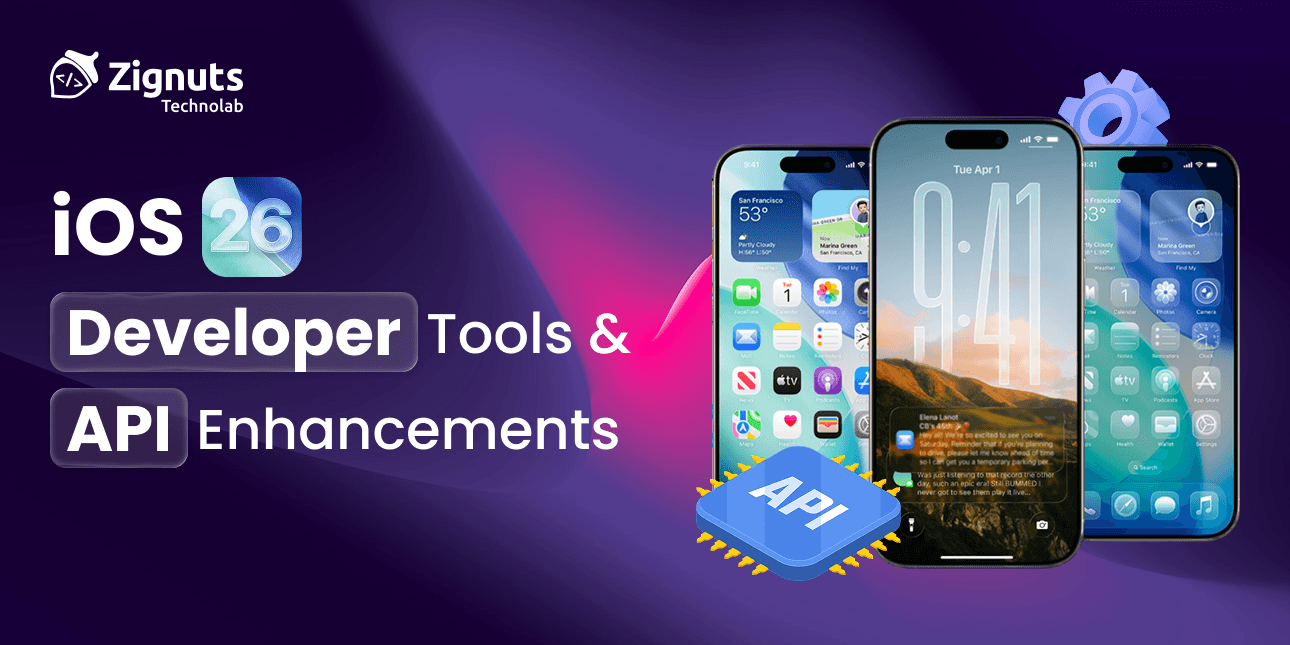
As someone who has been developing applications for over eight years, I can confidently say that the shift toward iOS 26 Developer tools represents one of the most significant leaps forward in mobile history. Having attended WWDC and navigated the transition into 2026, it is clear that Apple is no longer just refining the experience; they are rewriting the rulebook. The introduction of the Liquid Glass design language and the deep integration of agentic AI within Xcode 26 have fundamentally altered my daily workflow, moving us from manual coding to high-level architectural oversight.
This era is defined by a "context-first" philosophy where the operating system and the developer tools work in a symbiotic relationship. With the release of iOS 26.4 beta, we are seeing APIs that don't just execute commands but anticipate user intent and environmental changes in real-time. Whether it is leveraging the Foundation Models framework for on-device intelligence or adapting to the refractive depth of the new UI, the technical bar has been raised. For those of us who have seen the platform evolve since the early days of Swift, the tools available today offer an unprecedented level of creative freedom and engineering precision.
The Evolution of iOS 26 Developer Tools
The ecosystem has undergone a remarkable transformation this year. Apple has introduced a fundamental rethinking of how we interact with our software, moving beyond simple visual updates to a deeper, more integrated workflow. After spending weeks with the latest builds, I can attest that the productivity gains are substantial and immediately noticeable. The focus has shifted from static interfaces to a dynamic "physics-based" environment where every pixel feels tangible.
1. Liquid Glass Design and UI Adaptation
The most striking change in 2026 is the Liquid Glass aesthetic. This design language introduces a visual overhaul defined by translucency, depth, and refractive effects. It marks the first time Apple has unified its design system across every platform from the Apple Watch to the Studio Display, creating a truly seamless brand experience.
- New Design Language:
Liquid Glass isn't just a skin; it's a dynamic material system. It uses real-time GPU rendering to mimic physical optics, featuring lensing effects that bend and concentrate light rather than just blurring it. This creates a sense of spatial presence, where UI elements don't just sit on the screen but appear to have actual weight and viscosity.
- API Accessibility:
Updated frameworks provide direct access to these materials through modifiers like .glassEffect(). For the first time, we have the GlassEffectContainer, which allows multiple glass shapes to share the same rendering region. This enables "glass morphing," where elements like a floating plus button can fluidly merge into a full menu as if they were made of liquid.
- System UI Elements:
Toolbars and tab bars have been completely reimagined to be "content-first." New APIs allow tab bars to minimize automatically during a scroll, maximizing screen real estate while remaining accessible. We now have to think in layers: a Background Layer for content, a Glass Layer for controls, and a Solid Layer for critical text to maintain accessibility.
- Adaptive Intelligence:
One of the coolest technical details is that Liquid Glass is interactive by default. The .interactive() modifier enables touch-point illumination, where a subtle glow radiates from your finger across the glass surface, providing instant, tactile feedback that feels more natural than a simple color change.
2. Xcode 26: The Agentic Coding Revolution
The crown jewel of the iOS 26 Developer suite is undoubtedly Xcode 26. This isn't just an incremental update; it is a reimagining of the development environment through "agentic coding." We have moved past simple code completion into an era where the IDE acts as a high-level collaborator that understands project intent.
- Integrated AI Agents:
Xcode 26 now features native support for agents like Claude and Codex via the new Model Context Protocol (MCP). These agents are capable of autonomous project exploration. They don't just suggest a line of code; they can scaffold entire features, refactor complex architectures across multiple files, and even fix SwiftUI layouts by "seeing" the result. By capturing screenshots of Xcode Previews, the agents perform visual verification to ensure the UI aligns with your design specifications before you ever hit run.
- Foundation Models Framework:
This year, Apple has opened the doors to the on-device large language models that power Apple Intelligence. We can now integrate these models into our own apps with just a few lines of Swift. Whether it is semantic search, real-time text summarization, or intelligent content classification, the Foundation Models API handles the heavy lifting locally. This ensures that user data remains private and your app’s "smart" features work perfectly even without an internet connection.
- Visual Intelligence and Semantic Deep Linking:
One of the most futuristic additions is the Visual Intelligence API. Apps can now gain a deeper understanding of what is happening on the screen. For developers, this means we can enable "Contextual Intent." For example, if a user is looking at a photo of a concert ticket in your app, the system can suggest a context-aware action like "Add to Calendar" or "Find Directions" by deeply linking into the specific data structures recognized by the OS.
- Autonomous Task Execution:
In Xcode 26, you can assign a broad goal to the coding assistant, such as "migrate this data layer to SwiftData" and watch it work. It will break the task into sub-tasks, search the local Apple documentation for the latest 2026 syntax, modify the necessary project settings, and iterate through build errors until the project compiles successfully. This "closed-loop" system allows us to focus on high-level innovation rather than repetitive boilerplate.
3. Performance Enhancements and Speed
Apple has delivered remarkable efficiency gains this year, addressing the long-standing demand for a leaner and more responsive development environment. In my testing, build times have been reduced by nearly 35%, and the overall workspace loading is significantly faster, allowing for a near-instantaneous transition between coding and testing.
- Optimized Footprint:
Despite the massive influx of AI-driven features, the Xcode 26 installer is actually 24% smaller than its predecessor. This was achieved through a modular architecture where heavy assets like specific simulator runtimes or specialized machine learning models are downloaded on demand. This "Thin Binary" approach ensures that your disk space is prioritized for your projects rather than the IDE itself.
- Localization Tools and String Catalogs:
Managing global releases has never been more fluid. String Catalogs now feature Type-Safe Swift Symbols, which eliminate the risk of "stringly-typed" errors. Furthermore, the system now utilizes Auto-generated Translator Comments; by analyzing the surrounding code context, Xcode automatically provides translators with the intent behind a string, significantly reducing back-and-forth communication.
- Advanced Debugging with Processor Trace:
For those working with the high-performance M4 and iPhone 16 chips, the new Processor Trace instrument is a game-changer. Unlike traditional sampling that might miss micro-stutters, it provides a full execution flow, capturing every branch and function call with hardware-level precision.
- SwiftUI Power Profiler:
Battery life is a critical metric for any iOS 26 Developer. The new Power Profiler allows you to track energy usage in real-time, broken down by subsystem, CPU, GPU, and even the 5G radio. When paired with the Cause & Effect Graph in the SwiftUI instrument, you can pinpoint exactly which view update is causing an unnecessary power spike.
- Compilation Caching:
A new opt-in feature for 2026 is Explicit Modules and Global Caching. By caching the compilation results of stable modules, Xcode significantly speeds up iterative build cycles. This is especially noticeable when switching between git branches, as the IDE no longer needs to recompile the entire universe for a minor logic change.
Hire iOS Developers Today!

4. Icon Composer: Professional Asset Creation
One of the most valuable additions is the Icon Composer app. This dedicated tool handles the complex task of creating multi-layered, adaptive icons. It allows us to preview how icons will look in dark, tinted, or "clear" modes across all platforms, ensuring a consistent brand identity.
- Thinking in Physical Layers:
In 2026, icon design has moved beyond flat images. With Icon Composer, you can organize your artwork into four distinct depth groups. Each group defines where a layer sits relative to the "glass" front plane, creating a genuine sense of parallax and physical presence.
- The Liquid Glass Toggle:
This is the standout feature for any iOS 26 Developer. With a single switch, you can apply a software-based material to your layers that mimics the optical qualities of real glass. The tool handles complex calculations for blur, translucency, and light refraction automatically, so you don't have to manually paint highlights in Photoshop.
- Annotating for Six Appearance Modes:
The system now supports six distinct stylistic variations: Default Light/Dark, Clear Light/Dark, and Tinted Light/Dark. Icon Composer lets you annotate specific layers for these modes, for instance, designating a "pure white" layer as the primary silhouette for monochrome-tinted modes, ensuring your brand remains recognizable even when the OS applies a system-wide color filter.
- Real-Time Lighting and Specular Highlights:
The app includes a dynamic lighting preview. You can move a virtual light source across your icon to see how specular highlights bounce off the "rounded enclosures" of your design. This ensures that your icon looks tactile and alive, rather than just another static asset on the home screen.
- Direct Xcode Integration:
Once finalized, the tool exports a single .icon file. You no longer need to manage dozens of PNG files for different resolutions; you simply drag this file into your project, and Xcode handles the compilation for iPhone, iPad, Mac, and Apple Watch.
5. New APIs and Frameworks
The iOS 26 Developer kit introduces several powerful new capabilities for specialized apps, moving beyond general improvements into deep, industry-specific functionality. These updates allow us to build more intelligent, sensitive, and commercially viable applications.
- HealthKit and Medication Intelligence:
The new Medication Data API is a significant milestone for digital health. It allows apps to access user-annotated dose events, including "as needed" logs and symptoms associated with specific medications using RxNorm codes. Furthermore, the Workout APIs are now fully unified across iPhone and iPad, enabling real-time fitness tracking and "Live Activity" mirroring on larger screens without code duplication.
- Journaling Suggestions and Secure Sync:
This API has evolved from a standalone tool into a cross-device experience. Suggestions generated on an iPhone, such as a visit to a new city or a completed workout, now sync securely via iCloud to iPad and Mac. For developers, the new JournalingSuggestionsConfiguration allows your app to register for "Smart Notifications," which prompt users to reflect at the optimal time based on their routine and location.
- StoreKit & AdAttributionKit:
Monetization and marketing have received a massive overhaul. StoreKit 2 now officially supports One-Time Subscription Offers for consumable and non-renewing products, giving us more flexibility for "pay-as-you-go" models. Simultaneously, AdAttributionKit replaces older frameworks with expanded attribution windows (up to 30 days for clicks) and improved re-engagement tracking. This allows us to measure how effectively we win back lapsed users without compromising their privacy.
- Background Tasks and Apple Intelligence:
A new Background Tasks API update enables long-running processes, like high-resolution video exports or machine learning model training, to continue even after the user leaves the app. Additionally, the Apple Intelligence Framework allows third-party apps to hook into the system's "Writing Tools," enabling your app to offer professional proofreading or tone adjustments natively.
- Unified Accessibility APIs:
New for 2026, the Head Tracking API and Eye-Gaze Framework have been moved into the standard SDK. This allows developers to build "Hands-Free" interfaces for any app, not just for accessibility, enabling users to navigate lists or trigger actions using simple facial expressions like a smile or a blink.
6. Documentation and Cross-Platform Synergy
Apple has completely overhauled the documentation system within the iOS 26 Developer ecosystem to be fully interactive. This transformation moves away from static text, turning the documentation viewer into a live sandbox where you can experiment without leaving your workflow.
- Interactive Live Previews:
You can now run live Swift code examples directly within the IDE documentation viewer. These aren't just snippets; they are fully functional, mini-applications. You can modify parameters in the documentation and see the resulting UI or logic change in real-time, which significantly flattens the learning curve for complex new frameworks like Liquid Glass or Metal 4.
- Unified Project Structure:
The "Multi-Platform" target has been reimagined. Instead of managing separate targets with complex conditional compilation, the new Universal Project Template allows you to share up to 90% of your codebase between iOS, macOS, and visionOS. The system intelligently handles platform-specific capabilities like the Digital Crown on watchOS or Eye-Gaze on visionOS through a unified "Capability Descriptor" file.
- Metal 4 and Real-Time Ray Tracing:
The release of Metal 4 has brought desktop-class graphics to the palm of your hand. It introduces MetalFX Frame Interpolation, which functions similarly to modern DLSS or FSR technologies, generating extra frames to ensure smooth performance even at high resolutions. For the first time on mobile, MetalFX Denoising makes real-time path tracing and ray tracing viable for AAA-quality lighting and reflections in mobile games.
- Game Porting Toolkit 3:
This version of the toolkit has moved beyond just "translation" to deep optimization. It now provides a Metal Performance HUD with real-time metrics on draw calls and shader bottlenecks. Developers can use it to evaluate how their Windows or console titles will perform on Apple Silicon, drastically reducing the time it takes to bring high-fidelity games to the App Store.
- Semantic Documentation Search:
The new search engine in Xcode 26 uses natural language processing to understand "intent." Instead of searching for a specific class name like UICollectionView, you can search for "how to build a grid that supports drag and drop," and the documentation will provide a curated guide including the necessary Swift protocols and sample projects.
7. App Intents 2.0 and Siri’s Semantic Intelligence
A significant shift for any iOS 26 Developer is the move toward a truly "headless" app experience. With App Intents 2.0, Siri is no longer just a voice trigger; it is an intelligent orchestrator that understands the data structures within your app. This update transitions the assistant from a reactive command-taker to a proactive participant in the user's workflow.
- Semantic Data Indexing with Assistant Schemas:
The new IndexedEntity protocol allows you to surface your app's core data directly in Spotlight and Siri’s global search. By adopting Assistant Schemas (using macros like @AppIntent(schema: .photos.copy)), you provide the system with a pre-defined understanding of your app’s actions. This means if you build a photo editing app, Siri inherently knows how to "apply a filter" or "duplicate an album" because your intent conforms to a system-wide semantic standard.
- Parameter-Rich Intents and Discovery:
You can now build complex, multi-step actions without the traditional boilerplate code. Siri can dynamically resolve parameters like choosing between different project folders or selecting a specific medication dosage based on the user’s past behavior and current context. With the new App Shortcuts discovery improvements, these intents are automatically indexed, allowing users to find your app's core functions even if they’ve never manually set up a shortcut.
- Visual Intent Triggers & On-Screen Awareness:
One of the most futuristic additions allows users to trigger intents based on what they are looking at. Leveraging the Visual Intelligence API, Siri now possesses "On-Screen Awareness." If a user is viewing a flight itinerary in your app, they can simply say, "Siri, add this to my calendar," and the system will parse the visual metadata to execute the command. This eliminates the need to build custom "Add to Calendar" buttons for every view; the OS now "sees" and interacts with your UI as a human would.
- Interactive Snippets:
In 2026, intents are no longer "fire and forget." New Interactive Snippets allow your app to present a small, functional UI directly within the Siri or Spotlight interface. Users can toggle switches, confirm choices, or enter text without ever leaving their current context. For example, a "Mark as Favorite" intent can update the UI instantly inside the Siri bubble, providing immediate feedback that the task was completed.
- Undoable Intents and Choice Resolution:
Apple has introduced Undoable Intents, giving users a safety net for high-stakes actions. If a user accidentally deletes a record via voice, a simple "Undo that" command or a three-finger swipe gesture can revert the state. Additionally, the system now handles complex "Choice Resolution" better than ever; if a user asks to "Send the file," Siri can intelligently present a list of recent recipients or file versions based on the semantic weight of each option.
8. Privacy-First Security Enhancements
Apple continues to lead with a "Privacy by Design" approach, introducing several new frameworks in 2026 that protect user data while simplifying the developer's job. This year’s focus is on minimizing data collection while maximizing defensive layers against emerging global threats.
- Declared Age Range API:
Instead of asking for a specific birthdate, you can now request an age range. This allows you to tailor mature content or social features without collecting sensitive personal information, keeping your app compliant with global safety regulations like GDPR, CCPA, and new 2026 mandates in regions like Utah and Louisiana. The API can return specific bounds (e.g., "13–15" or "18 or over") based on verified iCloud family data or self-declaration, ensuring age-appropriate experiences without unnecessary data storage.
- Post-Quantum Cryptography in CryptoKit:
To stay ahead of future threats, CryptoKit now supports Hybrid Public Key Encryption (HPKE) and quantum-secure TLS. By combining classical elliptic curve math with new lattice-based algorithms (like ML-KEM), Apple ensures that sensitive data, such as health records or financial transactions, remains protected against "harvest now, decrypt later" attacks. This is now the default for all apps using standard URLSession and Network frameworks in iOS 26.
- Automatic Passkey Upgrades & Account Creation API:
The new Account Creation API makes it easier than ever to ditch passwords. It allows developers to implement a one-step sign-up flow that generates a passkey from the very first interaction. Furthermore, Automatic Passkey Upgrades can now silently migrate existing users. After a traditional login, the system can automatically create a passkey in the background and notify the user that their account is now secured by biometrics, effectively phasing out legacy passwords with zero friction.
- Advanced Fingerprinting Protections:
Expanding on previous iterations, Advanced Tracking and Fingerprinting Protection is now enabled by default across all browsing in Safari, not just Private mode. For developers, this means the system now obscures more device-specific metadata, such as unique font lists or specific hardware configurations that advertisers previously used to track users across the web without consent.
- Stolen Device Protection by Default:
In the latest iOS 26.4 builds, Stolen Device Protection is now a standard setting. This forces a one-hour security delay and biometric authentication for sensitive developer-related actions, such as changing your Apple Account password or modifying "Find My" settings, ensuring that even if a device is compromised, the developer's most critical credentials remain locked.
9. SwiftUI 7: The Dynamic Layout Engine
SwiftUI 7 has matured into a powerful, declarative powerhouse that handles the heavy lifting of modern UI design. The focus this year is on motion, spatial depth, and extreme adaptability across Apple’s expanding hardware lineup. It is no longer just about placing views; it is about defining how those views live and breathe within the Liquid Glass ecosystem.
- State-Driven Animations & The @Animatable Macro:
Transitions are now handled by a new high-level state engine. You no longer need to write complex timing functions; you simply describe the start and end states, and the system uses physics-based math to animate the change smoothly. The new @Animatable macro takes this further by automatically synthesizing animatable data properties for custom shapes, allowing you to create complex, multi-step motion paths with a fraction of the code previously required.
- GlassMorphing Containers & The .glassEffect() Modifier:
Leveraging the Liquid Glass design, the new GlassEffectContainer allows multiple UI elements to share a single refractive region. When you place views with the .glassEffect() modifier inside this container, they don’t just sit next to each other; they blend. This enables "liquid" transitions where elements appear to flow into one another, creating a tactile, high-end feel that mimics the behavior of physical mercury or molten glass.
- Interactive & Spatial Widgets:
Widgets are no longer just for display. In 2026, they support full-speed background refreshes and direct interactivity through Intent-based initializers like Button(intent:). This allows users to check off tasks, toggle smart home lights, or control media playback directly from the Home Screen or Lock Screen. For those targeting visionOS 26, these widgets have become "spatial," gaining the ability to snap to physical surfaces in the user's room and adjust their rendering based on the viewer’s proximity.
- Scroll Edge Effects & Tab Bar Minimization:
To complement the new aesthetic, SwiftUI 7 introduces scrollEdgeEffectStyle(_:for:), giving you granular control over how content blurs and refracts as it hits the edges of a scroll view. Additionally, the new tabBarMinimizeBehavior(_:) allows for an "intelligent" navigation experience where the tab bar can shrink into a compact, floating glass pill during active scrolling, maximizing content visibility without losing the user's place.
- Volumetric Layout APIs:
For developers bridging the gap between 2D and 3D, new modifiers like aspectRatio3D() and rotation3DLayout() allow you to treat standard SwiftUI views as volumetric objects. This is critical for the "refractive depth" of iOS 26, where even flat elements can now cast subtle internal shadows and respond to the device’s gyroscope with realistic 3D shifting.
10. Enterprise and Device Management Upgrades
For those building tools for organizations, the iOS 26 Developer kit includes massive improvements to deployment and control. These updates focus on reducing technical friction during device transitions and providing IT administrators with granular, declarative authority over the fleet.
- Return to Service (Preserved Apps):
When a device is wiped for a new user, the "Return to Service" feature can now preserve the actual app binaries while securely erasing user data. This is a massive win for high-turnover environments like retail or healthcare. By maintaining a file system snapshot of managed apps, the re-deployment process becomes up to 80% faster, as the device no longer needs to re-download several gigabytes of software over the corporate Wi-Fi after every reset.
- Declarative Device Management (DDM) for Apps:
DDM has evolved from a reactive polling system to a proactive, autonomous one. Organizations can now deploy App Store apps, custom apps, and even installer packages using the ManagedAppDistribution framework. This shifts the intelligence to the device itself; the MDM server simply "declares" the desired state (e.g., "this app must be installed and kept updated"), and the device handles the execution, reporting back only when the status changes.
- Default Messaging and Calling App Overrides:
In a major win for enterprise security, organizations can now set default messaging and calling apps at the system level using the Calling and Messaging keys in the settings command. This allows businesses to ensure that all professional communication stays within secure, encrypted, and logged corporate channels, effectively making these third-party tools the primary gateway for employee interaction.
- Managed MDM Migration:
Historically, switching MDM providers required a full device wipe, a nightmare for large-scale operations. iOS 26 introduces a native migration path that allows devices to be re-enrolled into a new management service without data loss. Admins can even set enforceable enrollment deadlines, ensuring the entire fleet moves to the new platform on a strict schedule without manual intervention.
- Safari and Browser Customization:
New declarative configurations for Safari allow IT teams to fully customize the browsing experience. This includes pre-configuring bookmarks, defining the "Start Page" content, and enforcing content summarization rules. These tools help maintain a professional and focused web environment while ensuring that organizational resources are always just one tap away.
- Managed Apple Account Hub:
To simplify the distinction between personal and professional data, iOS 26 introduces a centralized Apple Account Hub. This replaces separate profile sections in individual apps, providing a clear boundary for managed purchases and updates. Organizations can now also restrict device sign-ins to only Managed Apple Accounts, ensuring that corporate hardware isn't used for personal iCloud storage or unauthorized app downloads.
Hire iOS Developers Today!
Future Implications for the iOS 26 Developer
Looking ahead, the iOS 26 Developer landscape represents more than just a collection of new APIs; it marks the transition of the iPhone and iPad into truly autonomous computing devices. Between the Liquid Glass UI and the move toward agentic AI, we are seeing a platform that is more immersive, more intelligent, and far easier to manage at scale than ever before.
For those of us navigating this new era, the following points summarize the long-term impact on our development philosophy:
Shift from Views to Intents:
Development is moving away from purely building static interfaces toward defining a robust "Intent Layer." As Siri and system-wide agents become the primary way users interact with software, your app's success will depend on how well its data and actions are semantically indexed and exposed via App Intents 2.0.
The Mastery of Material Design:
With the introduction of Liquid Glass, we are now "digital glassmiths." Developers must move beyond flat colors and hex codes to master physical properties like refraction, depth, and light-reactive materials. The UI is no longer a surface; it is a 3D environment that requires a deeper understanding of GPU-accelerated rendering.
AI as a Core Architectural Component:
Agentic coding in Xcode 26 means that AI is no longer just a feature; it is a collaborator. The implication for any iOS 26 Developer is a shift in workload; we will spend less time on boilerplate logic and more time on high-level system architecture, security auditing, and fine-tuning the Foundation Models framework for on-device privacy.
The Blur of Platform Boundaries:
The unified project structure and enhanced Metal 4 capabilities mean that "iOS development" is effectively becoming "Apple Ecosystem development." The ease of sharing 90% of code across mobile, desktop, and spatial computing targets will force us to think about "universal experiences" rather than platform-specific apps.
Privacy as a Competitive Advantage:
As security becomes more automated with Post-Quantum Cryptography and the Declared Age Range API, privacy is moving from a compliance requirement to a core user experience feature. Developers who lean into these privacy-first tools will build higher levels of trust in an era of increasingly autonomous data processing.
Autonomous Enterprise Deployment:
For enterprise-focused developers, the new declarative management tools represent a future of "zero-touch" maintenance. The ability to deploy, migrate, and reset devices while preserving core app binaries changes the lifecycle of corporate software, making it more resilient and significantly cheaper to manage at scale.
Conclusion
The advancements within the iOS 26 Developer ecosystem represent a paradigm shift that demands both technical precision and creative vision. From mastering the refractive complexities of Liquid Glass to architecting apps that breathe through App Intents 2.0, the bar for mobile excellence has never been higher. As we move toward a future of agentic AI and autonomous enterprise management, the successful apps of tomorrow will be those that prioritize user intent, data privacy, and seamless cross-platform synergy.
Navigating this revolution requires a team that doesn't just use these tools but understands their deep architectural implications. Whether you are looking to migrate a legacy system or build a ground-breaking spatial experience from scratch, the right expertise is vital. To turn these cutting-edge features into a market-leading reality, you can Hire iOS Developers from Zignuts who are already proficient in the latest 2026 frameworks and Xcode 26 workflows.
Ready to redefine what’s possible on the latest Apple hardware? Reach out to us at Zignuts to bring your vision to life. Contact Zignuts today to discuss your project requirements and let our experts help you lead the next wave of mobile innovation.

Sudhir Dadhania
Mobile Tech Evangelist | A creator at heart, dedicated to building seamless and innovative iOS applications that elevate user experiences.

Dip Lukka
A passionate tech enthusiast dedicated to building intuitive solutions and sharing valuable insights through engaging content.