


.svg)

.svg)


.svg)

.svg)


.webp)
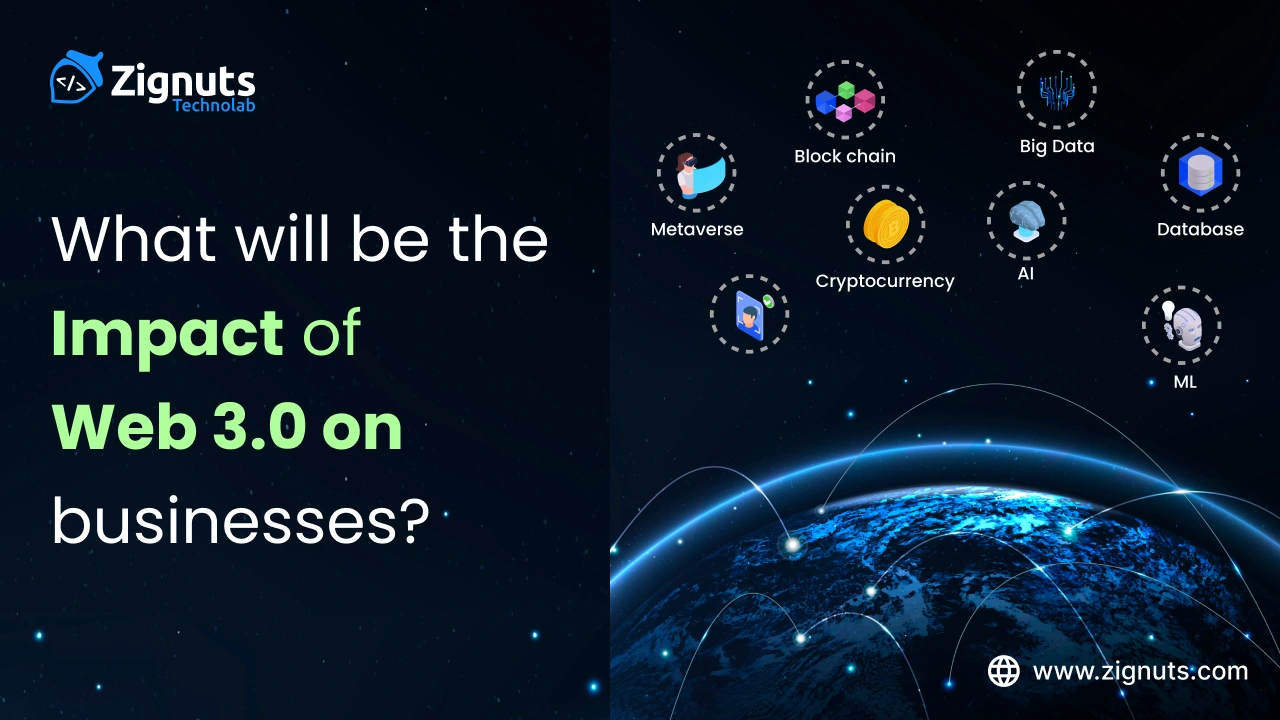
The transition to Web 3.0 has fundamentally re-engineered the social and economic fabric of the digital world. From Decentralized Physical Infrastructure Networks (DePIN) that crowdsource hardware to Phygital commerce that bridges the gap between digital twins and physical goods, businesses now operate in a "Semantic and Spatial" landscape. In this new reality, users retain sovereign ownership of their data, while Autonomous AI Agents carry out trustless transactions on behalf of both brands and consumers. This "Intelligent Web" is not just an upgrade to our online presence; it is a total redefinition of value, ownership, and corporate accountability in a post-centralized global economy.
What is Web 3.0?
Web 3.0 has matured into the "Spatial and Agentic Web." While earlier iterations focused on decentralized ledgers, the Web 3.0 of 2026 is defined by Self-Sovereign Identity (SSI) and Automated Trust. It fulfills the original vision of the internet: a peer-to-peer ecosystem where power is restored to the participants rather than concentrated in data silos. In this era, the web is no longer just a collection of pages; it is a persistent, 3D environment where human intent is executed by intelligent digital proxies.
Blockchain serves as the foundational "trust layer" of Web 3.0, but it is now augmented by Zero-Knowledge Proofs (ZKPs) and Edge AI. This creates a democratized environment where "middlemen" are replaced by smart contracts that execute at millisecond speeds. Beyond simple transactions, the Web 3.0 of 2026 introduces several key shifts:
The Agentic Economy:
We have moved from "searching" the web to "tasking" the web. Autonomous AI Agents now hold their own on-chain identities and digital wallets, allowing them to negotiate contracts, purchase services, and manage digital assets on behalf of users without human intervention.
Privacy-First Verification:
Through Zero-Knowledge Proofs (ZKPs), users can prove their eligibility, such as being over 21 or having a high credit score, without revealing their actual birthdate or bank balance. This ensures total data privacy while maintaining 100% regulatory compliance.
Tokenization of Everything:
In this 2026 landscape, Web 3.0 enables a Smart Economy where physical assets from real estate to energy grids are tokenized and traded globally. This "RWA (Real-World Asset) Movement" allows for fractional ownership and instant liquidity, removing the traditional gatekeepers of high-value investments.
The Spatial Layer:
Integration with 6G-ready infrastructure has enabled a "Spatial Web" where digital information is overlaid onto the physical world. Websites have evolved into 3D Immersive Spaces, allowing businesses to interact with customers in a high-fidelity, interactive "Phygital" environment.
Impact of Web 3.0 on Businesses
The Rise of Autonomous AI Agents in Web 3.0
Businesses are now utilizing "Agentic Workflows" where AI bots, equipped with their own digital wallets, manage procurement, supply chain bidding, and customer service without human intervention. These agents operate 24/7, executing on-chain actions through smart contracts to ensure millisecond-level precision in high-frequency markets.
Real-World Asset (RWA) Tokenization in Web 3.0
Moving beyond digital-only assets, businesses are tokenizing physical property, machinery, and inventory. This unlocks trillions in liquidity, allowing for fractional ownership and 24/7 global trading of "hard" assets. By 2026, even U.S. Treasuries and private equity have shifted to digital rails, enabling instant settlement and reducing administrative overhead.
Phygital Commerce & 3D Immersion in Web 3.0
The blending of physical products with "Digital Twins" (Utility NFTs) has revolutionized retail. Customers can now experience 3D products in the spatial web before they arrive at their doorstep. This "Try-Before-You-Buy" spatial layer reduces return rates and fosters a deeper, interactive connection between brands and consumers.
Decentralized Physical Infrastructure (DePIN) in Web 3.0
Companies are crowdsourcing hardware needs like 5G nodes, GPU compute power, or solar energy grids through token incentives, drastically reducing the Capital Expenditure (CapEx) for expanding physical networks. This "People-Powered Infrastructure" allows startups to compete with global telecom and energy giants by building networks from the bottom up.
Self-Sovereign Identity (SSI) & Portable Data in Web 3.0
The era of "username and password" is over. Users carry their own encrypted identity in a Web 3.0 wallet, granting businesses temporary, permissioned access to data rather than surrendering it to a central server. This shift eliminates the liability of holding sensitive user data while providing more accurate, verified customer insights.
Zero-Knowledge Compliance & Privacy in Web 3.0
Using Zero-Knowledge Proofs (ZKPs), businesses can verify sensitive customer information (like age or creditworthiness) without ever actually seeing or storing the raw personal data. This ensures 100% privacy compliance with global regulations while speeding up onboarding processes for fintech and healthcare.
Decentralized Autonomous Organizations (DAOs) for Enterprise in Web 3.0
Modern brands are moving toward "Community-Led Governance," where token holders and loyal customers vote on product roadmaps and corporate strategy. This fosters radical brand loyalty and shifts the corporate structure from top-down management to a collaborative, incentivized ecosystem.
The Sustainability Pivot: Regenerative Finance (ReFi) in Web 3.0
Businesses are utilizing the transparent nature of Web 3.0 to track ESG impact in real-time. This allows for verifiable carbon credit trading and ethical supply chain audits that are visible to every consumer, turning sustainability from a marketing claim into a programmable reality.
Decentralized Social Media & Creator Sovereignty in Web 3.0
Enterprises are moving away from centralized ad platforms to engage directly with niche communities on Decentralized Social (DeSoc) protocols. In this 2026 landscape, creators own their audience and "portable" social graphs, allowing businesses to form more authentic, direct-to-wallet partnerships that bypass traditional platform gatekeepers.
Programmable Loyalty & Liquid Rewards in Web 3.0
Traditional loyalty programs have evolved into interoperable reward systems. In Web 3.0, loyalty points are liquid tokens that can be traded, sold, or used across different brand ecosystems. This turns reward programs into mini-economies, significantly increasing customer retention through tangible, tradable value.
Ready to bring your application vision to life? Start your project with Zignuts expert Dedicated developers.
**Hire now**Hire Now**Hire Now**Hire now**Hire now

New Strategic Business Horizons in Web 3.0
- The Web 3.0 Creator Economy & Brand Co-Creation: By 2026, the boundary between "Customer" and "Creator" has vanished, giving rise to Direct-to-Community (D2C) protocols.
- Direct Monetization:
Creators use NFTs to bypass platform fees, keeping 100% of their revenue. This includes "Primary Sale" profits and "Secondary Royalty" streams that are automatically triggered by smart contracts every time an asset is resold. - User-Owned Platforms:
Brands are migrating to Web 3.0 Decentralized Social (DeSoc) protocols where the audience is "portable." If a brand moves its community from one app to another, the users' social graphs and data move with them, preventing "platform lock-in." - Co-Created IP:
Brands launch "Open-Source" characters or products. Fans can build their own versions, commercialize them, and automatically share a percentage of the revenue back to the original brand via the blockchain.
- Direct Monetization:
- Web 3.0 On-Chain Professional Credentialing (Soulbound Identity): Recruitment and B2B partnerships have shifted to a "Trustless Verification" model where reputation is the primary currency.
- Immutable Resumes:
Skills, degrees, and work history are issued as non-transferable Soulbound Tokens (SBTs). These act as a "Digital Passport" that cannot be forged, bought, or transferred to another individual. - Instant Verification:
Instead of weeks of background checks, HR departments verify a candidate's credentials in seconds by checking their Web 3.0 wallet. This ensures the "Proof of Skill" is mathematically certain. - Proof of Contribution:
Freelancers prove their value through a permanent ledger of "On-chain Contributions," which tracks successfully completed tasks, code commits, or project milestones in real-time.
- Immutable Resumes:
- Web 3.0 Decentralized Finance (DeFi) for Small & Medium Enterprises (SMEs): SMEs no longer rely solely on traditional banks, instead tapping into Programmable Capital to fund their growth.
- Algorithmic Lending:
Businesses use their real-time on-chain revenue history as collateral. This allows for "Flash Loans" or lines of credit that are granted based on performance data rather than just credit scores. - Streaming Salaries:
Employees can receive their pay "by the second" through money-streaming protocols. This eliminates the wait for a monthly paycheck and allows workers to access their earned capital instantly for investments or expenses. - Automated Yield Generation:
Corporate treasury departments put idle cash into decentralized vaults. These vaults use AI to move capital between protocols, ensuring the business earns the highest possible risk-adjusted yield.
- Algorithmic Lending:
- The Evolution of Web 3.0 "Brands-as-a-Service" (BaaS): Large enterprises are becoming infrastructure providers, turning their brand power into Modular Ecosystems.
- Whitelabel Ecosystems:
Global giants offer their Web 3.0 loyalty infrastructure to smaller partners. For example, a local cafe can use a global airline's blockchain reward system to offer high-value travel points to its local customers. - Cross-Brand Interoperability:
A customer’s loyalty points from a hotel chain might be instantly spendable at a partner airline’s NFT shop. This creates a "Liquid Loyalty" environment where rewards feel like real currency.
- Whitelabel Ecosystems:
- Web 3.0 Decentralized Marketing & Token-Incentivized Engagement: The marketing landscape has moved from "Surveillance-Based" to "Permission-Based" models using tokenomics.
- Attention Rewards:
Instead of paying big tech for ads, businesses pay users directly in tokens for their attention. Users choose to view an ad or share feedback in exchange for "Engagement Tokens." - Gated Communities:
Brands use "Access NFTs" to create exclusive digital "VIP Lounges." Only token holders can access special product drops, attend virtual events, or participate in "Executive-style" voting for the brand's next product launch.
- Attention Rewards:
- The Web 3.0 "Micro-Multinational" SME Model Web 3.0: tools allow even one-person enterprises to operate as global entities from day one.
- Global Settlement:
Small businesses use stablecoins for instant, low-cost international settlements. This bypasses the $25–$50 fees and 3-day wait times of traditional SWIFT banking transfers. - Distributed Talent Pools:
SMEs hire and manage global talent through DAOs (Decentralized Autonomous Organizations). Smart contracts handle the legal agreements, escrow payments, and performance-based bonuses automatically across borders.
- Global Settlement:
- Web 3.0 Semantic Healthcare & Patient-Owned Data: Healthcare providers are adopting decentralized data architectures to enhance patient outcomes and privacy.
- Sovereign Health Records:
Patients hold their medical history in encrypted Web 3.0 vaults. They grant temporary "Decryption Keys" to doctors, ensuring that their data isn't trapped in one hospital's siloed database. - Data Monetization for Research:
Patients can choose to "Opt-in" to medical trials. They share their anonymized health data with pharmaceutical researchers in exchange for tokens, turning their personal data into a productive asset.
- Sovereign Health Records:
Benefits of Web 3.0 for Businesses
No third-party requirement in Web 3.0:
Smart contracts remove the "middleman tax," reducing transaction costs by up to 60%. By automating escrow and settlement, businesses eliminate the need for banks or legal intermediaries to verify every step of a transaction.
Better regulation compliance in Web 3.0:
"Programmable Compliance" ensures transactions automatically adhere to local laws (like MiCA or GDPR 2.0). Compliance logic is embedded directly into the protocol, making audits instantaneous and reducing the risk of human error or regulatory fines.
Improved security in Web 3.0:
Decentralized storage means there is no "central honeypot" for hackers to target. By distributing data across a global network of nodes, Web 3.0 eliminates single points of failure, making large-scale data breaches nearly impossible for centralized entities to suffer.
Improved customer relations in Web 3.0:
Trust is built by only using the data that customers explicitly share via their Web 3.0 wallets. This creates a "Zero-Party Data" environment where brands offer value in exchange for permissioned access, leading to higher-quality engagement and loyalty.
Enhanced Transparency and Traceability:
Every movement of a product or asset is recorded on an immutable ledger. This is particularly beneficial for Supply Chain Management, where businesses can prove the authenticity and ethical sourcing of goods to consumers in real-time.
Operational Resilience through DePIN:
By utilizing Decentralized Physical Infrastructure Networks (DePIN), businesses can maintain operations even during central server outages. Since the infrastructure is distributed, the network remains "always-on," ensuring 100% uptime for critical digital services.
New Revenue Streams through Secondary Markets:
Web 3.0 allows businesses to earn Automated Royalties on the secondary resale of digital assets. For the first time, a brand can profit every time its "Utility NFT" or digital collectible is traded between users in the open market.
Direct Value Creation & Fairer Economies:
Businesses can bypass "Platform Taxes" (like the 30% app store fees) by using decentralized payment rails. This allows companies to offer more competitive pricing to users while retaining a larger share of the revenue.
Hyper-Personalization without Privacy Loss:
Using Edge AI and Semantic Search, Web 3.0 provides a deeply tailored user experience. AI agents analyze user intent locally on the device, offering personalized recommendations without ever uploading sensitive personal files to a corporate server.
Challenges of Web 3.0 for Businesses
Interoperability Fragmentation:
Managing assets across different blockchains requires complex cross-chain infrastructure. In 2026, the ecosystem is still divided into "isolated islands" of data. Businesses often struggle to move liquidity and data seamlessly between Layer-1 and Layer-2 networks, leading to a fragmented user experience and higher technical overhead for maintaining multiple bridge protocols.
The Talent Gap:
The demand for Web 3.0 architects, smart contract auditors, and decentralized system engineers far exceeds the global supply. Because the technology stack evolves almost monthly, companies find it difficult to hire and retain professionals who understand both the cryptographic foundations and the business logic required for decentralized applications.
Environmental Responsibility:
The computing power for AI-integrated nodes and the maintenance of distributed ledgers require a focus on "Green Coding." While many networks have moved to Proof-of-Stake (PoS), the sheer scale of the 2026 decentralized web, combined with high-performance Edge AI, continues to place a significant energy burden on corporate sustainability goals.
The Regulatory Transparency Paradox:
Businesses face a "Catch-22" between privacy and compliance. While regulators (under frameworks like MiCA or GDPR 2.0) demand complete transaction visibility for AML (Anti-Money Laundering), blockchain's immutable nature can conflict with "the right to be forgotten." Navigating these conflicting legal requirements across different jurisdictions remains a primary hurdle for global enterprises.
The UX "Complexity Wall":
Despite advancements in Account Abstraction, the user experience of Web 3.0 still carries a steep learning curve. Concepts like gas fees, seed phrases, and "signing" transactions can be intimidating for the average consumer. For businesses, this translates to higher customer drop-off rates and a constant need for educational onboarding.
Smart Contract & Logic Vulnerabilities:
In the Web 3.0 world, "code is law." A single logic error in a smart contract can lead to irreversible financial loss. By 2026, hackers have moved beyond simple exploits to sophisticated Oracle Manipulation and Social Engineering attacks targeting "Agentic AI" workflows, requiring businesses to invest heavily in continuous, AI-driven security auditing.
Scalability Bottlenecks during Peak Demand:
Even with Layer-2 solutions, major decentralized networks still face congestion during high-traffic events. For a business, this can mean "Gas Wars" where transaction fees skyrocket or "Failed Transactions" that disrupt real-time commerce, making the decentralized web feel less reliable than its centralized predecessors.
Future of Web 3.0
The future of the web lies in the "Invisible Integration" stage. By the end of 2026, the term Web 3.0 will become synonymous with "The Internet," as blockchain and AI technologies become the hidden backbone of every interaction. Users no longer need to understand "wallets" or "gas fees"; instead, they experience a seamless, secure, and hyper-personalized web where the complex decentralized architecture runs quietly in the background.
The Era of the "Silent Blockchain":
By 2027, the underlying ledger technology will be completely abstracted. Consumers will interact with apps that offer the security and ownership of Web 3.0, but with the familiar, frictionless user interface of the traditional web.
The Rise of the Agentic Economy:
We are moving toward a world where Autonomous AI Agents act as your personal concierge. These agents will manage your digital identity, negotiate the best prices for services, and execute smart contracts on your behalf, turning the web into a proactive assistant rather than a reactive tool.
Tokenization of Global Liquidity:
The future will see the full-scale migration of traditional finance to on-chain rails. From fractionalized real estate to automated carbon credits, Web 3.0 will unlock trillions in "trapped" value, creating a truly global and 24/7 liquid market for every possible asset class.
Hyper-Personalization through Semantic Intelligence:
The "Semantic Web" will finally reach its peak, where the internet understands the context of your needs. AI will synthesize information from across the decentralized web to provide answers and experiences tailored to your specific life stage, professional goals, and personal preferences.
Post-Quantum Security Standards:
As we look toward the 2030s, the future of Web 3.0 will focus on Post-Quantum Cryptography. Businesses will adopt "Quantum-Resistant" ledgers to ensure that decentralized data remains secure even in the face of next-generation computing power.
Decentralized Governance as a Corporate Standard:
We will see the rise of Hybrid DAOs, where traditional corporations use decentralized governance for specific modules like product development or community grants to foster radical transparency and stakeholder participation.
Practical Resources for Users in Web 3.0
How to Prepare Your Business: A 2026 Strategic Checklist
Transitioning to a decentralized model requires a shift from managing data to managing "trust." Use this checklist to evaluate your organization’s readiness for the next phase of the internet:
Audit Your Data Sovereignty and Portability:
Evaluate your current reliance on centralized data silos. In 2026, leading businesses are moving toward Self-Sovereign Identity (SSI). You should plan a migration where you no longer "hold" sensitive user data in a central database but instead verify it via permissioned access to a user's digital wallet. This reduces your data-breach liability and puts the customer in control.
Identify Agentic Use Cases for Automation:
Map out your manual operational workflows, particularly in procurement, vendor bidding, and real-time logistics. Identify which of these can be handled by an Autonomous AI Agent. These agents, equipped with their own digital wallets and on-chain identities, can negotiate contracts and execute payments instantly when specific smart contract conditions are met, such as a verified delivery.
Technical Infrastructure Readiness Check:
Ensure your IT stack is compatible with Layer-2 scaling solutions (like Polygon or Arbitrum) and Edge AI. These technologies are essential for maintaining the speed and low cost that users expect in 2026. If your infrastructure cannot handle high-frequency, on-chain interactions without significant latency, it may be time for a backend modernization project.
Legal & Compliance Alignment:
The regulatory landscape (specifically MiCA in Europe and Article 12 in the US) has matured. You must ensure that your tokenomics and smart contract logic are "compliant by design." This includes having clear protocols for Know Your Customer (KYC) in a decentralized environment and ensuring your digital asset collateral is legally perfected under modern commercial laws.
Ready to bring your application vision to life? Start your project with Zignuts expert Dedicated developers.
**Hire now**Hire Now**Hire Now**Hire now**Hire now
Essential Web 3.0 Tooling for Enterprises
Selecting the right "stack" is critical for building a resilient, enterprise-grade Web 3.0 presence. The following categories represent the most reliable tools and platforms currently dominating the 2026 business landscape:
Digital Identity and Decentralized Access:
Managing user identity is the first step toward decentralization. MetaMask Institutional provides the security and multi-signature capabilities required for corporate-level asset management. For more nuanced identity needs, Soulbound ID and Microsoft Entra Verified ID allow businesses to issue non-transferable, verifiable credentials. These tools are used to prove employee status or vendor certifications without exposing sensitive personal information, creating a "zero-trust" security layer.
Infrastructure, Storage, and Data Indexing:
To build decentralized applications (dApps) that feel as fast as traditional websites, you need robust middleware. Alchemy acts as the primary API bridge, connecting your business to dozens of blockchains with enterprise-grade reliability. To manage and query the vast amounts of on-chain data, The Graph is the industry standard for indexing and creating searchable histories. For the storage of large files such as 3D product models for the spatial web or legal documents, IPFS (InterPlanetary File System) offers a decentralized, permanent storage solution that ensures your assets are never at the mercy of a single cloud provider’s outage.
Security, Auditing, and Real-Time Monitoring:
In Web 3.0, "code is law," which makes security audits non-negotiable. OpenZeppelin provides a suite of audited, secure smart contract templates that act as the building blocks for your decentralized operations. For real-time monitoring and compliance, Chainalysis is used to track on-chain transactions to prevent interaction with high-risk or sanctioned wallets. Additionally, Azure Confidential Ledger provides a tamper-proof environment for businesses that need a managed, high-security decentralized ledger for audit trails and logs.
Connectivity and Real-World Oracles:
For your smart contracts to interact with the real world, such as adjusting a supply chain order based on weather data or a stock price, you need a bridge. Chainlink Labs provides Decentralized Oracle Networks that securely feed external data into your blockchain environment. This connectivity is the "nervous system" of a modern Web 3.0 business, allowing for truly autonomous, event-driven operations that don't require human intervention to trigger.
Conclusion
The transition to Web 3.0 in 2026 represents far more than a technical upgrade; it is a fundamental shift in how value, trust, and data are managed globally. By integrating Agentic AI, RWA tokenization, and Self-Sovereign Identity, businesses can now eliminate costly intermediaries, secure user data through decentralization, and automate complex workflows with unprecedented precision. While challenges like the talent gap and interoperability remain, the move toward an "Invisible Integration" stage ensures that decentralized technologies will soon be the quiet powerhouse behind every successful enterprise.
Looking ahead, the convergence of the Spatial Web and 6G connectivity will further blur the lines between physical and digital commerce, creating "Phygital" ecosystems where transparency is a programmable feature rather than a marketing claim. Organizations that choose to Hire dedicated developers to leverage these tools will not only benefit from reduced operational overhead but will also foster deeper, more authentic relationships with their customers through direct-to-wallet engagement and community-led governance.
Ultimately, Web 3.0 is restoring the internet's original promise: an open, user-centric environment where innovation is permissionless, and ownership is absolute. To stay competitive in this intelligent, spatial, and peer-to-peer economy, businesses must move beyond observation and begin active implementation today.
Contact Zignuts to build future-ready mobile apps, websites, or software custom-tailored to fit your specific business needs!




.webp)
.webp)
.webp)

.png)
.png)
.webp)
.webp)
.webp)


