

Understanding Full Stack Development for AI and ML Applications
What is Full Stack Development for AI and ML Applications?
In the modern era, building a digital product requires more than just a slick interface or a clever algorithm. It involves a cohesive architecture where the user experience and the underlying logic work in perfect harmony. Specifically, this discipline focuses on the ability to construct both the client-side environment and the complex server-side infrastructure. In 2026, the definition has expanded to include the orchestration of "Agentic" workflows and the integration of multimodal intelligence directly into the application core.
A developer in this space is expected to manage the entire lifecycle of a project, from the initial pixel on the screen to the final byte stored in a high-performance vector database. By bridging these two worlds, creators can ensure that the transition from a conceptual model to a functional, production-ready tool is seamless and efficient.
The Importance of Full Stack Development for AI and ML Applications
The current technological landscape demands more than just static software. We are now in an age where applications must think, learn, and adapt. Having a unified approach to development is essential because it eliminates the traditional silos between data science and software engineering. In 2026, businesses no longer view smart features as "extras"; they are the primary driver of value.
Instead of a model sitting isolated in a research notebook, a holistic development strategy allows that intelligence to be integrated directly into a production environment. This ensures that the insights generated by smart systems are accessible, actionable, and reliable for the end user. Furthermore, a full-stack perspective allows for better cost optimization of expensive compute resources and ensures that privacy-preserving measures are baked into every layer of the system.
Hire Dedicated Developers Today!

The Foundations of Full Stack Development for AI and ML Applications
Frontend Development for AI and ML Applications
The frontend is the primary touchpoint where human intuition meets machine intelligence. In 2026, this goes beyond simple buttons and forms. We are seeing a shift toward immersive, generative interfaces that adapt based on user behavior. Using modern frameworks, developers build responsive environments that can visualize complex multidimensional data in real time.
In addition to traditional visual elements, frontend development now integrates:
- WebAssembly (Wasm) for Client-Side Inference: This allows models to run at near-native speeds directly in the browser, reducing the need for constant server communication and improving privacy.
- Multimodal Interfaces: Modern frontends are designed to handle simultaneous inputs from voice, text, and even gesture-based interactions, creating a more fluid user experience.
- Edge-First Rendering: By processing UI logic at the network edge, applications achieve ultra-low latency, which is essential for "human-in-the-loop" systems where instant feedback is required.
The goal is to make sophisticated predictive outputs feel natural and easy to navigate, ensuring that the human at the keyboard remains in control of the automated logic happening behind the scenes.
Backend Development for AI and ML Applications
The backend serves as the engine room where the heavy lifting occurs. It is responsible for orchestrating the flow of information between the user and the processing units. Modern server-side architecture in 2026 prioritizes high performance and low latency, which is critical when dealing with large-scale computations.
Key advancements in this layer include:
- AI-Integrated Orchestration: Backends are no longer passive; they use intelligent decision engines to predict traffic surges and automatically scale resources before a bottleneck occurs.
- Asynchronous Inference Pipelines: Developers utilize event-driven architectures to handle complex model requests without blocking the user interface, ensuring a smooth experience even during intensive processing.
- Serverless GPU Compute: The rise of specialized serverless platforms allows backends to call high-performance hardware (like NVIDIA H100s or next-gen accelerators) only when needed, optimizing both cost and energy efficiency.
Developers focus on building robust APIs that can handle high volumes of requests while maintaining the integrity of the system. This layer ensures that the business logic remains stable even as the underlying data grows in complexity and scale.
Database Management for AI and ML Applications
Data is the lifeblood of any modern system, but its value depends entirely on how it is organized and retrieved. Current strategies involve a hybrid approach, utilizing relational databases for structured logic and vector databases for high-speed retrieval of high-dimensional information.
Essential trends for 2026 include:
- Vector Database Dominance: These are now the standard for supporting Retrieval-Augmented Generation (RAG), acting as a "long-term memory" for applications to store and search semantic meanings rather than just keywords.
- Agentic Data Management: Databases now support autonomous agents that can self-index and clean data streams in real time, ensuring that the information used for training and inference is always fresh.
- Hybrid Storage Solutions: Systems often combine structured SQL data with unstructured data in "lakehouse" architectures, allowing for complex analytical queries and simple transactional tasks within the same environment.
This dual-layered strategy allows for quick lookups and efficient storage, which is vital for systems that rely on historical context to make future predictions. Proper management ensures that the information remains consistent, secure, and ready for instant access.
DevOps and Deployment for AI and ML Applications
The journey from a local machine to a global audience requires a sophisticated delivery pipeline. In today's environment, this involves automated testing, continuous integration, and rapid deployment cycles.
Modern deployment strategies now feature:
- AIOps (AI for IT Operations): Machine learning models are integrated into the pipeline to monitor for anomalies, predict potential failures, and suggest automated fixes for infrastructure drift.
- Internal Developer Platforms (IDPs): Teams move away from fragmented tools toward unified platforms that provide self-service environments, making it easier to deploy and manage complex cloud-native architectures.
- Policy-as-Code (PaC): Security and compliance are embedded directly into the deployment scripts, ensuring that every update meets strict regulatory standards automatically.
Developers utilize containerization to ensure that software runs identically across different environments. Monitoring is also a core focus, as it allows teams to track system health and performance in real time, ensuring that the application remains available and responsive under varying loads.

Advanced Concepts in Full Stack Development for AI and ML Applications
Cloud Computing and Infrastructure for AI and ML Applications
The cloud has transitioned from a simple storage solution to a massive, distributed computer. In 2026, modern infrastructure relies on specialized hardware like TPUs and H100/B200 high-performance GPUs available on demand. Developers now leverage serverless GPU architectures to scale resources automatically, paying only for the exact milliseconds of computation used.
Beyond raw power, this layer now incorporates:
- Multi-Cloud and Hybrid Strategies: Organizations use a "best-of-breed" approach, running training on one provider while utilizing another's specialized edge delivery network to minimize vendor lock-in.
- FinOps for AI: Specialized financial operations tools are now integrated into the stack to monitor "GPU spend" in real time, preventing cost runaways during large-scale model retraining.
- Sustainable/Green Computing: Modern platforms provide "carbon-aware" scheduling, moving heavy training workloads to regions and times where renewable energy is most abundant.
This elasticity is crucial for handling the unpredictable processing demands of intelligent systems, allowing small teams to deploy global-scale solutions without maintaining physical hardware.
Integration of Frameworks for AI and ML Applications
Success in this field depends on the ability to weave various specialized libraries into a single, cohesive unit. In 2026, this means going beyond simple library imports to creating "Agentic" workflows where different frameworks collaborate autonomously.
Key framework trends include:
- The Rise of JAX and PyTorch 3.x: While TensorFlow remains a staple for enterprise stability, JAX has gained massive traction for high-performance research, and PyTorch has become the industry standard for production flexibility.
- On-Device Frameworks (TinyML): Frameworks like TensorFlow Lite and PyTorch Mobile now support sophisticated pruning, allowing complex models to run locally on mobile and IoT devices without cloud reliance.
- Interoperability Standards: Tools like ONNX (Open Neural Network Exchange) serve as a universal bridge, allowing a model trained in one ecosystem to be deployed in another without friction.
Integration today focuses on creating a modular system where individual parts, like a language model or a computer vision module, can be updated or replaced as new breakthroughs emerge without breaking the entire application.
Real-Time Data Processing for AI and ML Applications
Static data is a thing of the past. Today's systems must react to information as it is generated. This requires a streaming-first mindset where data is ingested, processed, and acted upon in milliseconds.
In 2026, real-time stacks are defined by:
- Unified Batch and Stream Processing: Modern engines allow developers to use the same code for historical analysis and live data streams, ensuring consistency across the application.
- Vector-Stream Synchronization: As new data enters the system, it is automatically vectorized and indexed into "long-term memory" stores, allowing AI agents to have up-to-the-second context.
- Edge-to-Cloud Data Meshes: Processing is decentralized; simple filters run on the "edge" device, while only complex patterns are sent to the central cloud, drastically reducing latency and bandwidth costs.
Whether it is a financial system detecting a fraud pattern or a recommendation engine updating a feed, the ability to handle live streams of information is what defines a truly modern application.
Security and Privacy Considerations for AI and ML Applications
As systems become more intelligent, the responsibility to protect user data grows exponentially. In 2026, security is no longer an afterthought but a core component of the "DevSecOps" process.
Advanced privacy protections now include:
- Federated Learning: This allows models to learn from decentralized data across thousands of devices without the raw data ever leaving the user's possession.
- Homomorphic Encryption: Developers can now perform computations on encrypted data, meaning the server can process a request without ever "seeing" the sensitive underlying information.
- Adversarial Defense: Applications now include specialized layers to detect "prompt injection" or "data poisoning" attempts designed to trick or corrupt the AI's logic.
This includes implementing end-to-end encryption, secure authentication protocols, and strict data governance policies. Furthermore, with the rise of global regulations like the EU AI Act, developers must ensure that their systems are transparent and that user information is handled with the highest level of ethical and legal care.
Hire Dedicated Developers Today!
The Future of Full Stack Development for AI and ML Applications
Looking ahead, we are moving toward a world of "Autonomous Development." This involves tools that can assist in writing code, optimizing queries, and even identifying bugs before they happen. In 2026, the role of a developer is shifting from manual coding to "System Orchestration," where AI agents act as virtual teammates to handle scaffolding, documentation, and routine refactoring.
Key trends defining the next era include:
- Agentic Workflows: We are seeing the rise of Agentic AI, where applications do not just provide answers but autonomously execute multi-step tasks. Full-stack developers are now building "agent systems" that can browse the web, interact with APIs, and manage data pipelines without human intervention.
- The Rise of Edge AI and TinyML: Processing is moving away from centralized data centers and directly onto the user's device. This shift to Edge Computing ensures millisecond response times and enhanced privacy, as sensitive data never leaves the local environment. Developers are now optimizing models to run on mobile phones, wearables, and IoT sensors using frameworks like WebAssembly.
- Repository Intelligence: AI assistants have evolved to understand entire codebases rather than just single files. This context-aware development allows for "repository-level" refactoring, where an AI can suggest architectural changes across dozens of files simultaneously, maintaining consistency and logic throughout the project.
- Quantum-Classical Hybrid Systems: As we approach 2026, experimental full-stack projects are beginning to integrate Quantum Computing for specific high-speed financial modeling and cryptographic tasks, working alongside traditional classical backends.
- Trust-Tech and Blockchain 2.0: With the proliferation of generative content, developers are integrating decentralized ledgers to verify the authenticity of data. Blockchain is becoming the backbone for "Trust Tech," helping to fight deepfakes and secure global supply chains within intelligent applications.
Ethical Development and Algorithmic Transparency for AI and ML Applications
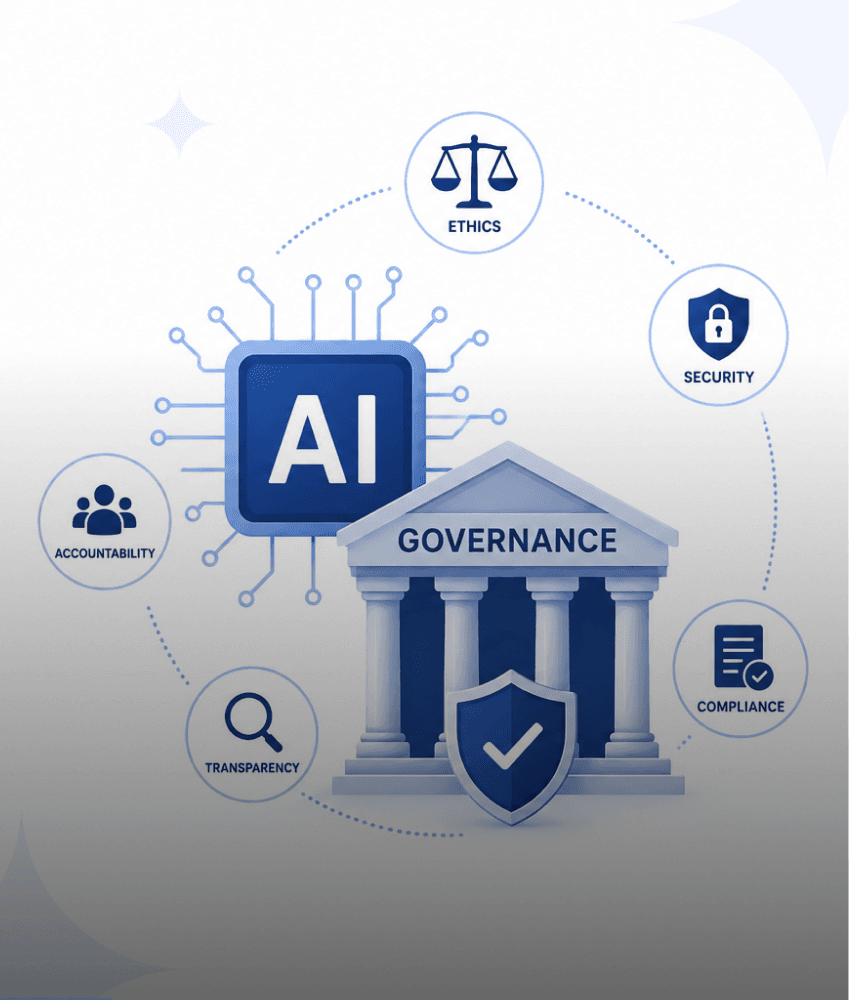
In 2026, building a functional application is only half the battle; ensuring it is ethical and transparent has become a legal and social mandate. Developers are now integrating Explainable AI (XAI) layers directly into the full stack to provide users with clear "reasons" behind automated decisions. This shift is driven by global regulations like the EU AI Act, which requires high-risk systems to be auditable, fair, and technically robust.
Modern ethical development involves:
- Bias Detection Pipelines: Automated tools and "red-teaming" protocols now scan training datasets and live model outputs for demographic, historical, and algorithmic bias. In 2026, these pipelines are integrated into CI/CD workflows, ensuring that any code reaching production meets strict fairness benchmarks.
- Human-in-the-Loop (HITL) Architectures: Developers are designing sophisticated interfaces that allow human experts to override or validate AI decisions. This is no longer just a manual review process; it is a strategic validation layer where human professionals "own" the final output in critical sectors like healthcare, law, and autonomous finance.
- Transparent Metadata and AI Nutrition Labels: Applications now feature standardized "AI Nutrition Labels" at the point of interaction. These labels provide a one-screen summary of the model's purpose, primary data sources, confidence levels, and clear pathways for users to appeal an automated decision.
- Explainable-by-Design (XbD) Frameworks: Rather than adding explanations as an afterthought, 2026 developers use frameworks like SHAP, LIME, and counterfactual explanations to build interpretability into the application's core logic. This allows users to see exactly which features (e.g., income, location, or behavior) influenced a specific prediction.
- Sovereign AI and Privacy-Preserving Governance: To meet local compliance standards, developers are increasingly deploying "Sovereign AI" stacks. These ensure that sensitive data remains within specific geographic or organizational boundaries, utilizing differential privacy and federated learning to maintain security without compromising the model's intelligence.
Adaptive User Experience and Generative UI for AI and ML Applications
The concept of a static user interface is becoming obsolete. In 2026, full-stack developers are building Generative UI (GenUI) systems that reconstruct themselves in real time based on user intent and emotional context. These interfaces do not just respond to clicks; they anticipate the user's next move and dynamically assemble the most relevant components to reduce cognitive load.
Key components of this adaptive experience include:
- Intent-Driven Layouts: Surfaces no longer follow a fixed funnel. Instead, they reorganize navigation, shortcuts, and even entire dashboard widgets based on frequent use and predicted behavior patterns. For instance, a financial app might automatically surface volatile market charts when it detects a surge in trading activity, while hiding irrelevant static reports.
- Emotional Intelligence Integration: Utilizing multimodal inputs such as voice tone, typing speed, or even subtle facial cues, the system can adjust the application’s messaging and supportive feedback. If a user appears frustrated, the UI may automatically simplify its layout or trigger a proactive "agentic" help guide to resolve the friction.
- Zero UI and Ambient Experiences: We are moving toward "invisible" interfaces where voice, gesture, and environmental sensors (like proximity or motion) replace traditional buttons. In this paradigm, the application feels like a natural extension of the user’s surroundings, activating only when needed and fading into the background once the task is complete.
- Declarative and Tool-Driven UI: In 2026, the frontend acts as a "canvas" where AI agents call specific React or Flutter components from a pre-approved catalog. Instead of a developer coding every screen, the AI sends a structured JSON payload that tells the interface exactly which interactive forms, charts, or maps to render to help the user complete a specific goal.
- Context-Aware Liquid Design: Interfaces now possess a "liquid" quality, adapting not just to screen size but to the user's situational context. A ride-sharing app might switch to a high-contrast, voice-first "Driving Mode" when it detects high-speed motion, or a banking app might upfront currency converters the moment it detects the user is abroad.
- Collaborative "Chat+" Workspaces: Moving beyond the simple chat box, the modern full stack includes a side-by-side workspace where the AI and user co-create. The AI might generate a live, editable document or a 3D model in a secondary pane, allowing for real-time human-in-the-loop adjustments to AI-generated outputs.
Conclusion
As we navigate through 2026, the role of a developer has evolved from a simple builder to a sophisticated architect of intelligent systems. Mastering the art of bridging frontend adaptability with backend robustness is no longer optional; it is the standard. Success in this field requires more than just technical knowledge; it demands an ethical approach to data, a commitment to transparency, and the agility to integrate emerging technologies like agentic workflows and generative UI.
To ensure your infrastructure can keep up with these rapid advancements, it is vital to Hire Dedicated Developers who specialize in high-performance AI pipelines and automated scaling. By focusing on these pillars, you can build applications that are not only functional but truly transformative.
Are you ready to elevate your project with the next generation of intelligent software? Zignuts is here to turn your vision into reality. Contact Zignuts today to start building the future together!

Zignuts Technolab
Zignuts Technolab delivers future-ready tech solutions and keeps you updated with the latest innovations through our blogs. Read, learn, and share!