


In the rapidly evolving digital marketplace of 2026, personalizing the customer experience is no longer a luxury; it is a competitive necessity. As consumers move toward agentic commerce, where autonomous AI assistants actively research, compare, and even purchase products on behalf of users, the role of a robust AI recommendation engine has become the critical infrastructure of retail success.
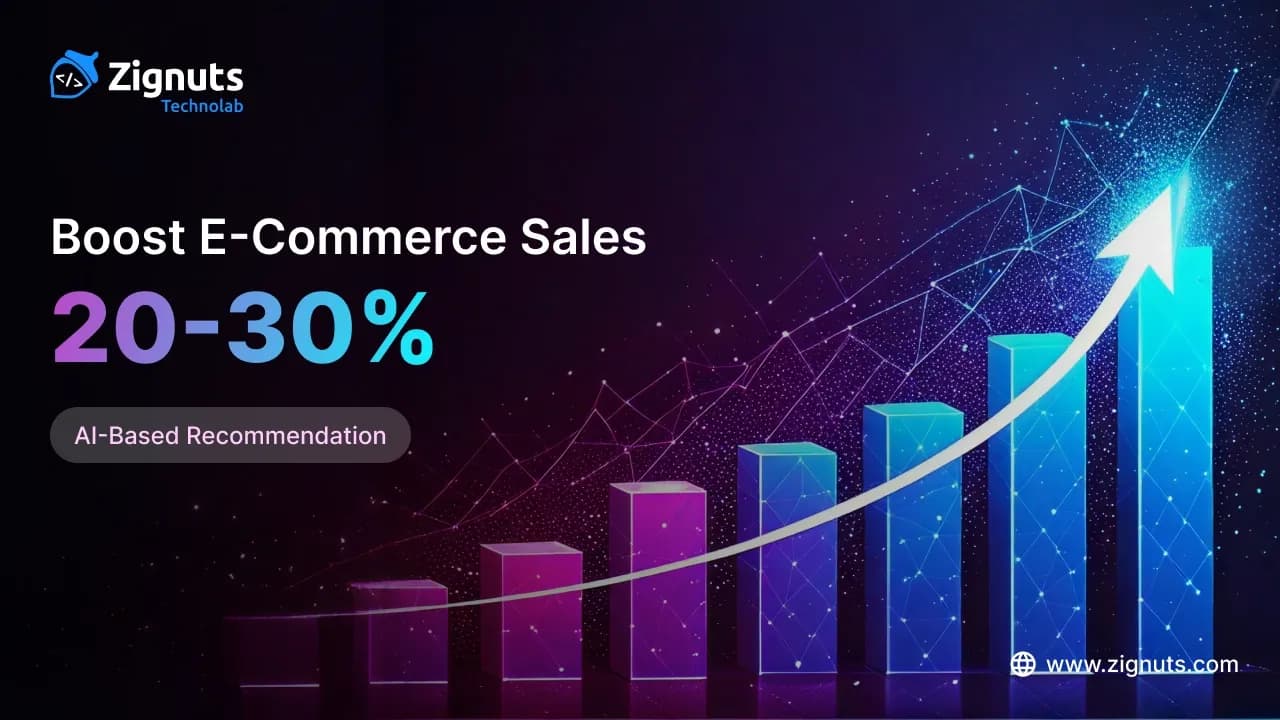
Recent industry data confirms that e-commerce brands utilizing advanced AI recommendation engine technology see a consistent 20 to 30 percent boost in sales, with top-tier retailers reporting revenue lifts as high as 40%. In today's landscape, these engines do more than just suggest "similar items." They act as autonomous shopping concierges that orchestrate the entire journey, interpreting natural language intent, predicting life-cycle shifts, and eliminating friction from the initial landing page to the final one-click checkout.
The Power of a Modern AI Recommendation Engine
The capabilities of an AI recommendation engine have expanded significantly in 2026. These systems have moved from simple collaborative filtering to hyper-personalized, multimodal interactions that understand the "why" behind a purchase. Today, these engines serve as the connective tissue between a customer's unspoken intent and a brand's entire product ecosystem.
1. Hyper-Personalization with an AI Recommendation Engine
A modern AI recommendation engine does not just look at past purchases. It utilizes Hyper-Personalization to analyze real-time micro-behaviors, sentiment analysis from social signals, and even local weather patterns. For example, if the system detects a shift in social media sentiment toward a specific fashion trend or identifies a sudden drop in temperature in the user's city, it adapts the storefront instantly. This allows the system to suggest the right product at the exact right moment based on mood, context, and immediate intent.
2. Multimodal Search Discovery via AI Recommendation Engine
Modern engines now support Multimodal AI capabilities, which have become the standard for intuitive discovery. Customers no longer struggle with keywords; they can upload a photo of a style they like, record a voice description of a vague idea, or combine both. The AI recommendation engine interprets these diverse inputs simultaneously to surface accurate matches. This approach effectively bridges the gap between a customer's inspiration and the final "add to cart" action.
3. Predictive Upselling through an AI Recommendation Engine
By leveraging Reinforcement Learning from Human Feedback (RLHF), a modern AI recommendation engine can predict which complementary products have the highest probability of increasing the Average Order Value (AOV). It uses Demand Sensing to anticipate what a specific user will likely need next based on life events such as moving house or starting a new hobby and seasonal shifts. The engine doesn't just react to a cart; it anticipates the next step in the lifestyle journey.
4. Agentic Commerce and Your AI Recommendation Engine
The defining trend of 2026 is the rise of Agentic Commerce. In this era, your AI recommendation engine communicates directly with a user’s Personal AI Assistant. These agent-to-agent interactions allow your engine to negotiate bundle deals, verify product compatibility, and provide tailored suggestions to a user's assistant before the human user even visits your website. This autonomous layer ensures your products are always "top of mind" for the AI agents making decisions on behalf of consumers.
5. Reducing Cart Abandonment with an AI Recommendation Engine
AI-driven Intent Recovery Systems identify "exit intent" through micro-signals like mouse-hover patterns or tab-switching behavior. The AI recommendation engine triggers a precision intervention offering a dynamic discount or suggesting a more relevant, lower-cost alternative, reducing abandonment rates by up to 20 percent and recovering previously lost revenue.
6. Zero-Click Commerce and Proactive Fulfillment
In 2026, the AI recommendation engine enables Zero-Click Commerce. For routine or subscription-based items, the engine predicts depletion and automatically initiates a purchase or adds it to a "suggested checkout" list that the user can approve via a single haptic notification. When combined with predictive logistics, the engine ensures that recommended products are already moved to local micro-fulfillment centers before the order is even placed.
7. Immersive AR Integration and Visual Recommendations
The AI recommendation engine now powers Virtual Try-On 2.0. By integrating with AR glasses and mobile camera feeds, the engine analyzes a user's physical environment or body measurements to recommend products that are guaranteed to fit and look right. Whether it is virtually placing furniture in a room or trying on a 3D-rendered garment that moves with the user, these visual recommendations reduce return rates by up to 40 percent.
8. Sustainable and Ethical Recommendations
Modern consumers demand transparency. The AI recommendation engine in 2026 includes Ethical Filtering, allowing users to prioritize products based on carbon footprint, fair-trade certifications, or circular economy principles (like resale and recycling). The engine proactively suggests "pre-loved" versions of items or eco-friendly alternatives, aligning the brand with the customer's personal values and building long-term ethical trust.
9. Dynamic Content Generation for Recommendations
Using Generative AI integration, the engine creates the pitch as well as the pick. It can rewrite product descriptions or generate custom lifestyle imagery on the fly to match a user's preferences. If a user values sustainability, the engine highlights eco-friendly aspects; if they are price-conscious, it emphasizes value. This ensures every recommendation is presented in the most persuasive context possible.
Hire AI Developers Today!

The New Era of AI Recommendation Engine Discovery
The e-commerce landscape in 2026 has introduced several groundbreaking shifts that every brand must adopt to remain relevant. We have moved past the era of static "discovery" into a period of proactive assistance, where the AI recommendation engine acts as the primary interface between the brand and the consumer.
1. Zero-Click Commerce and AI Recommendation Engine Feeds
Search behavior has fundamentally shifted from browsing through pages of results to receiving direct, conversational answers. Brands now prioritize Generative Engine Optimization (GEO), structuring their product data specifically for AI crawlers and large language models. An effective AI recommendation engine now feeds directly into Zero-Click environments such as ChatGPT, Perplexity, or smart home hubs, where products are evaluated and bought through chat interfaces without the user ever visiting a traditional storefront.
2. Virtual Try-On and Computer Vision Integration
The integration of AR (Augmented Reality) and advanced computer vision is now a standard component of the AI recommendation engine workflow. By analyzing a user's physical attributes through a real-time camera feed, the engine suggests products that are guaranteed to fit the user's specific body type or room dimensions. This "Fit-First" recommendation logic has led to a 40 percent reduction in return rates across the fashion and home decor industries, solving one of e-commerce's costliest challenges.
3. Predictive Inventory and Demand Sensing
Modern recommendation systems are now linked directly to the global supply chain via Demand Sensing technology. The AI recommendation engine doesn't just suggest popular items; it analyzes local demand surges, weather patterns, and social media spikes to proactively suggest items that are already stocked in the nearest micro-fulfillment center. This ensures that the promise of instant delivery is always backed by real-time inventory availability, preventing the frustration of "out-of-stock" recommendations.
4. Hyper-Personalized AI Storefronts (Generative UI)
In 2026, the concept of a "standard" homepage is dead. Using Generative UI, the AI recommendation engine dynamically reconstructs the entire website interface for every visitor. A user interested in sustainability will see a storefront emphasizing eco-certifications and "pre-loved" options, while a high-performance athlete will see a layout focused on technical specs and durability. This level of real-time merchandising ensures that the products most likely to convert are always at the center of the user's visual field.
5. Social Commerce and Ambient Recommendations
The AI recommendation engine has moved beyond the website and into the "ambient" spaces of social media and messaging apps. By analyzing real-time conversation signals on platforms like WhatsApp or Instagram, the engine can prioritize high-intent interactions and offer In-Stream Recommendations. This allows customers to discover, inquire about, and purchase products within a single social thread, turning every digital interaction into a potential point of sale.
6. Voice Commerce and Conversational Discovery
As voice recognition reaches near-human accuracy, Voice Commerce (V-commerce) has become a dominant channel. The AI recommendation engine now powers sophisticated "Shopping Concierges" that understand complex, long-tail queries like, "Find me a durable, waterproof backpack for a three-day hiking trip in the Alps." The engine processes these situational requirements to provide a curated list of three perfect options, drastically reducing decision fatigue and streamlining the path to purchase.
7. Ethical and Values-Based Filtering
Modern consumers in 2026 choose brands that align with their personal ethics. Leading AI recommendation engines now include Values-Based Filtering, allowing shoppers to set preferences for carbon-neutral shipping, vegan materials, or minority-owned businesses. The engine proactively surfaces these "Ethical Matches," building deep brand loyalty by proving that the retailer understands and respects the customer’s worldview.
Case Study: The Industry Standard for AI Recommendation Engine Growth
Leading platforms like Amazon and Netflix continue to set the gold standard for the industry. In 2026, Amazon reportedly attributes a staggering 35 to 45 percent of its total revenue to its proprietary AI recommendation engine. This system has transitioned from simple product matching to a complex, multi-modal architecture that analyzes voice, visual similarity, and real-time browsing context to drive nearly half of all marketplace transactions.
Similarly, Netflix has optimized its AI recommendation engine to the point where over 80 percent of viewer activity is driven by personalized suggestions. By reducing search time and maximizing content relevance, Netflix saves over $1 billion annually in customer retention costs, proving that recommendation tech is as much about loyalty as it is about initial sales.
Real-Life Success: Walmart’s AI Recommendation Engine Evolution
By 2026, Walmart’s use of an AI recommendation engine will have evolved into a fully integrated "Predictive Retail" ecosystem. The system no longer just recommends what is currently on the digital shelf; it utilizes Demand Sensing to influence the entire supply chain.
Predictive Inventory Syncing: The AI recommendation engine identifies emerging local trends, such as a sudden spike in demand for specific outdoor gear due to weather forecasts, and triggers the movement of stock to the nearest micro-fulfillment center before the customer even searches for it.1
Hyper-Local Personalization: Walmart’s engine adjusts its suggestions based on what is physically available for 30-minute delivery in the user's specific zip code, ensuring that the "instant gratification" promise is always met.
Resulting Growth: This deep integration has led to a 10-15 percent increase in online sales and a 20 percent reduction in cart abandonment, as customers are rarely met with "out of stock" messages for the items they desire most.
Hire AI Developers Today!
Zignuts' Proven Expertise in AI Recommendation Engine Technology
At Zignuts, we have a long-standing track record of implementing an AI recommendation engine that delivers measurable, data-driven results for global brands. Our approach focuses on deep technical discovery, understanding each client's unique inventory challenges and customer personas to develop a custom AI recommendation engine that integrates seamlessly with existing tech stacks.
By leveraging cutting-edge models such as Google Gemini and GLM-4.5V, we build engines that are not only smarter but faster and more intuitive than traditional off-the-shelf solutions. You can read more about our technical architecture and results on the Zignuts Technolab Blog.
Case Study: Enhancing E-Commerce Sales Through AI
Client: A leading online fashion retailer.
Challenge: The client struggled with product discoverability across a massive, diverse catalog. With high bounce rates on mobile and stagnant repeat purchase metrics, they needed an AI recommendation engine that could understand shifting fashion trends and personal style preferences in real time.
Solution: Zignuts developed and integrated a sophisticated AI recommendation engine that went beyond basic data points. The system analyzed:
Real-time Browsing Intent: Understanding a user's current session goals (e.g., "vacation wear" vs. "work attire").
Multimodal Data: Utilizing computer vision to suggest items with similar patterns, textures, or silhouettes.
Social & Trend Signals: Incorporating external style trends to surface "viral" or high-velocity items.
Results:
Sales Increase: The client experienced a 20% boost in sales within the first quarter post-implementation.
Customer Engagement: Time spent on the site increased by 15%, as the AI recommendation engine made discovery feel like a curated personal shopping experience.
Conversion Rate: The high-precision suggestions led to a 25% increase in conversion rates, significantly lowering the cost of customer acquisition.
Beyond the Sale: Long-Term Business Value
Our expertise at Zignuts extends into the operational benefits of an AI recommendation engine. In 2026, we focus on:
Reducing Return Rates: By using "Fit-First" recommendation logic and computer vision, we help retailers reduce returns by up to 30%, saving millions in reverse logistics.
Inventory Optimization: Our engines are linked to demand-sensing models, ensuring your most recommended products are always in stock in the fulfillment centers closest to your customers.
Omnichannel Loyalty: We ensure the AI recommendation engine provides a consistent experience across web, mobile apps, and personalized email marketing, driving a 20% increase in Customer Lifetime Value (CLV).
Why Choose Zignuts?
Our expertise in AI and machine learning enables us to create solutions that are not only effective but also scalable and adaptable to evolving market trends. We prioritize understanding your business objectives to deliver AI-driven systems that provide a competitive edge in the 2026 landscape.
2026-Ready Technology Stack: We leverage advanced Google AI innovations, including the Gemini multimodal model and Vertex AI, to build context-aware applications that understand text, images, and video simultaneously.
Agentic AI Expertise: At Zignuts, we are pioneers in building and deploying AI Agents via low-code and no-code platforms, helping businesses achieve a 45 percent productivity boost through autonomous task handling.
Global Compliance & Trust: Our development processes are strictly governed by GDPR, HIPAA, and industry-specific security standards, ensuring your data remains private and your AI implementations are ethically sound.
Proven ROI & Speed: We deliver a structured roadmap that minimizes risk, often achieving a 200 percent ROI for scaled e-commerce solutions with a time-to-market that is 3 to 5 times faster than traditional vendors.
Services Offered:
1. Custom AI Development
We build bespoke models, from Predictive Analytics for demand forecasting to Generative AI for automated content creation. Our custom builds deliver up to 40 percent higher efficiency by tailoring every algorithm to your specific operational needs rather than relying on off-the-shelf plugins.
2. Integration & Digital Transformation
Zignuts specializes in the seamless incorporation of AI systems into your existing infrastructure. Whether it is migrating to Kubernetes-orchestrated cloud environments or integrating AI with legacy SAP systems, we ensure a unified ecosystem that maximizes productivity without disrupting your current workflow.
3. Continuous Support & Optimization
AI is not a "one and done" solution. We provide post-launch monitoring, model tuning, and maintenance to detect data drift and ensure your AI recommendation engine evolves alongside changing consumer behaviors. Our 24/7 support ensures 99.9 percent uptime and long-term performance stability.
4. Digital Product Engineering
Our services encompass the full product lifecycle, including AI-driven UI/UX design, rapid prototyping, and automated quality assurance. We help you build products that users love by combining technical innovation with user-centric strategy.
Conclusion
The e-commerce landscape of 2026 has officially moved beyond the era of passive browsing. As we have explored, a robust AI recommendation engine is no longer just a "value-add" feature; it is the fundamental engine of growth that bridges the gap between massive product catalogs and the highly specific, often unspoken needs of the modern consumer. By achieving a 20-30% boost in sales, these systems prove that when a brand understands a customer's intent, whether through multimodal search, emotional sentiment, or agentic interaction, conversion becomes a natural byproduct of a superior experience.
From the "Zero-Click" convenience of autonomous shopping agents to the drastic reduction in overhead costs through predictive inventory and fit-first AR technology, the ROI of an AI recommendation engine is multifaceted. It drives immediate revenue, slashes return rates by up to 40%, and fosters the kind of ethical, values-based loyalty that defines market leaders in this decade.
At Zignuts, we understand that the future of retail is personal, predictive, and proactive. Our expertise in deploying 2026-ready AI technology ensures that your platform doesn’t just keep up with market trends but sets them. To bridge this technical gap, many forward-thinking brands choose to Hire AI developers who specialize in deep learning and agentic workflows to stay competitive. Whether you are looking to integrate a custom engine into your existing infrastructure or build a next-generation agentic commerce experience from the ground up, we have the proven track record to scale your vision.
Are you ready to transform your e-commerce platform into a high-conversion powerhouse? Partner with Zignuts Today to implement a custom AI recommendation engine that turns every digital interaction into a personalized success story. Let’s build the future of your brand together.

Deep Mistry
Digital Marketing Enthusiast | Diving into the world of trends, tools, and strategies, sharing discoveries that help create impactful online experiences.