

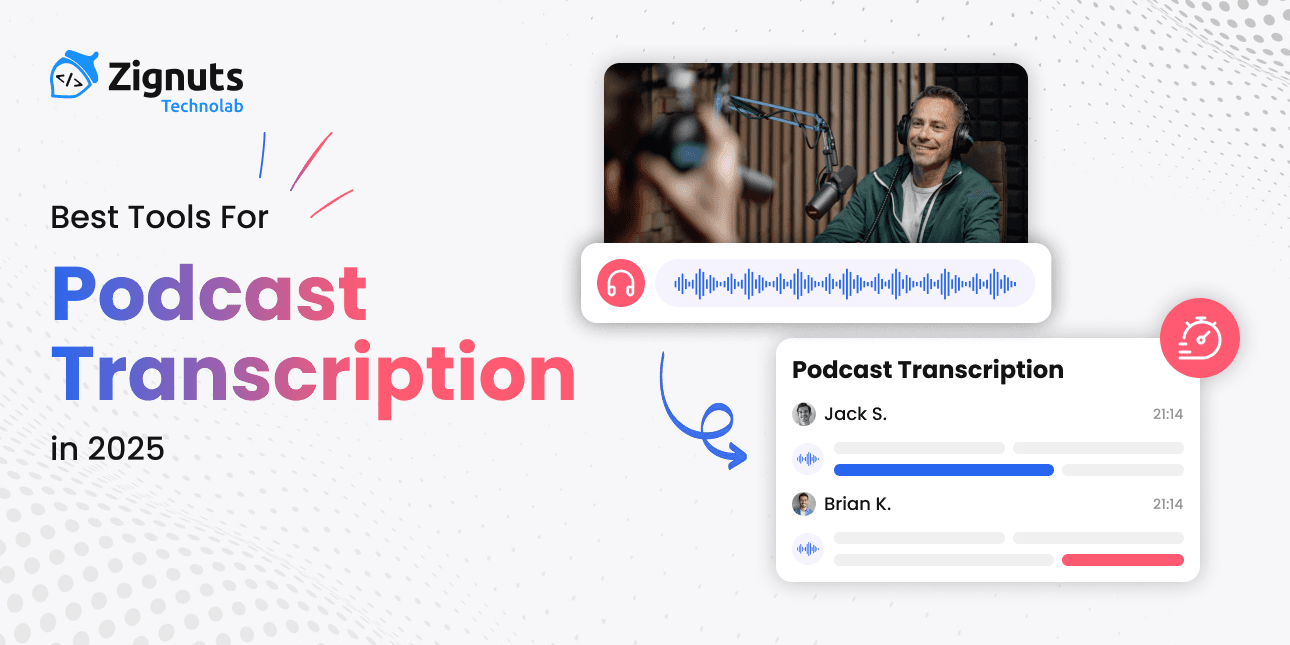
The landscape of digital content is shifting, and in 2026, audio alone is no longer enough to stay competitive. As listeners become more fragmented across platforms like YouTube, LinkedIn, and specialized apps, providing a text-based version of your show has evolved from a convenience to a strategic necessity. In fact, 2026 marks the era of the "Multimodal Podcast Bundle," where an episode is no longer just an MP3 file, but a high-value package of video, searchable text, and interactive summaries.
With major platforms like Netflix and Spotify deepening their partnership to treat podcasts as premium "catalog content," your reach is now determined by how easily your ideas can be indexed, translated, and shared. Whether you are looking to boost your search engine rankings through keyword-dense transcripts or ensure your content is accessible to a global audience via automated translation, choosing the right automation partner is the first step toward scaling your brand in this highly professionalized market.
Modern tools in 2026 do more than just listen; they use contextual intelligence to understand tone, intent, and even non-verbal cues from video to produce near-perfect documentation. By transcribing your show, you aren't just creating a script; you are building a searchable knowledge base that allows your audience to engage with your message whenever, wherever, and however they choose.
Why Podcast Transcription Matters in 2026
The demand for high-quality text versions of audio content has reached an all-time high. In a world saturated with "AI slop," authentic and accurate records of your spoken word help build trust and authority. As the industry professionalizes, transcripts have evolved from a secondary feature to a foundational pillar of a successful multimedia brand.
Evolving Content Consumption Trends
Today’s audience often consumes content in "silent mode," skimming through text during commutes or using search functions to find specific segments of an interview. A well-structured text format gives them the freedom to engage with your message without needing headphones. Furthermore, with the rise of "multitasking listening," many users prefer to have a transcript open to take notes, verify spellings of mentioned resources, or quickly revisit a point they found particularly impactful.
SEO and Discoverability Benefits
Google and other search engines have become significantly better at indexing long-form text, especially with the 2026 shift toward Generative Engine Optimization (GEO). By publishing your full dialogue, you provide "crawlers" and Large Language Models (LLMs) with a rich map of entities, keyword variations, and topical depth. This ensures your show isn't just a "blind spot" in the audio feed but an active answer to user queries on search engines and AI assistants.
Accessibility and Audience Reach
Inclusivity is a cornerstone of professional media in 2026. Beyond supporting the deaf and hard-of-hearing community, text formats allow non-native speakers to follow along with complex topics, vastly increasing your potential global footprint. In a 2026 global market, accessibility also means bandwidth efficiency; for listeners in regions with limited data or slow connectivity, a lightweight text transcript is often the only way they can access your insights.
Content Longevity and Repurposing
A transcript is the "DNA" of your episode. In 2026, creators no longer see an episode as a single event but as a source of infinite assets. With a clean transcript, you can instantly generate:
- Deep-dive blog posts that rank for niche keywords.
- Email newsletters that summarize the "top 3 takeaways" for busy subscribers.
- LinkedIn carousels and quote cards that drive viral engagement.
- AI-generated "Clips" with accurate captions for TikTok and YouTube Shorts
Key Features to Look for in Podcast Transcription Tools
Choosing a tool in 2026 requires looking beyond basic speech-to-text. You need a system that acts as an intelligent workflow partner, capable of transforming raw audio into a diverse ecosystem of digital assets.
AI-Powered Accuracy and Language Support
The latest models now achieve nearly 99% accuracy, even when dealing with heavy accents or technical jargon. Look for tools that offer multimodal processing, which can analyze video cues like lip movements and gestures to better distinguish between speakers in a crowded room. Additionally, in 2026, top-tier tools offer "contextual memory," allowing the AI to learn your specific industry terminology or brand names over time to eliminate repetitive manual corrections.
Real-Time vs. Batch Processing
For breaking news, live-streamed shows, or interactive Q&A sessions, real-time processing is non-negotiable. However, for high-fidelity production, batch processing often provides deeper "reasoning" capabilities. Modern batch engines now perform multiple passes over your audio, identifying subtle nuances, correcting grammar automatically, and even suggesting where to place "ad breaks" based on natural transitions in the conversation.
Integration with Hosting Platforms and Editors
The best tools sync directly with your existing stack, including Spotify for Podcasters, YouTube, and Adobe Podcast. This "one-click" workflow ensures that as soon as your audio is finished, your text and captions are ready for distribution. Look for tools that support text-based editing, allowing you to cut the actual audio file simply by deleting a sentence in the transcript, a feature that has become the industry standard for speed in 2026.
[Image showcasing a unified dashboard where a transcript is being edited to automatically trim audio clips]
Cost-Effectiveness and Scalability
With the democratization of AI, pricing has shifted from "pay-per-minute" to value-based subscriptions. Ensure your chosen tool scales with your volume without hidden fees for "premium" features like speaker identification or high-definition SRT exports. Many 2026 platforms now offer "Asset Credits," where your subscription covers not just the text, but the automated generation of show notes, social media carousels, and newsletter drafts.
Advanced Security and Privacy
As data privacy laws tighten globally in 2026, look for tools that offer ISO 27001 certification or GDPR-compliant local processing. For sensitive interviews, choose a service that provides "zero-retention" options, ensuring your audio is deleted immediately after the text is generated, protecting both you and your guests.
Hire AI Developers Today!

How to Choose the Right Podcast Transcription Tool for Your Needs
The ideal transcription tool depends on your podcast frequency, content style, and workflow preferences. In 2026, the "best" tool isn't just about accuracy; it's about how well it fits into your specific production ecosystem. Here is how to evaluate your options:
Consider Your Podcast Type and Volume
Your content format dictates your technical requirements. Daily news briefings or morning shows require extreme speed and real-time processing to stay relevant. Conversely, deep-dive investigative series or legal podcasts often deal with sensitive information and complex narratives that might require "Human-in-the-loop" verification to ensure every quote is perfectly captured for historical or legal accuracy. If you produce high volumes, look for tools that offer bulk uploading and automated project folders to keep your archives organized.
Compare Features Against Your Budget
While free tiers are excellent for hobbyists or those just starting out, professional creators in 2026 should look for a return on investment through advanced automation. High-tier tools now offer:
- Sentiment Analysis: Automatically detects the emotional tone of segments, helping you identify the most "viral" moments for social media.
- Automated Chaptering: Uses AI to recognize topic shifts and generate time-stamped chapters, saving you hours of manual post-production.
- Custom Dictionaries: Essential for podcasts with unique brand names, technical jargon, or niche industry terms that standard AI might misspell.
Determine if You Work Solo or in a Team
The "user interface" needs of a solo creator are very different from those of a global production agency. Solo creators often prioritize simplicity and all-in-one mobile apps that allow them to edit on the go. However, collaborative environments require robust team features such as:
- Version History: See who made changes to a transcript and revert if necessary.
- Shared Workspaces: Allow editors, show-runners, and guests to review and highlight text simultaneously.
- Role-Based Permissions: Ensure only authorized team members can export or publish final versions.
Integration with Your Existing Tech Stack
In 2026, the most expensive cost is time lost to manual data transfer. Choose a tool that "talks" to your other apps. If you record on Riverside or SquadCast, your transcription tool should pull those files automatically. If you manage your content in Notion or Slack, look for native integrations that push summaries and action items directly into your team's workflow the moment a recording finishes.
Top 3 Tested Podcast Transcription & Summarizer Tools in 2026
By 2026, the market will have moved beyond simple "speech-to-text." The leading tools now act as creative co-pilots, capable of understanding context, sentiment, and visual cues. Here are the top three platforms we’ve tested that dominate the creator economy this year:
1. Castmagic
Still the gold standard for repurposing, Castmagic has updated its engine to include Agentic AI, which doesn't just transcribe but can actually draft your entire social media campaign and newsletter based on the episode context. In 2026, its "Magic Chat" feature allows you to "talk" to your transcript, asking it to rewrite a specific segment as a LinkedIn thought-leadership post or a viral TikTok script. It is the preferred tool for creators who want to turn one hour of audio into a week's worth of multi-channel content with a single click.
2. Descript
In 2026, Descript remains a powerhouse by allowing you to edit your audio by simply deleting text. Its "Underlord" AI assistant has evolved into a full-scale co-editor that automatically removes filler words, adjusts your vocal tone to sound more professional, and even fixes "eye contact" in video podcasts if you were looking at your notes. The new "Regenerate" feature is a game-changer; if you misspoke, you can simply type the correct word into the transcript, and the AI clones your voice to fix the audio seamlessly.
3. Otter.ai
Perfect for interview-style shows, Otter’s live-syncing capabilities have expanded to include Visual Mind Mapping, turning your spoken conversation into a structured chart of ideas in real-time. This is particularly useful for educational or brainstorming podcasts where listeners want to see the "flow" of a complex topic. Otter also features "Otter AI Chat," which allows your audience to interact with your live stream by asking the AI questions about what was just said, making your podcast a truly interactive 2026 experience.
The Future of Podcast Transcription: The 2026 Multimodal Shift
As we progress through 2026, the biggest trend is Multimodal Intelligence. AI no longer just "hears" words; it understands the context of the entire recording by synthesizing audio, video, and text data simultaneously. This holistic approach has turned the humble transcript into a "smart document" that captures the soul of a conversation, not just the syllables.
Visual Context and Gesture Recognition
If your podcast is on video, AI now uses lip-syncing and gestures to improve the accuracy of the text. By analyzing the speaker's facial movements, the system can distinguish between similar-sounding words (homophones) even in noisy environments. In 2026, these tools can even detect "visual cues" such as a guest nodding or pointing and insert relevant parenthetical notes like (nods in agreement) or (points to chart) directly into the text, providing a richer experience for those reading the transcript.
Contextual Reasoning and Emotional Intelligence
Modern systems can detect when a speaker is joking or being sarcastic, adding appropriate notation to the text to preserve the original intent. This Emotional AI analyzes pitch, pace, and tonal shifts to label segments with sentiments like humorous or urgent.
Hyper-Personalization and Voice Training
Systems can now be "trained" on your specific voice, regional accent, and unique vocabulary. In 2026, "Speaker Embeddings" allows the AI to build a deep profile of your speech patterns, meaning the more you record, the more accurate the text becomes. This hyper-personalization extends to industry-specific jargon; whether you are discussing neurobiology or blockchain, the AI adapts to your niche lexicon without needing manual corrections.
Real-Time Multilingual Dubbing and Translation
The 2026 shift includes End-to-End Speech-to-Speech (S2ST) capabilities. As the transcript is generated, it can be instantly translated and "performed" in dozens of languages using a cloned version of your own voice. This means a podcast recorded in English can be consumed in Spanish or Japanese with the same emotional nuances and vocal characteristics, breaking down global barriers like never before.
Agentic AI and Content Repurposing
Transcription tools have evolved into Agentic Assistants. Once the dialogue is captured, the AI doesn't wait for your instructions; it proactively suggests:
- Knowledge Graphs: Automatically linking mentioned topics to external resources or previous episodes.
- Smart Chapters: Dividing the text into logical, searchable sections based on the flow of the conversation.
- Actionable To-Dos: Extracting promises or tasks mentioned during a business podcast and syncing them with project management tools.
How Creators Use Podcast Transcription to Amplify Reach
A high-quality transcript is the "raw material" of a modern content empire. In 2026, the most successful creators don't just hit "publish" on an audio file; they treat their Podcast Transcription data as a central library that feeds every other marketing channel.
Convert Transcripts into Blog Content
Don't just post a wall of text. Use the data to generate SEO-optimized articles that act as a gateway to your audio content. In 2026, AI-assisted writing tools can take your transcript and instantly restructure it into a "Long-Form Pillar Post" or a "How-To Guide." This allows you to capture traffic from users who prefer reading detailed analysis over listening to a 60-minute episode. By embedding the audio player within these blog posts, you create a "content loop" that increases dwell time and boosts your site’s domain authority.
Share Snippets and Quotes on Social Media
Text-based "pull quotes" and audiograms remain the most effective way to stop the scroll on platforms like X, LinkedIn, and Instagram. With an accurate transcript, you can quickly identify the "golden nuggets," those 30-second segments of high-impact insight.
By pairing these quotes with eye-catching typography or using them as captions for "faceless" reels, you provide immediate value to your followers, enticing them to click the link in your bio for the full conversation.
Boost Metadata and Discoverability
Using your text data to create Auto-Chapters and Timestamps helps listeners navigate your show, a feature that platforms like YouTube and Spotify reward with significantly better rankings. In 2026, search algorithms prioritize "structured data." By including a transcript in your metadata, you are essentially giving search engines a table of contents for your audio, making it possible for your show to appear in "Featured Snippets" when users ask specific questions.
Create Interactive "Ask Me Anything" Bots
A major trend in 2026 is the creation of Custom Episode GPTs. By feeding your transcripts into a specialized AI agent, you can allow your audience to "chat" with your podcast. Listeners can ask questions like, "What did the guest say about real estate trends?" and the bot will provide a direct answer pulled straight from the transcript, complete with a link to the exact timestamp in the audio.
Generate High-Converting Newsletters
Email remains the most direct way to reach your audience. Instead of a generic "New Episode Out Now" email, use your transcript to draft a "Key Takeaways" summary. By highlighting the most provocative ideas or controversial opinions from the episode in text form, you provide a "hook" that drastically improves click-through rates and keeps your subscribers engaged even if they don't have time to listen to the full episode immediately.
Hire AI Developers Today!
Monetizing Your Brand via Podcast Transcription
In 2026, the text derived from your audio is no longer just for SEO; it is a direct revenue generator. Creators are leveraging their transcripts to unlock entirely new monetization streams, moving from passive "listeners" to active "customers." By transforming spoken words into structured data, you open the door to diverse income models that go far beyond the traditional 30-second ad spot.
Automated E-book and Playbook Creation
Top-tier podcasters are using their season-long Podcast Transcription data to compile digital playbooks. By grouping transcripts by topic, AI can synthesize a year's worth of interviews into a coherent, high-value E-book or whitepaper. This turns your "free" audio content into a premium digital product that can be sold on your website or used as a lead magnet for high-ticket coaching services. This "content harvesting" ensures that every minute of recording time contributes to a long-term, sellable intellectual property asset.
Contextual Ad Placement and Dynamic Insertion
Standard mid-roll ads are evolving. In 2026, Contextual Ad Engines read your transcript in real-time to insert the most relevant dynamic ads. For example, if your guest starts discussing "sustainable gardening," the ad server identifies this keyword in the transcript and triggers a targeted ad for organic fertilizer. This hyper-relevance significantly increases click-through rates and allows you to charge premium CPMs to advertisers because your content and their product are perfectly aligned in the exact moment of consumption.
Paid Access to Searchable Archive
Niche podcasts with high technical value, such as those in the legal, medical, or financial sectors, are moving their archives behind a paywall. By offering a "Searchable Vault," you allow premium subscribers to search your entire 500-episode history for specific advice or case studies using your text data. This turns your back-catalog into an evergreen subscription asset, providing a steady stream of recurring revenue from professional users who need fast, text-based answers.
Tiered Subscription Content & "Director's Cut" Transcripts
Many creators are now offering "Enhanced Transcripts" as part of their Patreon or membership tiers. These aren't just plain text; they include exclusive footnotes, links to cited research, and technical diagrams mentioned during the show. By providing a "Director’s Cut" version of the text, you provide tangible value that justifies a monthly subscription fee, effectively turning your most loyal fans into paying members.
Affiliate Marketing via Smart Links
Modern Podcast Transcription tools can now automatically identify product mentions and insert affiliate links directly into the text version of your show notes. In 2026, this became a significant revenue stream. When a guest mentions a specific microphone, book, or software, the AI detects the brand and replaces the text with a trackable affiliate link. This automated "passive income" machine ensures you never miss a commission opportunity, even in episodes recorded years ago.
Licensing Content for AI Training
A new and growing revenue stream in 2026 involves licensing your high-quality transcripts to researchers or companies building specialized Large Language Models (LLMs). If your podcast covers a specific niche like deep-sea engineering or 18th-century philosophy, your accurate, human-verified text is incredibly valuable for training industry-specific AI. By selling access to your transcript data (with appropriate privacy safeguards), you can unlock massive lump-sum payments from the tech sector.
Navigating the Ethics of AI Podcast Transcription
As the tools become more powerful in 2026, the responsibility of the creator has also increased. Transparency is the currency of trust in the age of automation. In an era where "deepfake" audio and synthetic voices are indistinguishable from reality, your audience needs to know that the content they are consuming is both authentic and ethically handled.
Disclosing AI Usage
With the rise of "voice cloning" and "automated regeneration," it is vital to disclose when a transcript has been significantly altered or when audio has been "fixed" using synthetic voices. In 2026, many professional podcasters have adopted a "Transparency Header" at the top of their transcripts, detailing exactly which AI tools were used for transcription, summarization, or translation. Maintaining a "Human-Verified" badge tells your audience that, despite the speed of AI, a real person has checked the facts and quotes for accuracy, protecting you from "AI hallucinations" that could damage your credibility.
Protecting Guest Privacy and Data
In 2026, data ownership is a primary concern. Your guest's voice is more than just audio; it is biometric data. When choosing a tool, ensure that your guest's voiceprints are not being used to train third-party public models without explicit consent. High-end creators now include "Data Privacy Clauses" in their guest agreements, specifying:
- Storage Duration: How long the raw audio and biometric "voice templates" will be kept.
- Third-Party Access: Whether the transcription provider has the right to use the data for "internal improvement."
- The Right to Erasure: Allowing guests to request the permanent deletion of their biometric data after the episode is published.
Mitigating Algorithmic Bias in Dialogue
AI models can carry inherent biases, particularly when transcribing speakers with diverse accents, dialects, or speech impediments. In 2026, ethical transcription means actively auditing your transcripts for "linguistic erasure." If an AI consistently misinterprets a specific guest's dialect or "sanitizes" their unique way of speaking into a generic corporate tone, it can strip the authenticity from your show. Creators should look for tools that offer "Bias Auditing" features or diversity-trained models that respect the nuances of global English and regional languages.
The "Off-the-Record" AI Challenge
With real-time transcription "always on" in many 2026 recording suites, there is a rising ethical risk of capturing and transcribing "off-the-record" moments or casual banter not intended for public consumption. Ethical creators must ensure they use tools with "Granular Privacy Controls," the ability to pause transcription instantly, or "black out" sensitive segments before the data is even processed by the cloud. This ensures that the trust between the host and the guest remains intact, even in a fully automated environment.
Conclusion: The New Standard for Podcast Content
By 2026, the strategic implementation of a high-quality Podcast Transcription workflow has evolved from a simple accessibility feature into the literal engine of multimedia growth. Whether you are using it to fuel your SEO, launch automated newsletters, or build an interactive AI "Ask Me Anything" bot for your brand, the accuracy and depth of your text data define the ceiling of your success. In this professionalized era, creators who view their spoken words as a structured data asset are the ones dominating the charts and unlocking multi-stream revenue models.
The future of digital storytelling is multimodal, and staying ahead of the curve requires a sophisticated technical foundation. If you are looking to build a custom solution or integrate these cutting-edge features into your platform, it is the perfect time to Hire AI developers who understand the nuances of voice intelligence and automated content repurposing. By partnering with experts who can navigate the complexities of multimodal models and ethical data processing, you ensure your brand remains both innovative and trustworthy.
Ready to transform your audio strategy with custom-built tools? Contact Zignuts today to discuss how our expert team can help you develop the next generation of AI-powered media solutions.

Deep Mistry
Digital Marketing Enthusiast | Diving into the world of trends, tools, and strategies, sharing discoveries that help create impactful online experiences.