

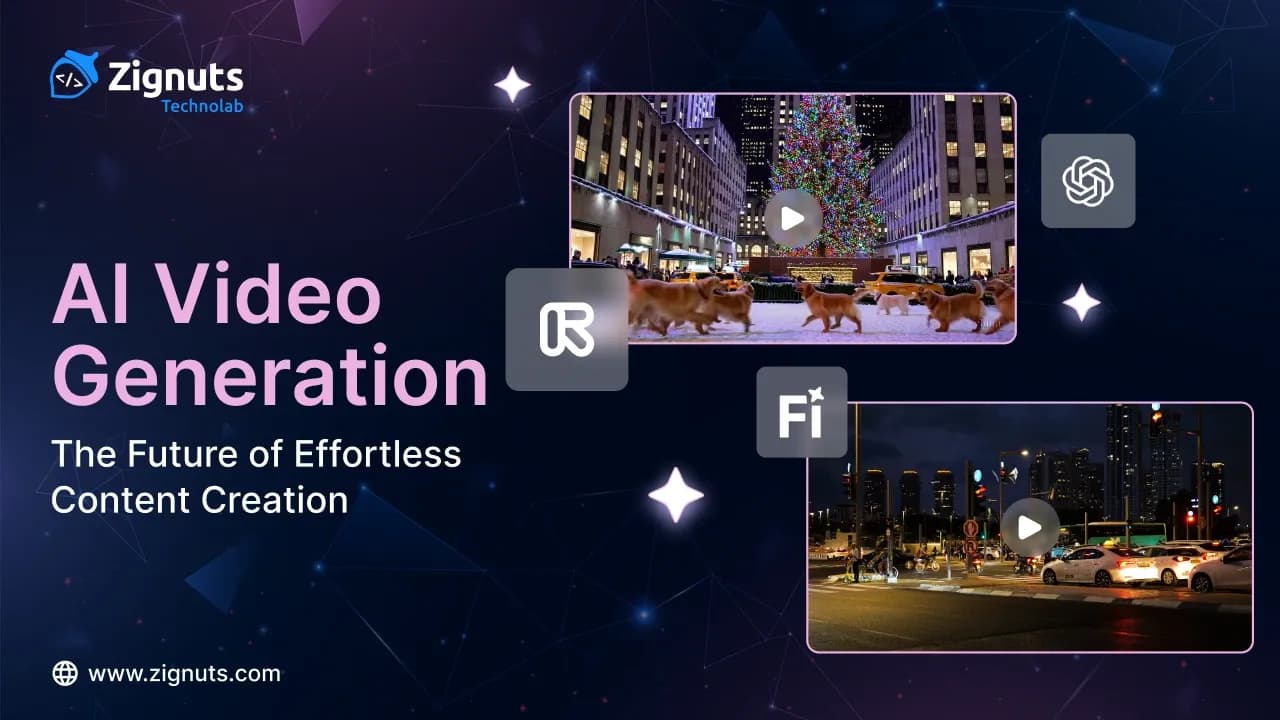
What is AI Video Generation?
In the current landscape of 2026, this technology has evolved far beyond simple filters. It is the sophisticated use of neural networks to synthesize high-fidelity motion pictures from scratch. By interpreting diverse data points, whether they are spoken descriptions, static photography, or even raw sensor data, these systems construct fluid, hyper-realistic sequences. It represents a shift from traditional manual rendering to an era where software understands the laws of physics and lighting to build immersive worlds instantly.
This evolution is driven by the rise of "World Models" AI architectures that don't just predict pixels, but actually simulate the physical properties of the environment they are creating. In 2026, these systems can accurately render the way light refracts through a glass of water, the complex weight of fabric in motion, and even synchronized, context-aware audio that matches the visual environment perfectly.
The distinction between a "generated clip" and "cinematic footage" has essentially vanished. Modern platforms now offer 4K resolution at high frame rates, supporting extended shot durations and persistent characters that maintain their visual identity across multiple scenes. This level of technical maturity has turned the technology into a collaborative partner, allowing creators to act as directors who guide the AI’s creative logic rather than just consumers of its output.
Key Processes in AI Video Generation
Advanced Semantic Mapping
Modern systems no longer just look for keywords. They utilize deep contextual awareness to grasp the emotional subtext and stylistic nuances of a request, ensuring the output matches the creator's specific vision. In 2026, this has evolved into Neural Knowledge Mapping, where the AI references vast databases of cultural context and cinematography history. It can now interpret a prompt like "film noir lighting with a sense of isolation" and automatically apply high-contrast shadows and specific camera lenses that historically evoke those feelings, moving from simple execution to artistic collaboration. This process also includes Multimodal Input Processing, allowing you to combine text with reference images or audio clips to anchor the AI's "imagination" to a very specific aesthetic.
Neural Scene Synthesis
This stage involves the actual construction of every pixel. Using temporal consistency algorithms, the software ensures that objects and characters remain stable across frames, eliminating the flickering issues seen in earlier iterations. The latest breakthrough in 2026 is the implementation of Physics-Aware Diffusion, which allows the AI to simulate gravity, fluid dynamics, and light refraction in real time. This means if a character splashes water, the droplets move with mathematical accuracy, creating a level of realism that was previously impossible without expensive manual VFX. Furthermore, Identity-Lock Systems now act as an anchor during synthesis, ensuring that a character’s facial features and clothing remain identical across multiple generated shots.
Intelligent Post-Production
The final polish is now handled by autonomous agents. These components manage color grading, spatial audio integration, and seamless transitions, delivering a broadcast-ready file without human intervention. Beyond just editing, these 2026 systems perform Semantic Audio Syncing, where the AI generates a native soundscape including footsteps, ambient wind, and dialogue that is perfectly locked to the visual action. It also handles automatic multi-platform reformatting, instantly generating vertical versions for social media and widescreen versions for cinema from a single master file. Additionally, Real-Time Dynamic Relighting allows creators to adjust the "sunlight" or color temperature of a generated scene after it has been created, without needing a full re-render.
Predictive World Modeling
Moving beyond static generation, the newest 2026 pipelines utilize World Simulation Engines. This process involves the AI predicting the next logical state of an environment based on physical laws. Instead of just "drawing" a video, the system builds a temporary 3D understanding of the space, allowing for Infinite Camera Navigation. You can now take a generated scene and "fly" the camera through it in any direction, as the AI understands the depth and occlusion of objects, effectively turning a single prompt into a navigable virtual set.
Collaborative Agentic Editing
The workflow has shifted from solo prompting to Agentic Collaboration. In this process, multiple specialized AI agents work in parallel: one handles the narrative pacing, another focuses on character performance, and a third manages environmental consistency. These agents communicate with each other and the human director in real-time. This allows for Instructional Refining, where you can give natural language feedback like "make the actor look more surprised" or "change the car to a vintage model," and the system updates the specific elements without altering the rest of the established scene.
Hire AI Developers Today!

Why It Matters: Key Benefits of AI Video Generation
Hyper-Efficient Workflows:
What used to take a post-production house several weeks is now achieved in the time it takes to grab a coffee. In 2026, real-time rendering has virtually eliminated wait times, allowing for an instant transition from script to screen. This instantaneous feedback loop allows directors to make creative pivots mid-generation, ensuring the final product matches the initial spark of inspiration without the lag of traditional rendering queues.
Democratic Budgeting:
High-tier production value is no longer gated by expensive camera gear or massive crews, leveling the playing field for startups. Statistics show that businesses using these AI video generator tools have reduced their external production spend by up to 60% while increasing their output volume. This shift allows small businesses to compete with global conglomerates by producing cinematic-quality advertisements on a fraction of the budget.
Infinite Iteration:
Marketing teams can produce thousands of variations of a single campaign, each tailored to specific regional aesthetics or individual user preferences. This Hyper-Personalization at Scale means one core message can automatically morph into 50 different cultural contexts in seconds. By using dynamic metadata, these systems can even alter background scenery or character attire to better reflect the viewer's local weather or time of day.
Brand Integrity:
By training models on specific corporate assets, companies ensure every frame produced strictly adheres to their unique visual identity. This Neural Style Locking prevents the AI from drifting away from your specific brand colors, fonts, and vibe. It acts as a digital brand guardian, ensuring that even as you scale production, the creative DNA of your organization remains consistent across every touchpoint.
Global Accessibility and Localization:
With 2026's advanced Neural Lip-Syncing, a video filmed in English can be flawlessly converted into 75+ languages. The AI doesn't just translate the audio; it re-animates the speaker's mouth movements and body language to match the phonetic nuances of the target language, ensuring authentic global resonance. This fosters a more inclusive digital world where high-quality educational and informational content is accessible to everyone, regardless of their native tongue.
Environmental Sustainability:
Traditional film shoots often require massive carbon footprints due to travel, set construction, and heavy equipment power. Shifting to virtualized production allows brands to maintain a Net Zero content strategy by replacing physical logistics with energy-efficient cloud rendering. In 2026, sustainable media production has moved from a choice to a standard, with virtual environments reducing the need for physical materials that often end up in landfills.
Risk-Free Prototyping:
Creative directors can now pre-Viz entire feature films or high-budget commercials in photorealistic quality before spending a single dollar on a physical set. This allows for rigorous testing of concepts and narrative flows, ensuring only the most effective ideas move into the final stages of distribution. It effectively removes the "guesswork" from high-stakes media projects, allowing for data-driven creative decisions.
Semantic Searchability and Archiving:
In 2026, the metadata within these videos is so granular that every object, movement, and spoken word is indexed. This makes large libraries of content instantly searchable, allowing creators to "remix" and repurpose old footage with perfect accuracy. Instead of digging through hours of raw files, an editor can simply ask the system to "find every shot of a sunset over a mountain with a red car," and the AI retrieves or regenerates the exact clip needed.
Top AI Video Generation Tools in 2026
Sora Pro by OpenAI
The latest evolution in the Sora lineage now supports full-length cinematic features with complex character arcs and physics-accurate environments. In 2026, Sora Pro introduced Characters (formerly known as the "Cameo" feature), allowing creators to save and reuse specific digital actors across different projects to maintain perfect narrative consistency. With its new Extensions feature, users can take any generated clip and seamlessly "write" the next chapter, as the AI preserves every detail of the setting and mood for sequences lasting up to 25 seconds per segment.
Cinematic Physics Engine:
The 2026 model has solved the "morphing" issue, ensuring that complex interactions like a character's hand passing through water or hair blowing in the wind follow strict physical laws. This architectural leap means objects no longer phase through each other, providing a grounded reality that is indistinguishable from live-action footage.
Native Audio Master:
Sora Pro now generates synchronized, high-fidelity soundscapes that include directional dialogue and environmental foley, significantly reducing the time spent in external audio suites. The system uses Spatial Audio Mapping, which ensures that the sound of a distant car or a nearby whisper is perfectly placed within a 3D acoustic environment.
World State Persistence:
One of the most significant updates in 2026 is the ability for the model to "remember" a 3D environment. If a character breaks a window in one scene, that window remains broken in every subsequent clip generated within that setting. This level of environmental continuity allows for complex, multi-scene storytelling without the need for manual set reconstruction.
Directorial Control Layer:
Beyond simple prompting, Sora Pro now offers a professional interface for adjusting camera focal lengths, aperture, and lighting setups post-generation. This allows filmmakers to treat the AI output like a virtual set, where they can fine-tune the "lens" to achieve a specific emotional impact or visual style.
Dynamic Character Evolution:
The 2026 engine supports aging and situational weathering. You can instruct the AI to make a character look ten years older or show the visible effects of a rainy environment on their clothing and skin texture, maintaining the core identity while reflecting the narrative’s progression.
Integrated Storyboarding:
Available to Pro users, the Storyboard Feature allows for second-by-second sketching of video inputs. This allows you to define the exact blocking and camera path for a shot, which the AI then renders into a high-fidelity sequence, bridging the gap between a rough draft and a final masterpiece.

AI Video Generation: The Future of Content Creation in 2026
Runway Gen-5
A favorite among professional filmmakers, this version offers granular control over camera movement and lighting, allowing for precise art direction via real-time feedback loops. Gen-5 features a revolutionary Physics-Aware Engine that handles complex liquid dynamics and fabric movements with stunning realism. In 2026, Runway has moved beyond simple "generation" to provide a full-scale Virtual Production Suite, where the AI acts as a digital cinematographer, lighting technician, and editor combined into one seamless interface.
Multi-Motion Brush 2.0:
This allows for independent control over multiple moving objects in a single scene, such as directing the speed of a car while simultaneously adjusting the flight path of birds in the background. The 2026 update introduces Z-Axis Depth Control, enabling you to brush motion into the foreground, midground, and background separately for a true 3D parallax effect.
Act-Two Performance Capture:
Users can now map their own facial expressions and vocal nuances directly onto AI-generated characters in real-time, effectively turning a webcam into a professional-grade motion capture rig. The latest iteration supports Sub-Surface Scattering, meaning your digital character’s skin now reacts to light, including the subtle glow of blood vessels (the "red ear" effect), making performances look indistinguishable from reality.
Director’s Mode (Real-Time Relighting):
Gen-5 allows for post-generation lighting adjustments. You can move a virtual sun or add neon "rim lights" to a scene after it has been created, and the AI will recalculate the shadows and reflections across all 24 frames per second instantly without a full re-render.
Advanced Storyboard-to-Video:
This feature allows you to upload a rough sketch or a series of frames, which the AI then uses as a structural anchor. In 2026, this has evolved into 3D Scene Persistence, where you can "save" a generated environment and move the camera through it from completely different angles while ensuring every building and tree remains exactly where it was.
Lip-Sync & Style Fusion:
Beyond motion, Runway now integrates Neural Voice Modeling within the video generation process. You can generate a character’s voice and their lip-sync movements simultaneously, ensuring that the phonetic shape of the mouth perfectly matches the emotional tone of the dialogue, supporting over 50 global dialects.
VFX-Ready Metadata:
For professional pipelines, Runway Gen-5 exports videos with embedded Alpha Channels and Z-Depth Maps. This allows editors to easily drop 3D models or text behind generated subjects in software like After Effects, bridging the gap between AI generation and traditional high-end compositing.

Adobe Firefly Video Max
Deeply embedded in the Creative Cloud, this tool focuses on the hybrid creator, blending traditional editing precision with generative expansion and object replacement. The 2026 "Max" version introduces Prompt-to-Edit capabilities, where you can surgically remove objects or change a scene’s weather simply by typing a command into the Premiere Pro timeline. It serves as a seamless bridge between raw AI generation and the sophisticated needs of professional video editors.
Commercially Safe Workflow:
Firefly remains the industry leader for corporate use, as its models are trained exclusively on Adobe Stock and public domain content. This ensures that every asset is legally "clean" and carries C2PA Content Credentials, providing an ironclad audit trail for intellectual property and brand safety in global advertising.
Topaz Astra Integration:
This partnership allows for native 8K upscaling within the Firefly workspace. By leveraging Astra’s neural enhancement, you can transform 1080p AI drafts into ultra-high-definition footage that maintains texture and clarity even on IMAX-sized digital displays.
Generative Extend 2.0:
A lifesaver for editors, this feature allows you to "stretch" existing clips by up to 5 seconds to cover gaps in the timeline or smooth out transitions. It doesn't just loop frames; it generates entirely new, contextually accurate motion and Ambient Room Tone, ensuring audio and video remain perfectly fluid.
Firefly Foundry (Custom Models):
In 2026, enterprise teams can use the Foundry to train private, "on-brand" video models. By feeding the AI your company’s specific product footage and aesthetic style, you ensure that every generated scene looks like it was filmed by your own internal production team.
Text-Based Video Assembly:
By integrating with the Adobe transcript engine, Video Max allows you to edit visual sequences as easily as a Word document. Highlighting a sentence in the transcript will automatically pull the relevant B-roll or generate a new clip to match the spoken content, effectively building a rough cut in seconds.
Neural Object Masking:
Rotoscoping is now a relic of the past. The 2026 Max engine features Insta-Mask, which can identify and track any complex object from a fluttering scarf to flowing water with pixel-perfect accuracy, allowing for instant background replacement or localized color grading.
Google Veo 3.1
Standing as a major heavyweight in 2026, Veo 3.1 excels in Cinematic Consistency and high-fidelity audio integration. Its standout feature, Ingredients to Video, allows filmmakers to upload multiple reference images, such as a specific character, a prop, and a background, to ensure every generated shot follows a strict visual storyboard. This multimodal approach effectively eliminates the "randomness" of earlier models, giving creators precise control over the visual DNA of their production.
Native Vertical Output:
Optimized for the 2026 mobile-first era, Veo 3.1 generates native 9:16 4K video for platforms like YouTube Shorts and TikTok without the need for cropping. This ensures that subjects remain perfectly framed within the vertical canvas, maintaining compositional integrity that feels intentional rather than adjusted.
Joint Diffusion Processing:
Unlike older models that add sound as an afterthought, Veo 3.1 processes audio and video together in a single neural pass. This results in lip-sync accuracy within 120ms and perfectly timed environmental sound effects. Whether it's the specific crunch of gravel under a boot or a complex orchestral swell, the audio is fundamentally "aware" of the pixels being rendered.
First and Last Frame Control:
This powerful mode allows you to define both the starting point and the exact ending state of a sequence. By providing two reference images, you can direct Veo 3.1 to bridge the gap with smooth, coherent transitions, making it an essential tool for creating seamless loops or specific narrative beats.
Scene Extension & Chaining:
While the base generation is highly focused, Veo 3.1 supports Continuous Narrative Chaining. You can extend a video by generating new clips based on the final frame of the previous one, allowing for stories that exceed the standard 8-second limit while maintaining 100% visual and acoustic continuity.
Cinematic Language Comprehension:
The model has been trained to understand advanced directorial commands. You can prompt for specific techniques like a Dolly Zoom, Over-the-Shoulder shots, or Handheld Camera Shake, and the AI will adjust the temporal physics of the scene to mimic those professional camera movements accurately.
Invisible SynthID Watermarking:
In line with 2026 transparency standards, all Veo 3.1 outputs include an imperceptible digital watermark. This ensures content provenance and allows platforms to verify the AI-generated nature of the media, fostering trust in a landscape of hyper-realistic digital content.
Kling AI v2.6
Widely recognized for offering the best balance between cost and cinematic quality, Kling has become the go-to for social media creators and independent animators. In 2026, its Neural Knowledge Mapping allows for incredible prompt accuracy, specifically in the anime and stylized 3D spaces. This version has moved beyond simple "visual-only" generation, introducing a unified multimodal architecture that treats sound and motion as a single, inseparable entity.
Extended Duration:
Kling leads the market in length, capable of generating up to 2 minutes of continuous, coherent footage in a single pass (and up to 3 minutes via the 2026 app extension). This is a massive leap from the 5-10 second clips of previous years, allowing for full story beats, musical performances, or long-form action sequences without a single jarring cut.
Identity-Lock System:
This feature is exceptionally robust, ensuring that even in high-motion action scenes like a character performing a backflip or dancing in a crowded club, character features and clothing never flicker or warp. It uses 3D Reconstruction Technology to maintain a stable "digital double," ensuring your protagonist looks identical from every angle and under any lighting condition.
Native Audio & Speech Synthesis:
Kling v2.6 is the first in its family to support One-Pass Audio, generating synchronized dialogue, sound effects, and ambient background tracks directly alongside the video. By using quotation marks in your prompt, you can direct a character to speak or sing, and the AI will automatically handle the lip-syncing and vocal performance with deep semantic alignment.
Motion Control & Reference Transfer:
A standout tool for 2026 is the Motion Brush, which allows you to "paint" the specific trajectory you want an object or character to follow. Furthermore, you can upload a reference video to act as a "motion template," allowing the AI to transfer complex human movements (like a specific dance routine) onto your generated character with 1:1 accuracy.
First and Last Frame Interpolation:
Kling v2.6 has perfected the ability to "bridge" two distinct images. By setting a specific starting frame and a final end frame, the AI calculates a smooth, physics-accurate path between them, making it the premier tool for "before and after" reveals or complex scene transitions.
Stylistic Versatility (Anime & 3D):
While competitors focus on realism, Kling has carved out a niche in Stylized Synthesis. Its 2026 engine understands the specific aesthetics of modern anime, including cel-shading, line-weight consistency, and cinematic "speed lines," making it an essential asset for independent animation studios.
Use Cases Across Industries for AI Video Generation
SaaS and Tech:
Software companies utilize these tools to build "living" documentation and interactive product walkthroughs that update automatically whenever the UI changes. In 2026, this has expanded into Autonomous Troubleshooting Videos, where AI agents detect a user's specific technical hurdle and instantly generate a personalized screen-capture tutorial to guide them through the solution in real time.
Global Education:
Learning platforms now deploy photorealistic digital instructors capable of teaching complex subjects in any language with perfect lip-syncing. Beyond simple lectures, 2026 introduces Generative Scenario Simulators, where medical or engineering students can enter an AI-generated video environment to practice high-stakes procedures. These videos react to the student's decisions, showing the immediate visual consequences of their actions in a risk-free virtual space.
Retail and E-commerce:
Virtual try-on experiences and personalized video advertisements allow customers to see products in their own home environment before purchasing. Leading retailers in 2026 use Dynamic Video Commerce to transform static product pages into "Video-First" storefronts. Here, the AI generates a unique product demo for every visitor, showcasing the item being used by an avatar that matches the shopper’s body type or aesthetic preferences, significantly reducing return rates and boosting buyer confidence.
Healthcare and Medical Training:
Hospitals utilize high-fidelity simulations to visualize surgical procedures and patient care protocols. In 2026, Patient-Specific Condition Trailers help individuals understand their diagnosis by generating a visual "map" of their recovery journey, illustrating the positive impact of treatment plans and lifestyle changes through personalized, easy-to-digest video narratives.
Real Estate and Architecture:
Gone are the days of simple 360-degree photos. Real estate professionals now use Generative Walkthroughs to show potential buyers the future of a property. A buyer can ask to see what a "fixer-upper" would look like with a modern kitchen or an added sunroom, and the AI renders a photorealistic video tour of the renovation instantly, helping to close deals on properties that are still under construction or in need of repair.
Manufacturing and Industry 4.0:
Factory managers turn complex CAD designs and machinery data into AI-Driven Assembly Guides. These videos visualize internal mechanical processes that are impossible to film with a physical camera, providing technicians with an "X-ray" view of equipment during maintenance, which speeds up repairs and enhances workplace safety.
Hire AI Developers Today!
Navigating Ethical Considerations
As we push the boundaries of realism, the industry has pivoted toward transparency. The focus in 2026 is on robust digital watermarking and C2PA standards to combat the spread of unauthorized likenesses. Furthermore, the conversation has shifted toward "Human-in-the-loop" models, where technology acts as a co-pilot to augment human creativity rather than replacing the soul and intent that only a person can provide.
The Rise of Synthetically Generated Information (SGI) Laws:
In 2026, global regulations such as the updated India IT Rules 2026 and the EU AI Act now strictly mandate the labeling of SGI. Platforms enabling the creation of AI media must now ensure that any content that looks or sounds indistinguishably real is embedded with non-removable metadata. This prevents deception in sensitive areas like political discourse, financial reporting, and legal evidence.
Biometric Integrity and Deepfake Defense:
With the surge in high-fidelity voice and video cloning, 2026 has seen the emergence of Injection Attack Detection (IAD). Enterprises no longer rely on simple face biometrics alone; they now use layered verification that checks for "liveness" through behavioral patterns and cryptographic device-bound tokens. This ensures that a digital double cannot be used to bypass security systems or commit identity fraud.
The "Liar’s Dividend" Mitigation:
To counter the risk where genuine footage is dismissed as "fake," 2026 has introduced Verified Capture Technology. Professional cameras and smartphones now come equipped with hardware-level signing, creating a "digital tamper-evident bag" at the moment a video is recorded. This allows journalists and creators to prove the authenticity of real-world events against a backdrop of synthetic alternatives.
Intellectual Property & The Blanket License Model:
The legal landscape for AI training has shifted toward a Hybrid Compensation Framework. In many jurisdictions, AI developers now pay into a centralized royalty pool managed by collective organizations. This ensures that original artists and creators are fairly remunerated when their stylistic DNA is used to train new models, moving the industry away from unauthorized scraping toward a sustainable, licensed ecosystem.
Algorithmic Bias and Cultural Representation:
Ethical AI in 2026 involves proactive Bias Auditing. Developers now use "Diversity-by-Design" protocols to ensure that generative models don't perpetuate harmful stereotypes or favor specific demographics. This leads to more inclusive global content that accurately represents the vast spectrum of human cultures and identities without distortion.
Non-Consensual Content Protection:
2026 marks a turning point in the fight against non-consensual deepfakes. Advanced Automated Takedown Systems are now integrated across major social intermediaries, reducing the window for harmful content to spread from days to just a few hours. Stricter criminal penalties for the creation of malicious synthetic media have also created a stronger deterrent against the misuse of this powerful technology.
Zignuts' Perspective on AI Video Generation
At Zignuts, we view these advancements as a bridge between a great idea and its digital reality. Our focus is on the strategic implementation of these models within your existing framework. We don't just generate footage; we build intelligent ecosystems where content is dynamic, ethical, and aligned with your long-term goals.
By combining our expertise in high-end development and intuitive interface design, we help you navigate this fast-moving space. Whether you need to integrate generative APIs into your platform or require a custom-trained model for your brand, our team ensures your transition into the future of media is both smooth and impactful.
Conclusion
The era of static, manual content production has officially transitioned into an age of fluid, intelligent synthesis. As we’ve seen throughout 2026, the technology behind these visual marvels is no longer a novelty; it is a fundamental pillar of modern communication. From the physics-accurate worlds of Sora Pro to the seamless creative ecosystems within Adobe Firefly, the barriers between imagination and digital reality have dissolved. By embracing these sophisticated tools, brands can finally achieve hyper-personalization at a global scale while maintaining the highest standards of brand integrity and ethical transparency.
The true potential of this revolution lies in how it amplifies human intent. It allows creators to step away from the technical minutiae and step into the role of a visionary director. However, navigating this complex landscape of neural mapping and agentic editing requires more than just software; it requires technical expertise. To fully integrate these transformative tools into your business architecture, you may need to Hire AI Developers who understand how to build secure, custom-trained, and scalable ecosystems.
At Zignuts, we are ready to help you lead this digital evolution. Whether you are looking to deploy autonomous video troubleshooting or build a custom generative marketing engine, our team is here to turn these future-tech concepts into your competitive advantage. Contact Zignuts today to explore our specialized services and start your journey toward next-generation digital transformation.

Meet Pandya
Passionate about creating intuitive and visually impactful user experiences, focusing on crafting seamless digital interfaces that engage and inspire users.

Chetan Singadia
Crafting meaningful digital experiences through strategic design thinking, user empathy, and a relentless commitment to visual and functional excellence.