

The digital landscape has shifted from simple data management to an era of intelligent automation. In every company’s growth journey, there comes a point where legacy tools like Google Docs, fragmented Excel sheets, and manual filing systems become "digital debt," slowing down operations rather than supporting them. As global markets become more volatile and consumer demands more immediate, traditional methods of organizing and planning are no longer just redundant; they are a risk to your business continuity.
Today’s scaling businesses require an advanced ecosystem that leverages Artificial Intelligence (AI) and Machine Learning (ML) to synchronize every moving part of the organization in real-time. This is exactly where ERP software (Enterprise Resource Planning) comes in. No longer just a luxury for Fortune 500 companies, modern ERPs serve as the central nervous system of a business, providing the agility needed to pivot in a fast-paced economy while ensuring that data flows seamlessly from the warehouse floor to the executive boardroom.
What is ERP Software and How is it Useful?
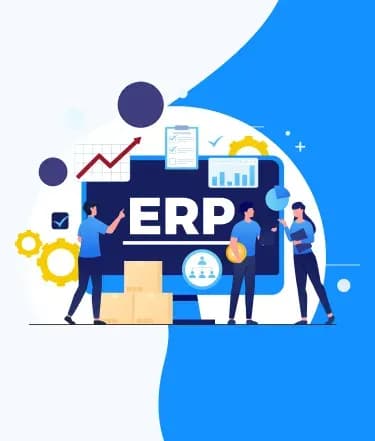
An ERP (Enterprise Resource Planning) software is a centralized business management platform that integrates various functions such as sales, procurement, accounting, human resources, and supply chain management into a single, unified ecosystem.
By 2026, the definition of ERP has shifted from a mere "system of record" to an intelligent "system of action" powered by AI. Modern ERPs no longer just store data; they actively analyze it to recommend the next best steps for your business.
How Can ERP Help Your Business in 2026?
The ERP landscape in 2026 is defined by autonomous operations and strategic intelligence. Here is how a modern system transforms your business:
1. Improved Efficiency through Hyper-Automation
Modern ERPs use AI Agents to automate complex, multi-step workflows. Instead of just "recording" an invoice, the system can automatically read the document, match it to a purchase order, flag discrepancies, and schedule the payment, all with minimal human intervention. This allows your team to focus on high-value strategy rather than data entry.
2. Predictive Decision Making & Scenario Planning
Beyond real-time data, 2026 ERP systems use Generative AI and Predictive Analytics to forecast market trends.
- "What-if" Simulations: Businesses can simulate the impact of a potential supply chain disruption or a price change before making a decision.
- Demand Forecasting: Machine learning identifies subtle patterns in sales cycles to optimize stock levels and prevent both stockouts and overstock.
3. Enhanced Collaboration & Composable Architecture
By breaking down silos, every department shares a "Single Source of Truth." * Modular Flexibility: In 2026, ERPs are increasingly "composable," meaning you can plug in or swap out specific modules (like a specialized logistics tool) without overhauling the entire system.
- Embedded Communication: Tools like Microsoft Copilot or SAP Joule allow employees to query data using natural language (e.g., "Show me the top 5 delayed shipments this week") directly within their workflow.
4. Increased Customer Satisfaction
Integrated CRM modules ensure faster order processing and hyper-personalized customer service.
- Real-time Visibility: Customers receive accurate, AI-calculated delivery estimates.
- Unified History: Support teams have instant access to a customer's entire history from previous orders to social media interactions, enabling faster issue resolution.
5. Sustainability & ESG Tracking
New 2026 regulatory standards (like the EU's CSRD) require businesses to report on their environmental impact. Modern ERPs now include ESG (Environmental, Social, and Governance) modules that automatically:
- Track carbon emissions across the entire supply chain.
- Monitor energy consumption in manufacturing facilities using IoT sensors.
- Audit supplier compliance with ethical labor practices.
Comparison: Traditional vs. Modern 2026 ERP
The evolution of enterprise technology has fundamentally changed how businesses interact with their data. Below is a breakdown of the key differences between legacy systems and the next-generation ERP software solutions available today:
Data Role:
- Traditional: Acted as passive storage, primarily serving as a "System of Record" to document what had already happened.
- Modern (2026): Functions as active intelligence, or a "System of Action," that interprets data to suggest immediate business moves. In 2026, data doesn't just sit in a database; it triggers autonomous workflows and informs real-time strategy.
User Interface:
- Traditional: Relied on complex menus, static dashboards, and intensive manual forms that required specialized training and technical "super-users."
- Modern (2026): Utilizes Conversational AI and natural language processing. Users can "ask" their ERP for reports, "Show me the revenue gap for Q1" via voice or text, making the software accessible to every employee without a steep learning curve.
Automation:
- Traditional: Limited to basic rule-based triggers (e.g., "if stock is low, send an email").
- Modern (2026): Driven by AI-powered Hyper-automation. Autonomous agents can now handle multi-step end-to-end processes from reading an incoming invoice to reconciling it with a bank statement and scheduling the payment with zero human intervention.
Sustainability & Compliance:
- Traditional: Required manual data gathering and tedious spreadsheets to track environmental impact, often leading to reporting delays.
- Modern (2026): Features integrated ESG (Environmental, Social, and Governance) modules. Modern ERPs automatically track carbon footprints and ethical sourcing in real-time, ensuring businesses stay compliant with the strict global regulations of 2026.
Insights & Forecasting:
- Traditional: Focused on historical reporting, looking backward at past performance to understand what went wrong.
- Modern (2026): Provides Predictive and Prescriptive analytics. By using Digital Twins and machine learning, modern systems tell you what will happen next and prescribe the exact steps to mitigate risks or seize new opportunities.
Supply Chain Resilience:
- Traditional: Fragmented visibility that often led to "bullwhip effects" and stockouts during global disruptions.
- Modern (2026): Leverages Blockchain and IoT integration to provide 100% transparent, tamper-proof traceability across the entire supply chain, from raw materials to the final customer delivery.
Building Your Own ERP Software: Is it Right for You?
In 2026, the challenge with off-the-shelf ERP software isn't just that they offer generic features; it's that they often lack the agility to keep up with rapid industry shifts. While many platforms allow for third-party add-ons, these "plug-and-play" solutions can lead to "integration debt," where your software becomes a patchwork of disconnected tools that don't align with your unique business logic.
If your company operates with highly specialized processes such as custom manufacturing workflows, niche logistics requirements, or unique financial compliance standards, building a custom solution is no longer just an alternative; it is a strategic necessity to maintain a competitive edge.
Benefits of Building Your Own ERP Software
Investing in a custom-built system offers transformative advantages that standard software simply cannot replicate:
1. Organizational Customization & Precision
Tailor every module to your specific workflow without paying for "bloatware" features that clutter your interface. In 2026, this means designing AI-driven workflows that follow your exact business rules, ensuring that the software adapts to your people, not the other way around.
2. Direct Control & Strategic Scalability
When you build your own ERP software, you own the roadmap. As your business expands into new markets or adopts new service models, you can evolve your software instantly. You are no longer at the mercy of a third-party vendor’s update cycle or forced to pay for expensive "Enterprise Tier" upgrades just to add more users or data capacity.
3. Seamless Ecosystem Integration
Custom development allows you to build native, deep-level connections to the tools your team already relies on.
- IoT & Edge Computing: Connect directly to factory sensors or warehouse hardware for real-time data.
- Proprietary Tools: Integrate unique internal apps that off-the-shelf ERPs often struggle to "talk" to.
- Future-Proof APIs: Ensure your system is ready to integrate with emerging technologies like blockchain for supply chain transparency or advanced generative AI agents.
4. Long-term Cost Savings & ROI
While the initial investment in custom ERP software is higher, the long-term financial payoff is significant:
- Zero Licensing Fees: Eliminate the "success tax" of per-user monthly subscriptions that skyrocket as your team grows.
- Reduced Operational Waste: Custom automation can reduce administrative costs by an average of 20-30% by eliminating manual workarounds.
- Ownership of IP: Your software becomes a valuable company asset (Intellectual Property) rather than a recurring expense.
5. Enhanced Security & Data Sovereignty
In an era of increasing cyber threats and strict data residency laws, custom ERPs allow you to build proprietary security protocols. You decide exactly where your data is stored and who has access, using advanced Role-Based Access Control (RBAC) and multi-factor authentication tailored to your organization's risk profile.
Hire Dedicated Developers Today!

Key Business Features of Modern ERP Software
A robust ERP software system in 2026 is inherently modular and "composable." This architecture allows businesses to build a solid core platform and then "plug in" specialized modules that cater to their specific industry needs. By utilizing a composable approach, you avoid the trap of monolithic systems and ensure your technology stack remains agile.
1. Financial Management & Zero-Touch Accounting
In 2026, financial modules have evolved from manual bookkeeping to Zero-Touch Accounting.
- AI-Driven Reconciliation: Machine learning algorithms automatically match invoices to bank statements and purchase orders with 99.9% accuracy.
- Continuous Closing: Instead of a frantic "month-end close," the system reconciles data in real-time, providing an up-to-the-minute view of financial health.
- Dynamic Tax Compliance: Modern ERP software automatically adjusts to shifting global tax laws and e-invoicing mandates, ensuring your business is always audit-ready without manual updates.
2. Supply Chain & Smart Logistics
Supply chains are now managed through Digital Twins, virtual replicas of your physical logistics network.
- IoT Real-Time Tracking: Sensors on pallets and vehicles feed data directly into the ERP, providing live updates on location, temperature, and handling conditions.
- Predictive Risk Mitigation: Using external data like weather patterns or geopolitical shifts, the ERP can simulate disruptions and automatically suggest alternative shipping routes or suppliers before a delay occurs.
- Inventory Optimization: AI agents predict demand surges and automate reordering, maintaining a "Just-in-Time" inventory model that minimizes storage costs.
3. Human Capital Management (HCM)
Modern HR modules focus on the "Employee Experience" (EX) rather than just record-keeping.
- AI-Assisted Recruitment: Natural language processing (NLP) screens resumes for skills and cultural fit while mitigating human bias.
- Hyper-Personalized Learning: The ERP analyzes employee performance data to recommend specific training modules, helping to close skill gaps proactively.
- Earned Wage Access (EWA): Advanced payroll modules allow employees to access their earned salary in real-time, a popular 2026 benefit that improves retention.
4. Manufacturing & Industry 4.0
For manufacturing, the ERP serves as the "Shop Floor MVP," connecting machinery directly to business strategy.
- Predictive Maintenance: IoT sensors monitor equipment vibration and temperature. The ERP software then predicts when a machine might fail and schedules maintenance during natural downtime.
- Quality Control Automation: Computer vision integrated with the ERP inspects products on the assembly line, instantly flagging defects and adjusting production parameters to reduce waste.
- Mass Customization: Systems can dynamically adjust production schedules to handle small-batch, customized orders without losing the efficiency of mass production.
5. Sustainability & ESG Reporting
In 2026, ESG (Environmental, Social, and Governance) metrics will be as critical as financial KPIs.
- Carbon Footprint Tracking: The system automatically calculates the carbon emissions of every product, from raw material sourcing to final delivery.
- Ethical Sourcing Audits: Blockchain integration provides a tamper-proof record of supplier compliance with labor laws and environmental standards.
- Automated Regulatory Filing: One-click reporting for global standards like CSRD or SEC climate disclosures.
6. Conversational Reporting & Analytics
Gone are the days of static spreadsheets. Modern analytics are prescriptive.
- AI Copilots: Business leaders can interact with their data using voice or text. You can ask, "How will a 5% increase in shipping costs affect our Q3 margins?" and receive an instant, simulated answer.
- Digital Dashboards: Role-specific views that use "Flow Mode" (Kanban-style boards) to highlight only the most critical actions for each user.
How to Build an ERP Software from Scratch: 2026 Roadmap
Building an ERP software from scratch is a high-stakes, high-reward endeavor. To succeed in the 2026 landscape, you must move beyond traditional development and embrace a Cloud-Native, AI-First methodology.
Following a structured Software Development Life Cycle (SDLC) is critical for turning a complex vision into a functional, scalable reality.
1. Requirements Discovery & AI Strategy
The foundation of any custom ERP is a deep dive into your business's "Digital DNA."
- Stakeholder Workshops: In 2026, discovery includes interviewing everyone from warehouse staff to C-suite executives to map every touchpoint.
- The "AI Gap" Analysis: Identify where human error currently slows you down. Can an AI Agent handle your purchase approvals? Should Machine Learning predict your stockouts?
- Defining KPIs: Establish clear success metrics, such as a "30% reduction in manual data entry" or "24-hour faster month-end closing."
2. Choosing a Composable, Cloud-Native Tech Stack
In 2026, we have moved away from "Monolithic" blocks of code. Instead, we use a Composable Architecture.
- Microservices: Each module (Accounting, HR, SCM) is built as an independent service. This means if you update your HR module, your Finance module stays online.
- Modern Stack Recommendation:
- Cloud Infrastructure: Leverage AWS, Azure, or Google Cloud for automatic scaling and global availability.
3. UI/UX Design for the "System of Action."
A 2026 ERP shouldn't look like a spreadsheet. It should look like a consumer app.
- Role-Based Dashboards: A floor manager and a CFO should see different, simplified screens tailored to their daily tasks.
- Conversational Interfaces: Integrate "Natural Language Querying" so users can simply ask, "How much inventory is left in the Berlin warehouse?" instead of digging through menus.
- Mobile-First Design: Ensure field teams and sales reps have full functionality on mobile devices with offline sync capabilities.
4. Agile Development & Integration
Build, test, and iterate in Sprints.
- API-First Approach: Ensure your ERP software can connect to anything from your existing CRM to third-party shipping carriers and IoT sensors on your factory floor.
- Digital Twin Integration: For manufacturing or logistics, build a virtual model that allows you to simulate changes before they are applied in the real world.
- Legacy Data Migration: Plan for a secure "ETL" (Extract, Transform, Load) process to move your old Excel or legacy data into the new system without loss.
5. Testing, Debugging, and 2026 Security Standards
Security in 2026 is about "Zero Trust Architecture."
- Automated QA: Use AI-driven testing tools to simulate thousands of users and catch edge-case bugs before they hit production.
- Data Sovereignty & Encryption: Implement end-to-end encryption and ensure compliance with global laws like GDPR, CCPA, or the newest 2026 ESG reporting mandates.
- UAT (User Acceptance Testing): Have your actual employees test the "Beta" version to ensure the workflow actually makes their jobs easier.
6. Implementation & Continuous Evolution
The "Go-Live" is just the beginning.
- Phased Rollout: Never flip the switch for the whole company at once. Start with a "Pilot" department, gather feedback, and iron out the kinks.
- AI Training & Feedback Loops: As your team uses the system, the AI learns and becomes more accurate.
- Continuous CI/CD: Maintain a pipeline for regular updates so your custom ERP software grows alongside your business, never becoming obsolete.
Hire Dedicated Developers Today!
Why Now? Emerging 2026 ERP Trends to Watch
If you are considering building or upgrading your ERP software this year, keep these emerging trends in mind. In 2026, the market has moved beyond generic functionality toward highly specialized, autonomous, and transparent systems.
1. Two-Tier ERP Strategy for Global Agility
Large enterprises are moving away from forcing a single, monolithic system on every branch. Instead, they use a "Tier 1" corporate backbone (for consolidated financials) while letting subsidiaries run Tier 2 agile, custom ERP modules for local needs.
- Faster M&A Integration: New acquisitions can keep their specialized workflows while syncing essential data to the parent company.
- Localization: Tier 2 systems can be customized for specific regional tax laws or cultural business practices without cluttering the main corporate core.
2. Blockchain for Absolute Transparency in ERP Software
In 2026, trust is a commodity. By integrating blockchain into your ERP software, you create an immutable, "trustless" record of every transaction.
- Supply Chain Traceability: Verify the exact origin of raw materials crucial for ethical sourcing and luxury goods.
- Smart Contracts: Automatically trigger payments to vendors the moment a "Proof of Delivery" is digitally signed and verified by the blockchain ledger.
- Tamper-Proof Audits: Financial records become virtually impossible to alter retrospectively, significantly reducing fraud risk.
3. Sovereign AI & Data Privacy in ERP Software
With global data residency laws tightening, "Sovereign AI" has become a boardroom priority. Companies are no longer comfortable sending their proprietary business logic to public AI models.
- Localized LLMs: Modern ERP software now hosts localized Large Language Models (LLMs) on private servers. This ensures your unique sales strategies and trade secrets stay within your firewall.
- On-Premise Inference: AI processing happens where the data lives, reducing latency and ensuring compliance with strict regional privacy mandates like the 2026 updates to GDPR.
4. Composable "Lego-Like" ERP Software Architecture
The "Big Bang" implementation is dead. In 2026, leading businesses will use Composable ERP architectures.
- Plug-and-Play Modules: Need a specialized "Carbon Credit Trading" module? You can plug it into your existing core via API without a six-month development cycle.
- Clean Core Strategy: By keeping the central system "clean" and building customizations as external extensions, businesses can upgrade their main software in hours rather than months.
5. ESG-Integrated Operational ERP Software
Sustainability is no longer a side report; it is a core business metric.
- Real-Time Carbon Accounting: Every purchase order and shipping route is instantly calculated for its carbon footprint.
- Scope 3 Visibility: Your ERP software now connects directly to your suppliers' data portals to track environmental impact across the entire value chain, not just your own factory.
Conclusion
In 2026, your ERP software is more than just a management tool; it is the central nervous system that dictates your company's ability to scale, innovate, and remain compliant in a volatile market. Choosing to build a custom ERP solution is a high-reward investment that grants you complete ownership over your business logic, data sovereignty, and technological roadmap. By moving away from "digital debt" and embracing hyper-automation, you ensure that your organization doesn't just keep up with the competition; it sets the pace.
The path to a successful custom ERP requires a blend of strategic foresight and technical excellence. To bridge the gap between complex business requirements and a high-performance digital ecosystem, most market leaders choose to Hire Dedicated Developers or leverage professional Custom Software Development Services. This approach ensures that your platform is built on a composable, secure architecture that can support advanced AI modules and blockchain transparency without compromising on stability.
Partner with Zignuts Technolab for Custom Success
At Zignuts, we specialize in transforming complex business challenges into streamlined digital assets. As a premier technology partner, we provide the specialized talent and Digital Transformation Services you need to build a future-ready ecosystem. Whether you are looking to integrate IoT for real-time manufacturing insights or deploy sovereign AI for secure financial data processing, our team is equipped to handle the heavy lifting of enterprise-grade development.
Take control of your growth journey today. If you are ready to build a bespoke ERP software or want to learn more about how our expert team can modernize your operations, Contact Zignuts for a free consultation. Our experts are ready to help you identify the best technology stack and project roadmap for your unique business needs.

Zignuts Technolab
Zignuts Technolab delivers future-ready tech solutions and keeps you updated with the latest innovations through our blogs. Read, learn, and share!