


In an era where data is often more valuable than currency, the methods we use to protect it are under constant siege. Traditional IT frameworks, while functional, are increasingly showing their age against sophisticated cyber threats. For decades, our defense strategy has relied on perimeter security building thicker firewalls and more complex passwords. However, in a world of decentralized workforces and hyper-connected devices, the "perimeter" has effectively vanished.
Enter a paradigm shift: Blockchain Security. This is a system that doesn’t just build higher walls but changes the very nature of the "room" where data lives. By replacing centralized points of failure with a distributed architecture, blockchain offers a self-healing, transparent, and mathematically verifiable foundation for digital interactions.
This guide explores the revolutionary impact of Blockchain Security and how it is redefining the digital trust model. We will examine how this technology moves us away from a "trust-but-verify" mindset toward a "zero-trust" environment where the integrity of information is baked into the code itself. From neutralizing ransomware threats to providing ironclad identity verification, the following sections detail how blockchain serves as the definitive anchor for the next generation of secure IT infrastructure.
1. Defining the New Frontier: What is Blockchain Security?
At its simplest, Blockchain Security refers to the comprehensive risk management system that leverages the unique architecture of distributed ledger technology (DLT). Unlike a traditional database stored on a single server which acts as a "single point of failure" this technology functions as a digital ledger that is shared and synchronized across a global network of computers, known as nodes.
Blockchain Security is not merely a single feature; it is an orchestrated stack of cryptographic protocols, consensus algorithms, and decentralized governance. It shifts the burden of security from a central human administrator to a mathematical consensus, ensuring that no single entity can unilaterally alter the record of truth. This creates a "trustless" environment where parties can transact safely without needing to trust a third-party intermediary.
The Anatomy of a Secure Block
Every "block" in the chain serves as a secure container for a batch of verified transactions, ranging from financial transfers to complex legal contracts. To maintain the integrity of Blockchain Security, each block is composed of three vital elements:
- The Data: The actual records or transaction details.
- The Hash: A unique cryptographic fingerprint generated by the block’s contents. If a single character within the block is changed, the hash changes entirely.
- The Hash of the Previous Block: This is the "glue" that creates the chain.
Once a block is filled, it is sealed with its cryptographic hash. By including the previous block’s hash, each new block reinforces the entire history of the ledger. This creates a chronological and unbreakable chain. If a hacker attempts to maliciousy alter an older block, the hash of that block will change, causing a "break" in the chain that is immediately rejected by the rest of the network nodes. Because the ledger is distributed, there is no "central vault" for a hacker to target, making Blockchain Security fundamentally different from and exponentially more resilient than legacy systems.
2. Navigating the Vulnerabilities: Traditional IT Security Challenges vs. Blockchain Security
To appreciate the disruptive power of this technology, we must first confront the systemic "cracks" in our legacy infrastructures. Traditional IT security is built on a centralized model, where a single authority (like a bank, a government agency, or a corporate server) acts as the gatekeeper for all data. While efficient, this model creates critical vulnerabilities that modern cybercriminals are expertly exploiting.
The Fragility of Centralized Systems
- Single Points of Failure (The Honeypot Effect):
Centralized databases are "honeypots" for hackers. Because all sensitive assets are stored in one location, a single successful breach can compromise the entire network. Blockchain Security eliminates this by distributing data across thousands of nodes; even if a few nodes are taken offline or hacked, the network’s integrity remains unshakeable.
- The Lack of Data Integrity:
In a standard database, an administrator (or an intruder with elevated privileges) can alter or delete records. This "mutable" nature makes it difficult to prove that data hasn't been tampered with after the fact. Blockchain Security provides an immutable record; once data is written, it is mathematically impossible to change without alerting the entire network. - The Identity Crisis:
Legacy systems rely on fragmented identity management usernames and passwords stored on third-party servers. These are easily phished, stolen, or sold on the dark web. Blockchain Security introduces "Self-Sovereign Identity" (SSI), allowing users to own their credentials locally via private keys, removing the need for vulnerable central password repositories.
| Security Feature | Traditional IT Security | Blockchain Security | Impact of Blockchain |
|---|---|---|---|
| Data Control | Centralized: Managed by a single admin or organization. | Decentralized: Distributed across a global network of nodes. | Eliminates a single entity's ability to manipulate or lose data. |
| Trust Model | Intermediary-based: Requires trust in third parties (Banks, Cloud providers). | Trustless/Algorithmic: Trust is placed in math and cryptographic proof. | Removes the need for costly and vulnerable middlemen. |
| Data Integrity | Mutable: Records can be edited, deleted, or overwritten by admins. | Immutable: Records are append-only; once written, they cannot be changed. | Creates a "permanent record" ideal for audits and forensics. |
| Network Resilience | Low: A single server failure or breach can take down the whole system. | High: Thousands of nodes hold the same data; if one fails, others stay online. | Neutralizes "Single Point of Failure" vulnerabilities and DDoS attacks. |
| Transparency | Opaque: Data is siloed; breaches may go undetected for months. | Transparent: Every transaction is time-stamped and visible to the network. | Enables instant, public (or permissioned) verifiability of all actions. |
| Identity Mgmt. | Password-based: Credentials stored on servers, prone to phishing. | Key-based: Uses Private/Public key pairs (Self-Sovereign Identity). | Gives users full control over their identity without central storage. |
| Security Updates | Manual Patching: Slow, reactive, often delayed by human error. | Smart Contracts: Automated, code-based enforcement of security rules. | Turns policies into automated laws that execute instantly. |
| Auditability | Fragmented: Requires manual reconciliation of different logs. | Native: The ledger is the audit trail, updated in real-time. | Drastically reduces the time and cost of regulatory compliance. |
The "Patchwork" Problem vs. Automated Defense
In traditional IT, security is often reactive. Administrators must manually manage security patches across thousands of disparate devices a process that is slow, expensive, and leaves "windows of vulnerability." Blockchain Security addresses this through Smart Contracts. These are self-executing pieces of code that automatically enforce security protocols and transaction rules without human intervention.
By decentralizing the "authority" of the network, Blockchain Security doesn't just patch the holes in traditional IT it redesigns the architecture so the holes can't exist in the first place.
3. The Architecture of Trust: Essential Pillars of Blockchain Security
The structural integrity of Blockchain Security is not the result of a single feature, but rather the synergistic effect of three core pillars. These characteristics work in tandem to create a "defense-in-depth" strategy that neutralizes threats which typically cripple traditional IT systems.
Decentralization: Killing the Honeypot
In standard IT environments, data is stored in centralized "honeypots" massive servers that attract hackers because a single breach yields a total reward. Blockchain Security shatters this model by distributing the ledger across a global network of nodes.
- Fault Tolerance: Because every node maintains a full copy of the database, the network remains operational even if 49% of the participants go offline or are compromised.
- The 51% Barrier: To successfully manipulate the network, an attacker would need to gain control of more than 51% of the network’s total hash rate or stake. For established networks, the cost of such an attack both in terms of hardware and energy is so astronomical that it far outweighs any potential gain, making the attempt economically irrational.
Immutability: The Permanent Record
Once a transaction is validated and added to the ledger, it becomes "set in stone." This is achieved through the use of cryptographic hashes. Each block contains the unique hash of the previous block, creating a mathematical dependency that spans the entire history of the chain.
- Tamper-Evidence: If a malicious actor attempts to alter even a single decimal point in a historical transaction, the hash of that block changes. This creates a "domino effect," invalidating every subsequent block in the chain.
- Auditability and Forensics: Because the data cannot be deleted or overwritten, Blockchain Security provides a pristine, time-stamped trail for auditors. In the event of a dispute, the blockchain serves as an "immutable source of truth," significantly reducing the time required for forensic investigations and regulatory reporting.
Consensus Mechanisms: The Digital Jury
In traditional systems, a central administrator or "boss" decides which transactions are valid. This introduces a risk of human error, bribery, or insider threats. In Blockchain Security, validity is determined by a "digital jury" through automated consensus algorithms.
- Proof of Work (PoW): Requires nodes to solve complex mathematical puzzles to validate blocks, ensuring that attackers cannot easily spam the network.
- Proof of Stake (PoS): Uses a system of "validators" who stake their own capital as collateral. If they attempt to validate a fraudulent transaction, they lose their stake, creating a powerful financial incentive for honesty.
- Byzantine Fault Tolerance (BFT): Advanced consensus models that allow the network to reach an agreement even if some nodes are sending false information or are behaving maliciously.
4. Diversity in Defense: Exploring Types of Networks in Blockchain Security
Not all blockchains are designed with the same goals in mind. While the foundational principles of Blockchain Security cryptography and decentralization remain constant, the way a network is structured determines its balance of privacy, speed, and control. Choosing the right architecture is a strategic decision based on an organization’s specific risk profile and regulatory needs.
[Image suggestion: A four-quadrant diagram comparing Public, Private, Consortium, and Hybrid blockchains based on Centralization vs. Accessibility]
Public Networks: The Fortress of Transparency
Public blockchains are the most decentralized form of the technology. They are "permissionless," meaning anyone with an internet connection can join as a node, validate transactions, and view the entire history of the ledger.
- Security Profile:
These networks rely on a massive, global distribution of nodes. This makes them virtually immune to censorship and single-node attacks.
- Best For:
Applications requiring total public trust and censorship resistance, such as cryptocurrencies (Bitcoin) or decentralized finance (DeFi).
- The Trade-off:
High Blockchain Security comes at the cost of scalability; transactions can be slower due to the time required for thousands of nodes to reach consensus.
Private Networks: The Internal Shield
In contrast, private (or permissioned) blockchains are restricted networks where a single organization controls who can participate. While this may sound like traditional IT, it still uses the cryptographic and immutable ledger features that define Blockchain Security.
- Security Profile:
Access is strictly governed. This allows for high-speed performance and confidentiality, as data is not visible to the general public.
- Best For:
Internal corporate processes like inter-departmental auditing or sensitive database management where "outside" eyes are a security risk.
- The Trade-off:
Since control is more centralized, it requires a higher level of trust in the managing organization compared to public chains.
Consortium Networks: Collaborative Security
A consortium blockchain is a "semi-decentralized" model where a group of organizations rather than just one jointly govern the network.
- Security Profile:
It eliminates the "monopoly of power" found in private chains while keeping the speed and privacy advantages. For example, five major banks might form a consortium; a transaction is only valid if a majority of those five banks agree.
- Best For:
Industries that require high-level cooperation between competitors, such as global shipping (supply chain) or interbank settlements.
- The Trade-off:
Setting up a consortium requires a high degree of legal and technical coordination between different organizations.
Hybrid Networks: The Best of Both Worlds
Hybrid blockchains are the newest frontier in Blockchain Security. They allow organizations to run a private, permissioned system for sensitive data while "anchoring" certain transaction hashes to a public blockchain for external verification.
- Security Profile:
It offers "selective transparency." You can keep the details of a contract private on your internal chain, but publish a cryptographic proof (hash) of that contract on a public chain. This proves the contract existed at a certain time without revealing its contents.
- Best For:
Real estate, healthcare, and government services where personal data must stay private, but the authenticity of the record must be publicly verifiable.
- The Trade-off:
Hybrid systems are technically more complex to design and require robust "gateways" to manage the flow of data between public and private layers.
5. Practical Implementation: Technical Components of Blockchain Security
How does this work under the hood? Blockchain Security is built upon a sophisticated stack of technical layers that ensure the system remains airtight. By combining mathematics, computer science, and economic incentives, these components create a platform where security is an inherent property rather than an optional add-on.
Public Key Cryptography: The Digital Identity Layer
This is the cornerstone of user security. It uses a dual-key system known as asymmetric encryption.
- The Public Key: Functions like your email address or account number. It is safe to share with anyone and is used to identify your presence on the network.
- The Private Key: Functions like your secret password or digital signature. It must be kept strictly confidential.
- Security Workflow: When you send data, you "sign" it with your private key. The network uses your public key to verify that the signature is authentic without ever seeing your private key. This ensures that only the rightful owner can authorize a transaction, providing non-repudiation meaning you cannot deny a transaction once it's signed.
Cryptographic Hashing: The "Immutable Glue"
Hashing is the mechanism that makes the blockchain tamper-proof. It takes an input of any size (a single word or an entire library) and turns it into a fixed-string of characters (a "hash").
- The Avalanche Effect: In Blockchain Security, even a tiny change in the input (like changing a "0" to a "1") produces a massive, detectable change in the output hash.
- The Linking Mechanism: Each block contains the hash of the block before it. This creates a mathematical dependency. If an attacker changes data in block 5, block 5’s hash changes. This makes the pointer in block 6 invalid, breaking the entire chain from that point forward and alerting every node in the network instantly.
Smart Contracts: The Automated Enforcement Layer
Smart contracts are self-executing scripts stored on the blockchain that automatically trigger when pre-defined conditions are met.
- Removing Human Error: By removing the "human element" from contract execution, Blockchain Security eliminates the risk of bias, manipulation, or administrative delays.
- Programmable Security: You can program a smart contract to only release funds once a third-party auditor provides a digital signature, or only allow access to data during specific hours, creating a dynamic and automated security perimeter.
Nodes and Miners: The Network’s Immune System
The physical infrastructure of Blockchain Security consists of nodes and miners, which act as the network's decentralized guardians.
- Full Nodes: These are computers that house a complete, up-to-date copy of the blockchain. They verify every transaction against the network's rules. If a transaction violates the protocol (like trying to spend money you don't have), nodes will reject it immediately.
- Miners/Validators: These specialized nodes compete to group transactions into blocks. Through the "Proof of Work" or "Proof of Stake" process, they provide the computational work required to seal a block, making it prohibitively expensive for a single actor to take over the network.
6. Real-World Transformation: Industry Use Cases for Blockchain Security
As we move through 2026, Blockchain Security has transitioned from a theoretical concept to a foundational layer for global industry. By providing a "trustless" framework where data integrity is guaranteed by math rather than a central authority, it is solving long-standing vulnerabilities in our most critical sectors.
Securing the Global Supply Chain
The modern supply chain is a labyrinth of manufacturers, shippers, and retailers. Blockchain Security acts as a universal record that tracks assets from the raw material stage to the final consumer.
- Preventing Document Fraud: In legacy systems, paper bills of lading and digital certificates are easily forged. With blockchain, every handoff is time-stamped and cryptographically signed. This ensures that claims of "organic" produce or "conflict-free" minerals are backed by an unalterable digital audit trail.
- Rapid Recalls: In the event of a foodborne illness or a faulty part, Blockchain Security allows companies to trace the contaminated batch back to its source in seconds rather than weeks, potentially saving lives and millions in waste.
Revolutionizing Healthcare Data
Healthcare records are among the most sought-after prizes for cybercriminals using ransomware. Blockchain Security shifts the paradigm from centralized storage to a patient-centric model.
- Patient Data Ownership: By using decentralized identifiers (DIDs), patients hold the "master key" to their records. Instead of data sitting in a vulnerable hospital cloud, it is fragmented and encrypted across a blockchain. Doctors are granted temporary "view-only" access that the patient can revoke at any time.
- Integrity of Clinical Trials: Blockchain Security ensures that research data cannot be "paged" or altered to show better results. Every data point from a trial is locked into the ledger, ensuring that medical breakthroughs are based on untampered evidence.
Financial Integrity and Banking
Financial institutions were early adopters, but in 2026, the use of Blockchain Security has moved into the "mainstream digital plumbing" of global finance.
- Cross-Border Payments: Major players like Visa and Barclays have integrated blockchain rails to settle international transfers. Traditionally, these payments took 3–5 days and were vulnerable to "man-in-the-middle" attacks during the relay. With Blockchain Security, these transactions settle in near real-time with end-to-end encryption.
- Smart Contract Settlements: Automated insurance payouts are now common. For example, if a flight is delayed, a smart contract connected to a trusted flight-status database automatically triggers a refund to the passenger’s wallet eliminating the need for manual claims and reducing the risk of billing fraud.
Protecting Democratic Integrity: Secure Voting
One of the most profound applications is the rise of blockchain-based e-voting systems. To ensure fair elections, Blockchain Security provides a platform where every vote is recorded as an immutable transaction.
- Tamper-Proof Ballots: Because the ledger is decentralized, no single government or malicious actor can delete or alter a vote once it is cast.
- Public Verifiability: Voters can use their private keys to verify that their specific vote was counted correctly in the final tally, all while maintaining total anonymity through advanced cryptographic techniques like "Zero-Knowledge Proofs."
7. The Evolution Continues: Future Trends in Blockchain Security
As we navigate through 2026, Blockchain Security is no longer a standalone technology. It has become the "security backbone" that integrates with other cutting-edge innovations to create a resilient, self-healing digital ecosystem. The following trends represent the next frontier of how we protect global data.
AI and Blockchain: The Fusion of Brain and Shield
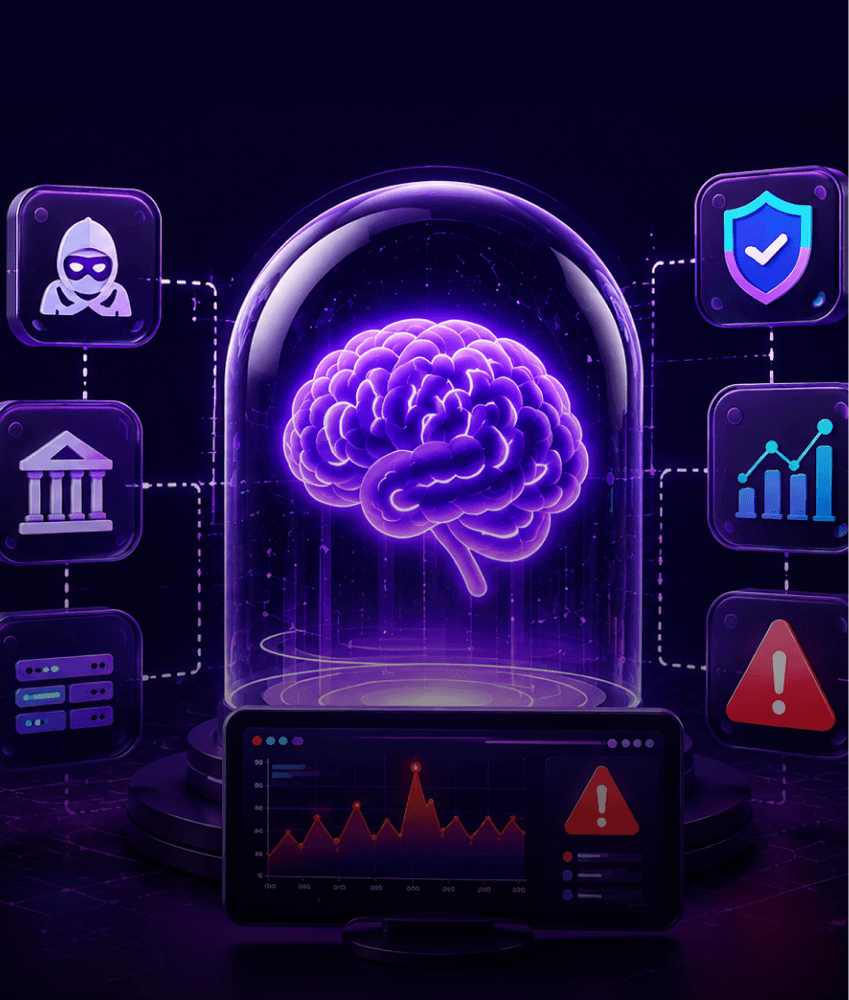
The convergence of Artificial Intelligence and Blockchain Security is arguably the most significant shift of the decade. AI acts as the "intelligent brain" that can analyze massive datasets, while blockchain serves as the "tamper-proof shield."
- Autonomous Cyber Defense: Modern networks now use AI agents to monitor traffic patterns in real-time. When the AI detects an anomaly such as a zero-day exploit or a DDoS attempt it can automatically trigger a defensive response, while the blockchain records every action in an unalterable forensic log.
- Verifiable AI Training: As deepfakes and AI-generated misinformation proliferate, Blockchain Security is used to verify the "lineage" of data. By anchoring AI training models on a blockchain, organizations can prove that their AI was trained on ethical, untampered data, ensuring the "explainability" and trustworthiness of the results.
Zero-Knowledge Proofs (ZKP): Privacy Without Disclosure
Zero-Knowledge Proofs have moved from academic theory to a mainstream component of Blockchain Security. This technology allows one party to prove they possess a piece of information without revealing the information itself.
- Privacy-Preserving Identity: In 2026, you no longer need to share your birthdate to prove you are over 18. Instead, you provide a "ZKP" generated by your digital wallet. The verifier receives a simple "Yes" or "No" confirmed by the blockchain, without ever seeing your personal data.
- Selective Disclosure for Compliance: For businesses, ZKPs allow for "compliance-friendly privacy." A company can prove to a regulator that it has sufficient capital or has passed an audit without exposing proprietary financial details or trade secrets.
Quantum-Resistant Ledgers: Future-Proofing the Chain
With the rapid advancement of quantum computing, the "Harvest Now, Decrypt Later" threat has become a major concern. Blockchain Security is evolving to meet this challenge head-on with Post-Quantum Cryptography (PQC).
- NIST-Standardized Algorithms: Modern blockchains are migrating to lattice-based and hash-based signatures (like CRYSTALS-Kyber and Dilithium) that are designed to withstand the processing power of future quantum computers.
- Space-Based Security: In a world-first, 2026 has seen the launch of satellite-based blockchain nodes that generate quantum-resistant signatures directly from orbit. This ensures that even if terrestrial networks are compromised, the "root of trust" remains secure in space.
The Rise of Modular Security Architectures
The "one-size-fits-all" blockchain is being replaced by modular designs. By separating the layers of consensus, execution, and data availability, Blockchain Security can be customized for specific risks. A financial network might prioritize high-speed consensus, while a government database might prioritize maximum data availability and multi-layered encryption.
Conclusion: Securing Your Digital Future with Blockchain Security
As we have explored, Blockchain Security is no longer just a buzzword for the financial sector; it is the definitive answer to the structural vulnerabilities of traditional IT. By replacing centralized "honeypots" with a decentralized architecture, businesses can finally protect their most sensitive assets from the evolving threats of the 2026 digital landscape. From the cryptographic "glue" of hashing to the automated rigor of smart contracts, this technology provides a self-healing framework that ensures data remains immutable, transparent, and resilient.
However, implementing a robust Blockchain Security strategy requires more than just high-level software; it requires deep technical expertise. To build the decentralized applications (dApps) and secure ledgers of tomorrow, organizations must strategically Hire Web Developers who are not only proficient in traditional stacks but are also experts in Solidity, Rust, and cryptographic protocols. The right development team acts as the essential bridge between theoretical security and a battle-hardened digital infrastructure that can withstand modern cyber-attacks.
At Zignuts, we are committed to helping you navigate this complex technological transition. Whether you are looking to integrate a private ledger or build a global consortium network, our team is ready to deliver cutting-edge solutions tailored to your unique business needs.
Ready to transform your IT infrastructure? Take the first step toward unparalleled data integrity today. Contact Zignuts today to schedule a consultation with our experts, or reach out directly to discuss how we can help you build a more secure, decentralized future. Let’s innovate together!

Zignuts Technolab
Zignuts Technolab delivers future-ready tech solutions and keeps you updated with the latest innovations through our blogs. Read, learn, and share!